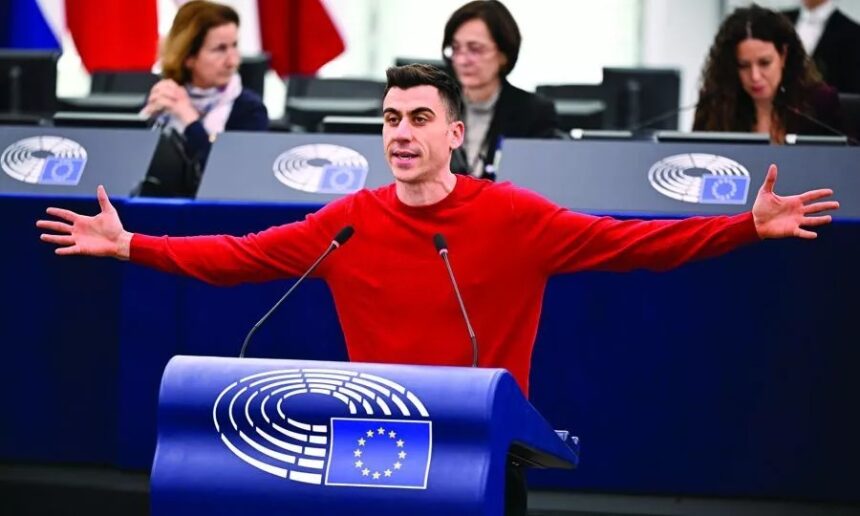
Independent Cypriot MEP Fidias Panayiotou is seeking to establish a pro-Russian group in the European Parliament, collaborating closely with Slovak MEPs associated with Prime Minister Robert Fico. This initiative marks a significant development in European political dynamics, as it aims to create an official pro-Russian presence within a parliament traditionally opposed to Moscow.
Pro-russian group: Formation of a New Political Entity
Fidias recently disclosed in an interview with a Cypriot television station that his project is currently being “built” in cooperation with his Slovak colleagues. Fico, known for his controversial ties to Russia, serves as a central figure in this emerging coalition. The goal is to form a political group that would not only represent pro-Russian sentiments but also enjoy the privileges afforded to recognised groups within the European Parliament.
Criteria for Political Group Formation
To establish a political group in the European Parliament, a minimum of 23 MEPs from at least a quarter of EU member states is required. This threshold is designed to ensure that only groups with substantial backing can exert influence in parliamentary processes. Such groups benefit from increased speaking time in plenary sessions, funding for staff and office expenses, and a greater role in committees and the Conference of Presidents.
Current Status of Slovak MEPs
MEPs aligned with Fico’s Direction – Social Democracy (SMER-SD) party currently do not belong to any major political group, having been removed from the Progressive Alliance of Socialists and Democrats. As non-inscrits, their influence in the European Parliament is significantly limited, which may drive their interest in joining Fidias’s ambitious project.
Potential Expansion with Greek MEPs
In an effort to bolster his group, Fidias and his team are reportedly considering inviting two independent Greek MEPs, Nikos Pappas and Nikos Farantouris, to join the new bloc. Both have recently distanced themselves from SYRIZA’s euro-group, and it remains uncertain whether they will accept the invitation. However, sources suggest that Fidias has maintained a good rapport with them, which could facilitate their involvement.
Political Climate and Reactions
This initiative does not operate in isolation; Fidias has been a polarising figure in both European and Cypriot political discourse. His previous actions, such as a controversial trip to Moscow alongside Slovak MEPs during a period of European diplomatic withdrawal, have drawn scrutiny. He framed this visit as a “peace mission”, but many viewed it as a direct challenge to the prevailing European stance regarding Russia amid the ongoing conflict in Ukraine.
Rhetoric and Public Perception
Fidias has been vocal about advocating for more amicable negotiations with Russia, a stance that has sparked debates within the European Parliament. His collaborations with politicians from Russia’s elite have further intensified criticisms against him. Similarly, Nikos Anadiotis of the Niki party, who has expressed pro-Russian views, attracted attention for his presence at the BRICS summit in Sochi, where he was photographed with former Russian president Dmitry Medvedev.
Controversies Surrounding Fidias
Fidias’s profile is further complicated by allegations regarding the use of EU funds for his political office in Cyprus, which is reportedly situated in a luxury villa. Additionally, his past comments have sparked institutional reactions due to their controversial nature. This collection of factors positions Fidias as a politician who consistently operates outside established party frameworks, preferring direct engagement with the public and challenging conventional political lines.
Implications of the New Group
If Fidias successfully establishes this pro-Russian group, it could elevate his standing within the European Parliament and grant him influence that is disproportionate to his electoral base. Conversely, failure to launch the group would highlight the challenges he faces in transitioning from a digital persona to a significant player in organised European politics.
The Road Ahead
The coming months will be crucial for Fidias Panayiotou and his aspirations to create a pro-Russian political group within the European Parliament. As he navigates the complex landscape of European politics, the reactions from other MEPs and the broader public will play a vital role in determining the success of his initiative. The impact of this movement on EU-Russian relations and internal parliamentary dynamics remains to be seen, but it certainly adds a new layer of complexity to the ongoing dialogue surrounding Russia within Europe.