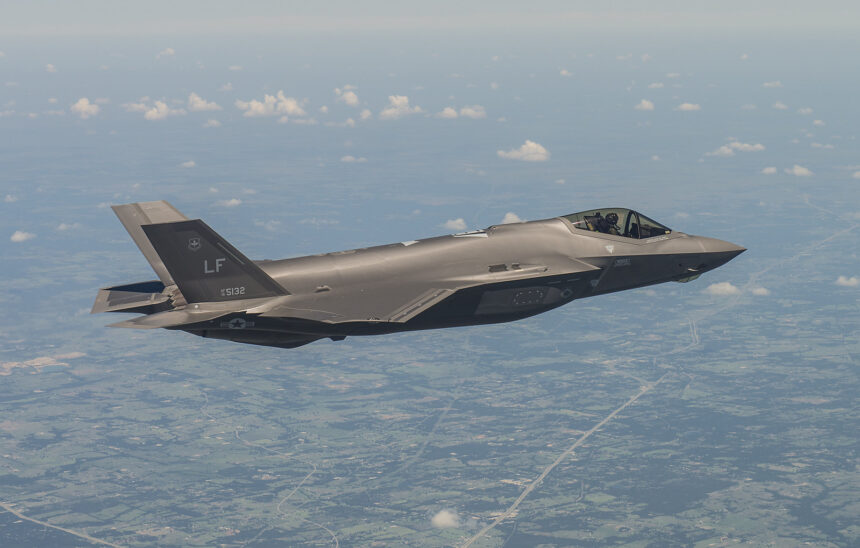
The F-35 programme has become a focal point of discussion regarding Turkey’s role in the Eastern Mediterranean and its implications for Cyprus. Donald Trump’s recent remarks hinting at a reconsideration of Turkey’s return to the F-35 fighter jet programme have sparked renewed debate about Ankara’s strategic importance and Washington’s shifting stance.

Photo: cyprus-mail.com
- As discussions continue, the fate of Turkey’s participation in the F-35 programme seems to hinge on the complexities of US domestic politics and the broader implications for regional stability.
Washington’s Changing Perspective on Turkey
Turkey was removed from the F-35 programme in 2019 after acquiring the Russian-made S-400 air defence system, which raised significant concerns in Washington. Despite this, Trump’s suggestion indicates a potential realignment in US policy towards Turkey, reflecting its perceived strategic importance in the context of NATO and regional security.
Strategic Necessity Amidst Tensions
Emmanuel Karagiannis, a professor of international security at King’s College London, remarked that the ongoing F-35 debate illustrates Washington’s evolving judgement about Turkey’s role. He noted, “It is less about the aircraft and more about Turkey’s place in the Western security order after a decade of turbulence.” Karagiannis emphasised that the US views Turkey as strategically essential for maintaining regional stability, particularly given its geographic advantages and military capabilities.
The Role of Geography and Military Leverage
Turkey’s geographical position, spanning from the Black Sea to the Middle East, reinforces its significance in US military strategy. According to Karagiannis, Washington heavily relies on Turkey’s control of key maritime routes and its influence over crises in Syria and the Gulf. He stated, “Ankara’s geography and military weight make it indispensable for containing Russia, stabilising Ukraine’s maritime lifelines and managing Iran-related escalation.”
Concerns Over Turkey’s Military Access
While Turkey’s strategic importance cannot be understated, the concerns that led to its exclusion from the F-35 programme remain. The S-400 system poses significant legal, technical, and political barriers that continue to trouble US lawmakers. As Karagiannis noted, “The US Congress still views Turkey as a hedging actor whose ties with Moscow and divergence from NATO norms make F-35-level technology exposure too risky.”
The F-35 Programme and Its Broader Implications
Lockheed Martin, the manufacturer of the F-35, highlighted that the programme currently involves 20 allied nations and a wide network of suppliers, with around 25 per cent of each aircraft produced by European industry. For Cyprus, the implications of Turkey’s potential re-entry into the programme are significant. Karagiannis pointed out that Turkey receiving the F-35 would alter the military balance in the Eastern Mediterranean.
Heightened Risks for Cyprus
“It would create mutual stealth vulnerability, complicate Aegean crisis management by compressing warning times and increasing escalation risks,” Karagiannis explained. He emphasized that such a shift could erode the technological buffer provided by Greece, heightening Cyprus’s exposure in an already tense security environment. Nonetheless, he added that broader regional deterrence would likely remain within the NATO framework, limiting the extent of structural change.
Domestic Political Challenges in the US
The conversation around Turkey’s potential return to the F-35 programme is met with significant opposition in the US Congress. Congressman Chris Pappas, who co-signed a letter urging congressional leaders to block any attempt at readmitting Turkey, expressed his outrage at Trump’s remarks. “It’s outrageous for Trump to even consider readmitting Turkey to the F-35 programme while Erdogan’s government continues to violate US law and threaten our allies,” Pappas stated.
Legal Hurdles and Congressional Resistance
Dr Sinan Ciddi, a senior fellow at the Foundation for Defence of Democracies, highlighted that any move to reinstate Turkey would encounter substantial legal obstacles. “There is very little way of working around those by presidential fiat,” he warned, indicating a likely political clash between Trump and Congress. Ciddi pointed out that Trump’s non-committal stance during the NATO summit suggests an awareness of these challenges.
The Time Factor and Future Considerations
With midterm elections approaching, Ciddi believes the political window for any significant change regarding Turkey’s F-35 status is narrow. “I don’t think there is enough time until November,” he remarked, noting that congressional approval would still be essential. Additionally, the focus on the six F-35s Turkey pre-emptively purchased, worth approximately $1.7 billion and currently in storage in the US, may be a priority for Ankara as it seeks to regain its footing in the programme.
Concerns Over Technological Knowledge
Beyond the immediate delivery of aircraft, the long-term implications of technological knowledge transfer pose significant risks. Ciddi noted that Turkey’s participation in the programme could allow for reverse engineering capabilities, particularly concerning the aircraft’s stealth technology. “There is a worry that the stealth secrets and capabilities of the aircraft could be compromised,” he cautioned, indicating that this concern resonates with regional allies, including Israel, Greece, Cyprus, and France.
Future of Turkey’s Military Capabilities
Another aspect potentially more promising for Turkey may be a US willingness to authorise General Electric F110 engines for its F-16 fleet. This support could bolster Turkey’s ambitions for strategic autonomy and its long-term goal of developing indigenous engine technology. Ciddi stated, “The goal here for Turkey is strategic autonomy.”
As discussions continue, the fate of Turkey’s participation in the F-35 programme seems to hinge on the complexities of US domestic politics and the broader implications for regional stability.