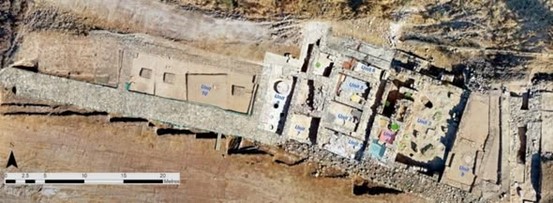
The recent discovery of extensive fortifications at ancient Palaepaphos has shed light on the city-state’s impressive defensive capabilities. Archaeologists announced on Tuesday the unearthing of a series of large stone towers that form part of a massive fortification wall, which once encircled the acropolis of ancient Paphos. This significant find highlights the advanced planning and construction skills of the society that inhabited Palaepaphos.
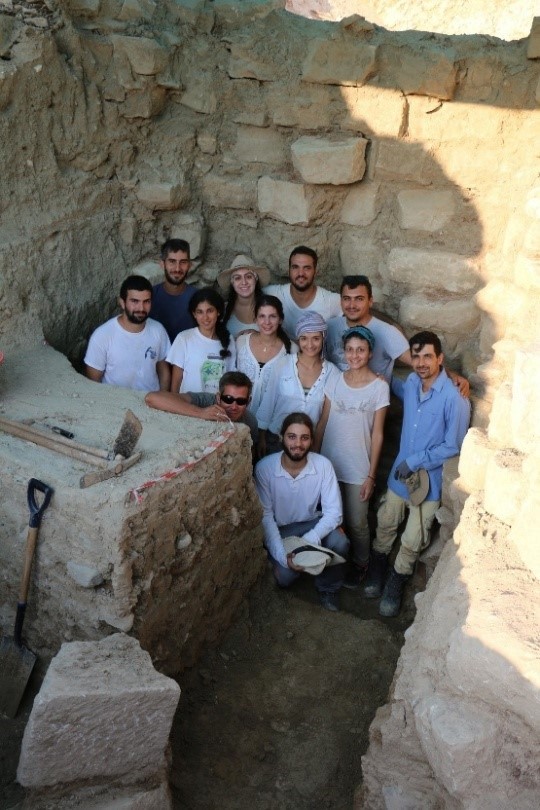
Photo: cyprus-mail.com
- The creation of a protected zone ensures that these historical remains are preserved for future generations and allows for further study of the urban landscape that characterised ancient Palaepaphos.
Palaepaphos: Key Findings from the Excavation
During the excavation, researchers uncovered a newly excavated tower at Laona, measuring approximately two metres high. The wall and its towers are believed to represent a major defensive project that dates back to a time when Palaepaphos was a well-fortified and centrally administered city-state.
Fieldwork was conducted in two phases, in spring and autumn 2025, involving undergraduate, postgraduate, and doctoral students from the University of Cyprus. The involvement of students not only enhances their educational experience but also contributes to the richness of the excavation process.
Preservation and Historical Context
One of the remarkable aspects of this discovery is the exceptional state of preservation at the site. Archaeologists noted that no significant construction took place after approximately 300 BC, allowing the fortifications, palace, and workshops to remain largely intact beneath as little as half a metre of soil in agricultural land. This preservation is crucial for understanding the architectural and urban planning techniques used in ancient times.
Protection of Historical Remains
In conjunction with the excavation efforts, the antiquities department completed a unified protective fence in October around the expropriated areas containing the ancient city’s urban fabric. This protective measure is vital for safeguarding the major monuments identified by the Palaipaphos urban landscape project, including the palatial complex at Hadjiabdoullah and the great wall of Laona.
The creation of a protected zone ensures that these historical remains are preserved for future generations and allows for further study of the urban landscape that characterised ancient Palaepaphos.
Collaborative Efforts in Archaeology
The excavation was led by Professor Emerita Maria Iacovou, who heads the University of Cyprus’ archaeological mission in cooperation with the antiquities department and the deputy cultural ministry. This collaboration highlights the importance of joint efforts in archaeological research, combining expertise from various sectors to enhance the understanding of historical sites.
As these discoveries come to light, they contribute significantly to the narrative of Palaepaphos as a pivotal location in ancient history, revealing insights into its defensive strategies and urban organisation.
Future Implications and Research Opportunities
The findings at Palaepaphos open up numerous avenues for future research. Archaeologists and historians are now tasked with analysing the implications of the fortifications on the socio-political landscape of the time. Understanding how such fortifications influenced trade, military strategy, and daily life in ancient Paphos could provide a deeper insight into its role in the broader context of the Mediterranean world.
Moreover, the preservation of the site presents a unique opportunity for educational initiatives, engaging both local communities and international scholars in the study of ancient civilisations. As the site continues to be investigated, it will undoubtedly yield more discoveries that enrich our understanding of this important historical area.