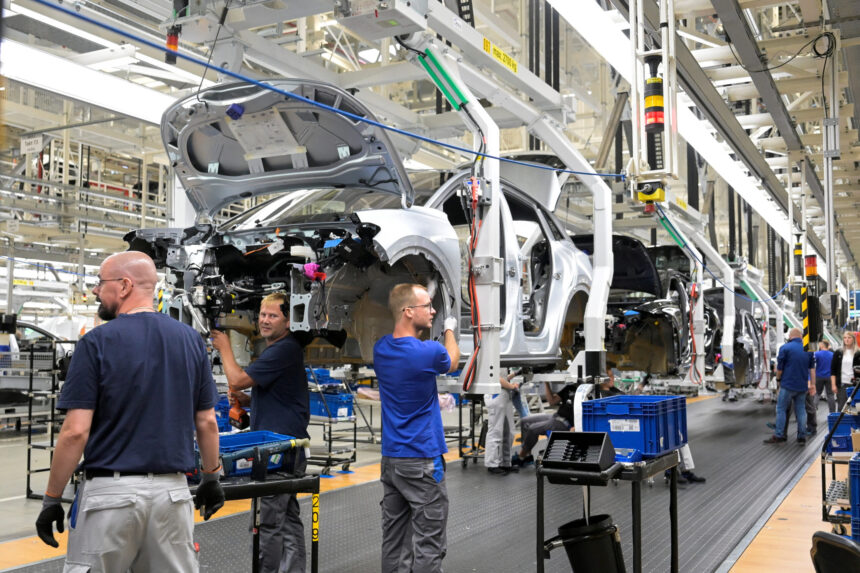
Eurozone manufacturing activity expanded in August for the first time since mid-2022, driven by a surge in domestic demand and output, igniting optimism for future production. The HCOB Eurozone Manufacturing Purchasing Managers’ Index (PMI) climbed to an over-three-year high of 50.7 in August, up from 49.8 in July, surpassing the crucial 50.0 mark that separates growth from contraction.
Manufacturing activity: Strong Growth Indicators
This rise in the PMI signals a positive shift in the manufacturing sector, with factory output growth reaching its strongest level since March 2022. Key indicators of demand also painted an encouraging picture; new orders expanded at their fastest pace in nearly three and a half years, suggesting that the sector might be on the cusp of a robust recovery.
Expert Insights on the Recovery
Cyrus de la Rubia, chief economist at Hamburg Commercial Bank, remarked on the broadening economic recovery within the manufacturing sector. “Incoming orders also offer hope for a sustainable recovery,” he stated, highlighting the shift in domestic orders that are compensating for weaker demand from international markets. He added, “Many expect to produce more in 12 months than they do today.”
Trade Dynamics and Domestic Demand
The recent trade framework agreement between the EU and the US, struck in late July, has only seen the baseline tariff of 15 per cent implemented so far. This context adds an intriguing layer to the current landscape, as manufacturers are reportedly finding strength in domestic demand as a counterbalance to external pressures, such as US tariffs.
Regional Performance Highlights
Among the eurozone countries, Greece and Spain led the factory growth with PMIs of 54.5 and 54.3, respectively. France and Italy also recorded slight expansions in their manufacturing sectors. Meanwhile, Germany, the largest economy in Europe, reported a PMI of 49.8, marking a 38-month high and coming close to the crucial growth threshold.
Implications for the German Economy
The recovery in manufacturing activity presents a glimmer of hope for the German economy, which experienced a contraction of 0.3 per cent in the last quarter, attributed to declining demand from the United States. The optimism within the manufacturing sector could play a pivotal role in stabilising the economic outlook in Germany.
Mixed Sentiment Across the Eurozone
While manufacturers expressed optimism for the upcoming year, sentiment remained largely unchanged from July. This contrasts with a broader deterioration in economic sentiment across the eurozone, as indicated by a European Commission survey conducted in August. The manufacturing sector seems to be holding its own amidst these mixed signals.
Price Trends and Monetary Policy Outlook
Interestingly, prices charged by manufacturers saw a slight reduction, even as input costs increased marginally. This dynamic could raise questions about pricing strategies as the European Central Bank (ECB) continues to target a 2 per cent inflation rate. The ECB held its key interest rate at 2 per cent in July and is expected to maintain this stance in the short term, with discussions about potential cuts likely to resume in the autumn if the economic situation worsens due to ongoing tariff pressures.