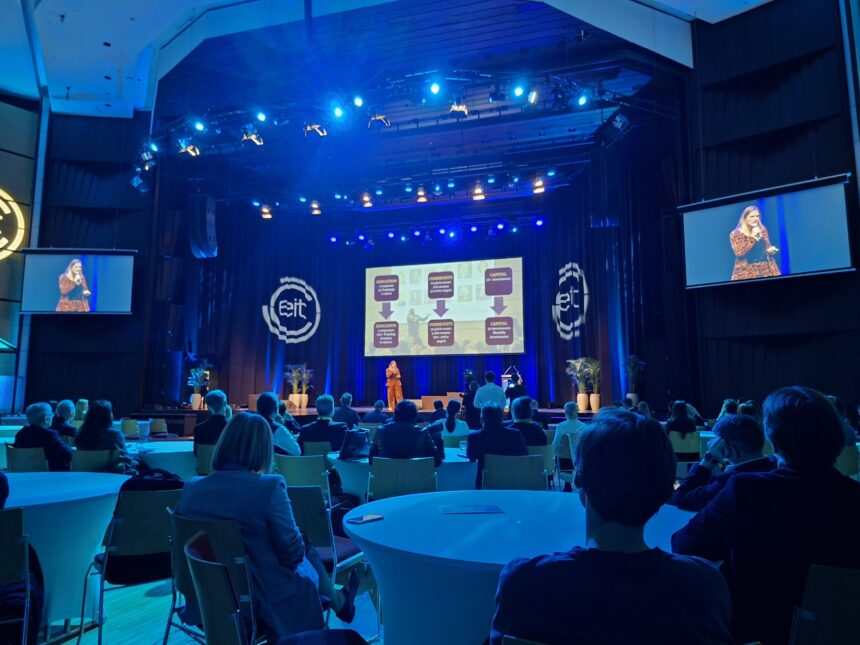
Europe has no shortage of gifted innovators, as demonstrated by the recent EIT Innovation Awards 2025 held in Budapest on November 25. The event drew together a diverse group of founders, researchers, and entrepreneurs, all eager to showcase their work and address the continent’s innovation challenges.

Photo: cyprus-mail.com
- “These are real jobs, real investments and real European companies,” Kern stated, reflecting the tangible outcomes of EIT’s initiatives.
- Prins also emphasised the value of learning from each other, noting Southern Europe’s expertise in desalination that Northern Europe could benefit from.
- In a moment of recognition, Laringe highlighted the urgency of their work: “We are not just improving batteries, we are changing how energy is used.”
Innovators: The Heart of Innovation in Europe
The EIT Innovation Awards provided a platform for Europe’s innovation community to engage in a day filled with pitches, policy discussions, and networking. Organised by the European Institute of Innovation and Technology (EIT), the event highlighted the vital connections needed between research and market deployment.

Photo: cyprus-mail.com
Building Ecosystems of Trust
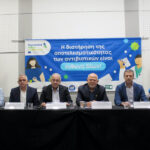
During the opening press conference, Stefan Dobrev, Chairperson of the EIT Governing Board, pointed out that innovation ecosystems require time and effort to cultivate. “Ecosystems are grown, not made,” he stated, emphasising the importance of trust among universities, investors, and governments.
Dobrev acknowledged that while Europe possesses a wealth of research and brilliant ideas, the continent often struggles to translate these into market-ready products. He referenced the Draghi report, which warned that without increased competitiveness and coordinated efforts, Europe risks falling behind in the global innovation landscape.
Small Countries as Innovation Engines
Highlighting the potential of smaller nations, Dobrev noted that countries like Malta and Cyprus could be significant contributors to innovation if properly connected to larger markets. He cited Romania’s battery technology, now utilised across the EU, as an example of innovation transcending geographical boundaries.
Impact and Investment in Innovation
Martin Kern, Director of the EIT, reinforced the idea that scale is crucial for effective innovation. He shared that for every euro invested by the EU into EIT, five euros are mobilised from the market, showcasing the impact of their work beyond mere financial support for startups.
Kern also pointed out that over 1.3 million individuals have benefitted from EIT’s education and training programmes, underscoring the link between innovation capacity and skilled individuals. “Deep tech innovations do not happen without people who know how to build companies,” he remarked.
Clean Energy and Biotech Innovations
Among the notable achievements, Kern highlighted advances in clean energy technologies, specifically mentioning hydrogen innovations that have raised substantial funding. He also discussed biotechnology ventures that utilise digital models of human cells to expedite drug development.
“These are real jobs, real investments and real European companies,” Kern stated, reflecting the tangible outcomes of EIT’s initiatives.
Addressing Water Scarcity and Pollution
The awards also introduced EIT Water, Europe’s latest Knowledge and Innovation Community (KIC). Michelle Williams, EIT Water Coordinator, articulated the urgent need for innovation in water management in light of increasing scarcity and pollution. “Climate change and human activity are putting our water systems under pressure in ways we have never seen before,” she explained.
Williams advocated for a shift from isolated approaches to a collective European perspective on water management, stressing the importance of circular water use. “We must treat water as something to be reused and recirculated, not something we consume once and discard,” she added.
Collaboration Across Borders
Hero Prins, Interim CEO of EIT Water, discussed the need for climate resilience and the potential of nature-based solutions for effective water management. He highlighted the use of digital twins to simulate water systems, which can preemptively address failures and save costs.
Prins also emphasised the value of learning from each other, noting Southern Europe’s expertise in desalination that Northern Europe could benefit from.
A Spotlight on Talent and Innovation
As the awards ceremony unfolded, the event shifted focus from policies to the innovators themselves. Laura Laringe, co-founder of reLi Energy from Germany, received the Changemaker Award for her company’s work in enhancing battery performance. The Innovation Team Award went to an Italian team for their AI system designed for industrial production lines.
In a moment of recognition, Laringe highlighted the urgency of their work: “We are not just improving batteries, we are changing how energy is used.”
Strategic Importance of Startups
Antoaneta Angelova Krasteva from the European Commission reinforced the strategic role of startups and scaleups in enhancing Europe’s competitiveness. She introduced the Union of Skills initiative, aimed at building a skilled workforce across the continent.
A new Memorandum of Understanding was also signed between EIT and the Government of Malta, launching a pilot programme aimed at supporting Maltese startups with funding and mentoring, with at least 30 million euros allocated by 2028.
Challenges in Funding and Investment
The afternoon sessions addressed investment challenges, with speakers pointing out the precarious nature of early-stage funding. Olga Petrovic from Neofunction remarked, “Early-stage companies live or die on investor confidence,” particularly highlighting hardware startups’ vulnerability due to prolonged development cycles.
Concerns about bias in funding decisions were also raised, with Ana Barjasic from Connectology noting that an emphasis on origin over merit can stifle innovation. “If you fund only the best storytellers from the biggest ecosystems, not the best ideas, you lose innovation,” she stated.
Celebrating Resilience and Innovation
The day concluded with the EIT Jumpstarter Grand Finale, where early-stage startups from emerging regions showcased their innovations. Special recognition was given to teams from the Western Balkans, Mediterranean, and outermost EU regions, alongside the EIT Red Kalyna Awards celebrating Ukrainian women innovators.
As conversations continued into the evening, the atmosphere was a blend of pragmatism and optimism. Europe is aware of the hurdles it faces but remains confident in its ability to nurture the talent necessary to overcome them. The challenge lies in scaling these innovations to meet the demands of the future.