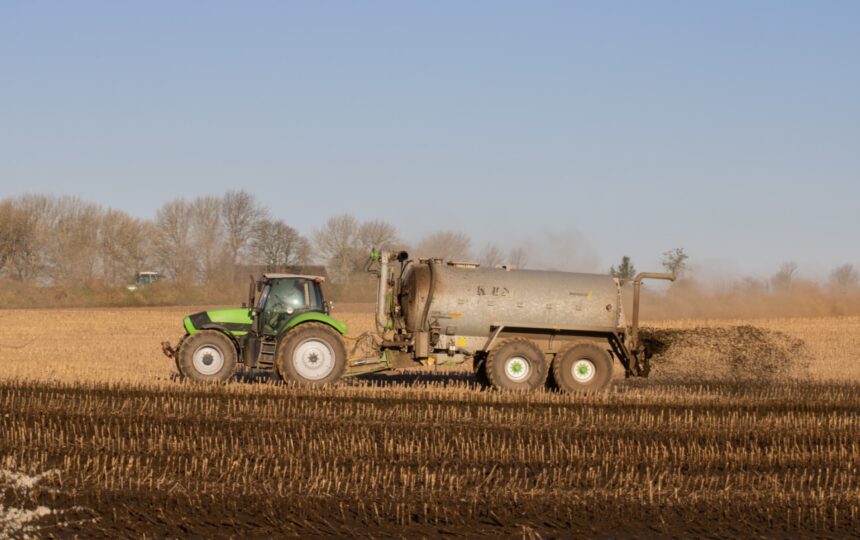
The European Union saw a notable increase in the consumption of mineral fertilisers throughout 2024, according to Eurostat, as agricultural producers applied a total of 9.8 million tonnes of nitrogen and phosphorus across the bloc.
This figure marks a 6.0 per cent increase compared with the 9.2 million tonnes used during the previous year. Despite this rise, the total quantity remains 15.8 per cent below the relative peak recorded in 2017.
Mineral fertiliser: Increase in Nitrogen Fertiliser Usage
The use of nitrogen-based fertilisers reached an estimated 8.9 million tonnes in 2024, reflecting a year-on-year increase of 5.8 per cent. The highest usage levels of nitrogen-based products were recorded by the European Union’s main agricultural producers.
- France: 1.8 million tonnes
- Germany: 1.1 million tonnes
- Spain: 0.9 million tonnes
Surge in Phosphorus Fertiliser Application
The data also highlighted a significant surge in the application of phosphorus fertilisers, which rose by 7.7 per cent compared with 2023 levels to reach 0.9 million tonnes. The nations with the highest consumption of phosphorus-based fertilisers included:
- Spain: 0.14 million tonnes
- France: 0.12 million tonnes
- Italy: 0.10 million tonnes
- Romania: 0.09 million tonnes
- Germany: 0.07 million tonnes
These five countries combined accounted for more than half of the total phosphorus fertiliser use across the entire bloc.
Environmental Concerns
While mineral fertilisers are essential for boosting crop yields, experts warn that excessive application can lead to nutrient leaching, which harms fragile ecosystems and contributes to both water and soil pollution.