ecb raises — ecb raises — The European Central Bank (ECB) has raised interest rates by 25 basis points, responding to inflation pressures that have emerged due to the ongoing conflict in the Middle East. This decision highlights the bank’s commitment to maintaining stable prices and supporting economic growth across the euro area.
Ecb raises: Impacts of the Middle East Conflict
The ECB Governing Council expressed concerns about the war’s implications for both inflation and economic stability. The conflict has prompted the central bank to revise its inflation forecasts and growth outlook, indicating a need for tighter monetary policy.
New Interest Rates Effective June 2026
Following this rate hike, the deposit facility rate will increase to 2.25 per cent, while the main refinancing operations rate rises to 2.40 per cent, and the marginal lending facility reaches 2.65 per cent. These changes will take effect on June 17, 2026.
Revised Inflation Projections
According to the latest Eurosystem staff projections, average headline inflation is expected to be 3.0 per cent in 2026, gradually returning to the ECB’s target of 2.0 per cent by 2028. The bank has noted that inflation excluding energy and food is anticipated to average 2.5 per cent in 2026 and 2027 before settling at 2.2 per cent in 2028.
Growth Forecasts Adjusted Downwards
The ECB has also adjusted its growth expectations, with euro area output now projected to grow by 0.8 per cent in 2026, 1.2 per cent in 2027, and 1.5 per cent in 2028. These downward revisions reflect the ongoing commodity market disruptions and their effects on consumer confidence and household income.
Uncertainties and Risks Ahead
With the geopolitical landscape remaining volatile, the ECB warned of exceptionally high uncertainty. Potential risks include rising inflation and declining growth, contingent upon the conflict’s severity and duration. The Governing Council remains committed to a flexible approach, adapting its strategy based on incoming data.
Insights from ECB President Christine Lagarde
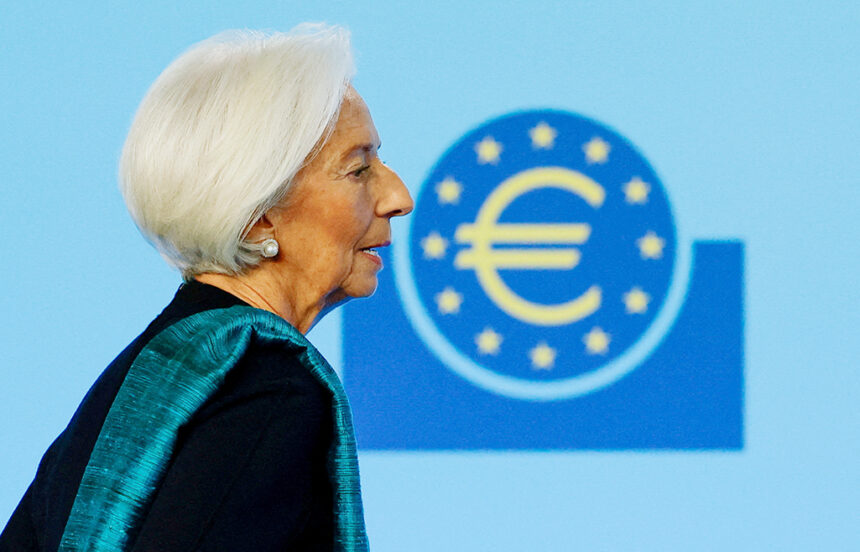
During a press conference, ECB President Christine Lagarde emphasised the pressing nature of inflationary pressures stemming from the Middle East conflict. She noted the economy’s expansion in the first quarter, driven by domestic demand and exports, yet acknowledged recent surveys indicating a slowdown, particularly in the services sector.
Resilience in the Labour Market
Despite cooling labour demand, the euro area’s unemployment rate stood at 6.3 per cent in April, close to historical lows. The outlook for employment remains cautious as both firms and households anticipate weaker conditions in the near term.
Long-term Competitiveness and Financial Stability
Lagarde underscored the importance of reforms aimed at enhancing productivity and completing the Savings and Investments Union to secure Europe’s long-term competitiveness. She also highlighted the potential of the digital euro in boosting financial innovation and integration.
Inflation Trends and Financial Conditions
Inflation accelerated to 3.2 per cent in May, influenced by a rise in energy inflation to 10.9 per cent, while food inflation moderated to 2.0 per cent. The ECB expects energy prices to sustain inflation above target through the first half of 2027.
Ongoing Financial Resilience
Despite tighter financial conditions, euro area banks have shown resilience due to robust capital and liquidity positions. However, the ECB cautioned that ongoing geopolitical tensions and a decline in asset prices could jeopardise financial stability.
Asset Purchase Programmes and Market Stability
The ECB confirmed that its asset purchase programmes will continue to shrink steadily, ceasing reinvestments from maturing securities. Additionally, the Transmission Protection Instrument remains available to address potential market disruptions that could affect the implementation of monetary policy across the euro area.