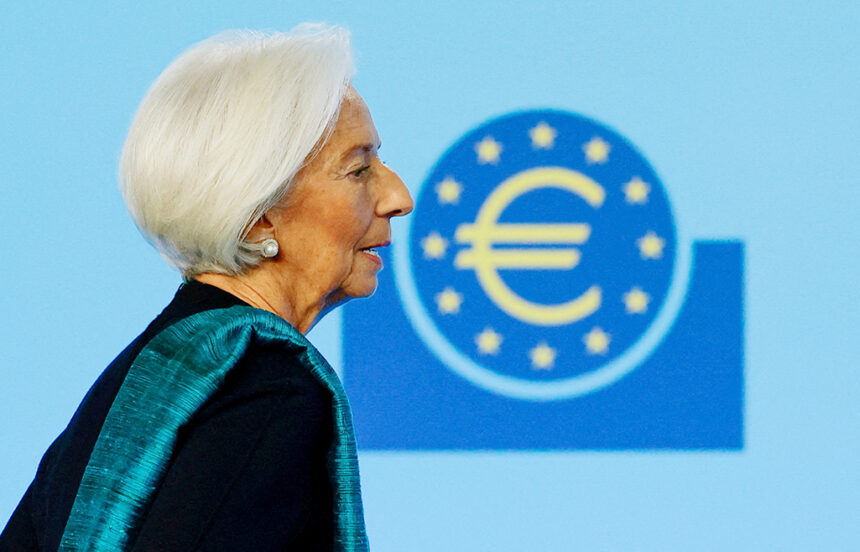
ecb interest — ecb interest — The European Central Bank (ECB) has kept interest rates unchanged as concerns about rising inflation continue to mount. The decision was anticipated on Thursday, yet it underscores a growing urgency to address economic pressures, particularly as inflation has surged to 3%, significantly above the bank’s 2% target.
This spike in inflation is attributed largely to the ongoing war in Iran, which has driven oil prices to a four-year high. The ECB warned that high energy prices could trigger a concerning inflation spiral through second-round effects, impacting the economy more broadly.
Ecb interest: Signalling Future Rate Hikes
In its statement, the ECB noted, “The upside risks to inflation and the downside risks to growth have intensified.” The bank’s officials acknowledged that the longer the conflict persists, the greater the potential impact on both inflation and economic stability.
Financial markets are now projecting interest rate hikes as early as June and July, with at least one more increase expected in the autumn. This anticipation stems from the ECB’s desire to swiftly counter any inflationary spiral, especially following criticism of its delayed response in 2022.
Current Economic Landscape
Despite the looming threats of inflation, the ECB indicated that longer-term inflation expectations remain stable. However, short-term expectations have risen significantly. The Governing Council is cautious and has refrained from committing to a specific rate path, indicating a need for flexibility in its approach.
It is noteworthy that any forthcoming rate hike cycle is likely to be more moderate compared to last year. In 2022, the ECB raised its key rate by a total of 450 basis points within twelve months to combat rampant price growth. Currently, price pressures appear less severe, and the effects of second-round inflation have yet to manifest prominently. Additionally, the labour market is showing signs of softness, and economic growth is inching towards stagnation.
Growth Projections and Economic Risks
Recent data suggests that the eurozone economy barely registered growth in the first quarter of this year, prior to the war’s full impact. Core inflation, a critical metric for assessing enduring price growth, actually decreased from 2.3% to 2.2% in April, signalling that second-round effects are not yet taking hold.
However, economists warn that the energy crisis could shave off as much as 0.5 percentage points from economic growth, roughly half of the eurozone’s expected expansion in the upcoming year. The outlook for the second quarter appears bleak due to the ongoing conflict, with Germany, the region’s largest economy, potentially facing contraction.
Business Sentiment and Financial Stability
Recent surveys have shown a rapid decline in business sentiment, with the services sector experiencing deterioration and corporate profits falling. Export activities are still struggling under the weight of tariffs, and banks are reportedly planning to restrict access to credit for businesses.
Despite these challenges, central bankers globally have suggested that a brief delay in rate hikes may be prudent, allowing for a clearer view of price trends. Notably, the Bank of Japan, the U.S. Federal Reserve, the Bank of Canada, and the Bank of England all opted to keep rates steady this week, while expressing concerns regarding price growth.
Historical Context and Consumer Behaviour
The lingering effects of past inflationary shocks could influence consumer behaviour significantly. The recent history of rapid inflation might prompt businesses to increase prices more quickly than they did in 2022, as both employers and employees seek to adjust wages and prices proactively.
Lorenzo Codogno of LC Macro Advisors remarked, “The experience of inflation is so recent that businesses will raise prices sooner than in 2022, and even workers will try to secure higher wages sooner, which will likely accelerate inflation developments.”