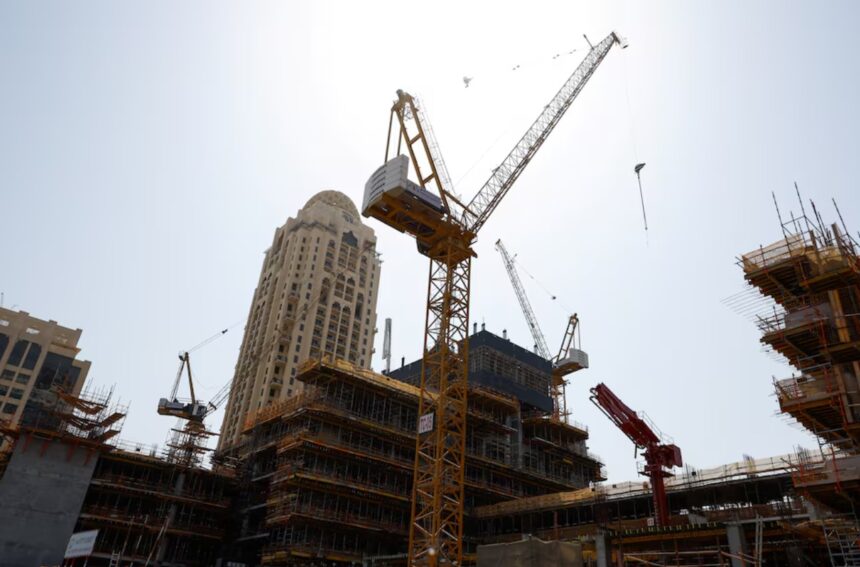
Dubai developers are increasingly embracing in-house construction as they aim to enhance a property boom and maximise cash flow. This strategic shift comes as major developers in the UAE opt to establish their own contracting firms, moving away from reliance on third-party contractors. By taking control of the building process, developers seek to gain better oversight of construction timelines, costs, and quality standards, ultimately securing a larger share of profits.
Rising Trend Among Major Developers
In a notable development, Emaar Properties, renowned for creating the iconic Burj Khalifa, has launched Rukn Mirage under its subsidiary, Mirage. This initiative underscores a growing trend among developers like Samana Developers, Ellington, and Azizi, all of which have introduced in-house contracting units within the last two years.
Arada, a developer co-founded by Saudi Prince Khaled bin Alwaleed bin Talal Al Saud, has also announced plans to integrate a portion of an Australian contractor into its UAE operations by 2027. This trend reflects the booming real estate market in Dubai, where property prices surged by 70 per cent over the past four years, with expectations of continued growth.
Market Dynamics and Developer Strategies
The Dubai real estate sector is witnessing a remarkable transformation, with property launches increasing by 83 per cent in 2024, despite a 23 per cent decline in completions. This surge in activity has attracted a new influx of workers, predominantly migrant labourers from South Asia, although it has also raised concerns about high turnover rates among expatriate staff.
Developers are facing challenges in attracting bids from external contractors, largely due to intensified competition. Samana Developers initially planned to allocate 20 per cent of its projects to their new in-house arm, which was launched in September. However, Chief Executive Imran Farooq revealed that this figure has now increased to handling 80-90 per cent of new projects internally. “We used to get 25 or 30 contractors bidding for a project. Today you get hardly two or three,” Farooq noted, highlighting the changing landscape.
Diverse Approaches to Construction Management
Meanwhile, Emaar is adopting a hybrid approach to its construction projects. While some developments will be executed by Rukn Mirage, the company will still outsource certain projects to external contractors. Founder and Managing Director Mohamed Alabbar emphasised the importance of maintaining flexibility in their construction strategy.
To finance land acquisitions and operational costs, developers are increasingly turning to debt markets, as billions of dirhams in buyer payments remain locked in escrow until project handovers. This funding model, which only releases funds after final inspections, often includes a one-year grace period before buyers can claim refunds, adding pressure to complete projects on time.
The Importance of Timely Project Delivery
For developers, timely project delivery is critical, not just for satisfying buyers, but also for unlocking cash necessary for shareholder distributions and financing expansion efforts both locally and internationally. The consequences of delays can be significant, as evidenced by a recent Dubai court ruling ordering a developer to repay 12.4 million dirhams ($3.38 million) plus interest for a floating villa that was not delivered on time.
As developers strive for efficiency, they are keen to avoid penalties for delays. These penalties, while not always disclosed publicly, can lead to financial repercussions and damage reputations within the competitive market.
Challenges of In-House Construction
While the trend of bringing construction in-house offers potential benefits, it also presents challenges. Gordon Rodger, founder and managing partner at construction consultancy Stonehaven, cautions that when developers attempt to take on the role of builders, they may dilute their focus. “When developers try to become builders, they start splitting focus — and that’s when things can get muddy,” he explained.
This expanded scope can lead developers to manage various aspects of the business simultaneously, from land acquisition and sales to health and safety and subcontractor management. Moreover, there is a risk of having idle capacity during market downturns, which could leave sizeable investments in construction resources underutilised.
Future Implications for the Construction Sector
Industry insiders predict that as developers increase their in-house capabilities, independent contractors may seek opportunities outside the real estate sector, potentially moving into government infrastructure, manufacturing, or oil and gas. This shift could reshape the landscape of the construction industry in the UAE, as developers navigate the balance between control and risk.
As Dubai continues to evolve into a global hub, the decisions made by developers today will significantly influence the future of the region’s construction landscape. Ensuring that projects are completed on time and to a high standard will remain paramount in maintaining the city’s reputation as a leader in innovative development.