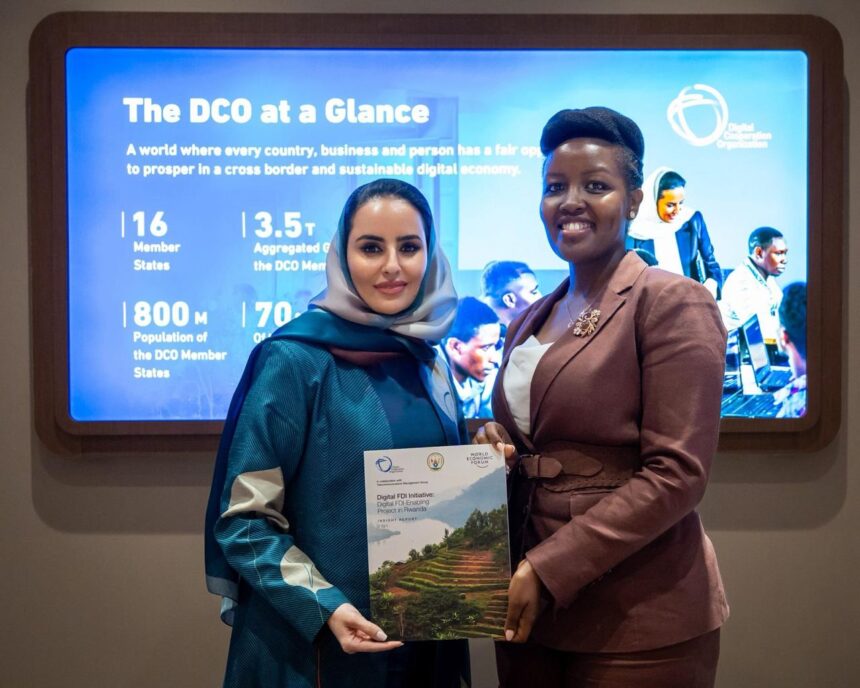
The Digital FDI roadmap offers essential guidance on enhancing cross-border data flows as the Ministry of ICT and Innovation partners with the Digital Cooperation Organisation (DCO) to launch the Digital FDI Rwanda report.
This initiative was unveiled during the 9th Future Investment Initiative held in Riyadh, showcasing a collaborative effort by the Ministry of ICT and Innovation, DCO, and the World Economic Forum. The report aims to bolster digital foreign direct investment, improve technology exports, and accelerate job creation within the nation.
Digital fdi: A Vision for Digital Transformation
Highlighting Rwanda’s rapid digital transformation, the report outlines specific policy and regulatory reforms designed to position the country as an attractive destination for digital-economy investments. H.E. Paula Ingabire, Minister of ICT and Innovation, expressed, “Rwanda’s vision is anchored in digital transformation accelerating economic growth, creating jobs, expanding exports, and building an inclusive, knowledge-based economy.”
She emphasised that the roadmap is crucial for cultivating a global business environment for technology companies, strengthening trust in the data ecosystem, enhancing investor facilitation, and broadening digital skills.
Collaboration as a Catalyst for Change
Deemah AlYahya, Secretary-General of the DCO, echoed this sentiment, stating that Rwanda’s experience exemplifies that digital investment transcends mere capital. “It is about courage, collaboration, and conviction. Digital FDI is a bridge between vision and impact,” she remarked.
AlYahya praised Rwanda’s ability to transform connectivity into opportunities and policies into empowerment, asserting that the DCO stands proudly alongside Rwanda and other Member States in this endeavour.
Strategic Action Plans for Digital Growth
The report details a strategic action plan focused on facilitating cross-border data flows, establishing clear cybersecurity regulations, and creating efficient systems for investor facilitation. Moreover, it aims to develop a talent pipeline that is future-ready, ensuring that the workforce is equipped to meet the demands of a growing digital economy.
Rwanda’s governance structures and pro-innovation policies are already yielding positive momentum across various sectors, including cloud services, fintech, business process outsourcing (BPO), information technology outsourcing (ITO), data centres, and government technology (govtech).
Guidance for Future Investments
With a growing pipeline of digital investment opportunities, the report provides guidance on reducing compliance costs, harmonising digital regulations, and supporting technology firms in both domestic and global expansion. This comprehensive framework not only positions Rwanda as a leader in the digital arena but also serves as a blueprint for other African nations aspiring to replicate its success.
Rwanda’s Role in the Global Digital Economy
As one of the 16 members of the DCO, established in November 2020 during the G20 summit in Riyadh, Rwanda is poised to expand its cooperation and unlock cross-border opportunities. The DCO aims to facilitate a robust digital economy across its member states, representing a combined GDP of nearly $3.5 trillion and a market of over 800 million people, predominantly under the age of 35.
The Digital Cooperation Organisation is the first standalone international body dedicated to promoting an inclusive and sustainable digital economy, further emphasising the importance of Rwanda’s strategic position within this framework.