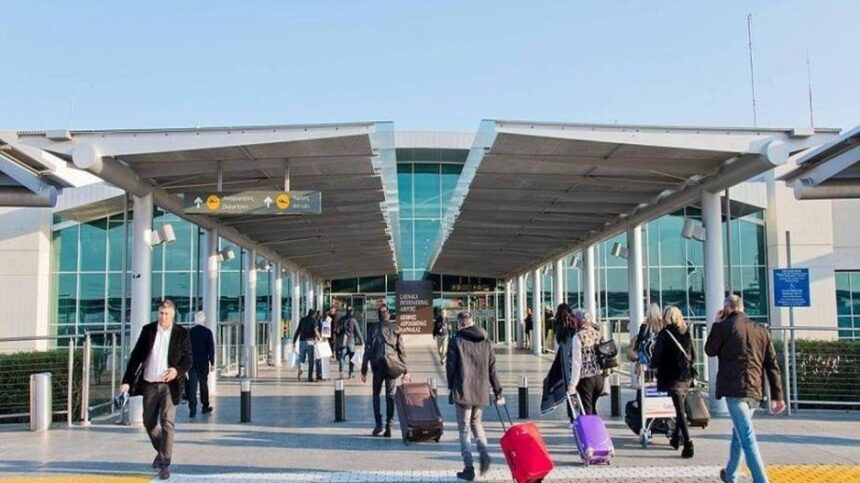
entry-exit system — entry-exit system — Cyprus’s airports are experiencing no problems from the automated system now recording the entry and exit of non-EU nationals across the Schengen area, even as the mechanism has caused chaos at several European airports for days.
The Entry/Exit System, known as EES, is a digital scheme that records when travellers enter and leave the Schengen area for short stays. It collects biometric data, including facial images and fingerprints, alongside personal details from travel documents.
According to sources, Cyprus remains outside Schengen and has not installed the system, meaning traditional passport checks continue at its airports. EES is now operating at the external borders of all 29 countries in the free-movement zone except Cyprus and Ireland. The system also does not apply in Switzerland, Liechtenstein, Iceland, and Norway. Travellers from certain countries, including the United States, the United Kingdom, Australia, and several Latin American states, do not require a visa but remain subject to EES checks. Citizens of EU and Schengen states, along with nationals of Andorra, San Marino, the Vatican City, and Monaco, are exempt from these checks.
As Cyprus monitors the situation, the relevant authorities are keeping a close eye on developments, as the country has already begun the process of joining the Schengen zone. The potential implementation of EES could significantly impact Cyprus’s airports, particularly since UK citizens are subject to these checks. The UK is the largest source market for tourist arrivals in Cyprus, raising concerns about future capacity at the airports.
Meanwhile, other European airports are grappling with major disruptions. Reports indicate that as Europe enters the peak tourist season, waiting times at border checks have surged, with some travellers facing queues of up to five hours during high-traffic periods. This situation has affected millions of passengers, prompting a letter from associations representing airlines and airports to the European Commission. Airlines for Europe, ACI Europe, and the International Air Transport Association have called for immediate intervention, urging flexibility to allow for the complete suspension of EES during the busy months of July and August.
Greece has been particularly hard hit, especially at smaller regional airports on its islands, which lack the necessary space and infrastructure to manage checks under the new system efficiently. The European Union has acknowledged the significant delays at some points; however, it has rejected requests from airports and airlines to suspend the new checks. EU officials have stated that only 20 out of approximately 1,500 border entry points are experiencing serious problems, although the situation remains fluid.