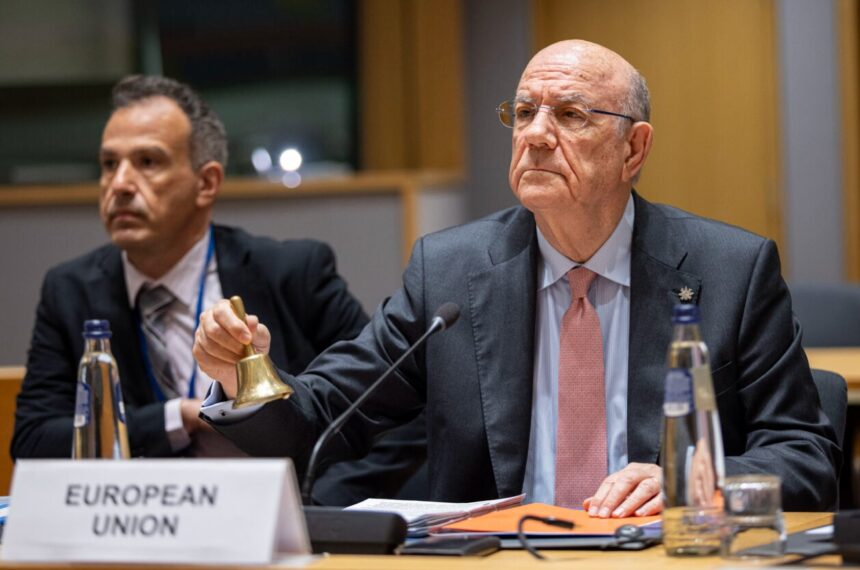
global economic — Cyprus is raising concerns over the global economic outlook, as Finance Minister Makis Keravnos addressed the Ecofin council in Brussels on Tuesday. The session, which he chaired, underscored the increasing uncertainty surrounding both the European and global economies.

Photo: cyprus-mail.com
- It also cautioned that overly broad foreclosure exemptions or freezes could jeopardise the effectiveness of the debt recovery system, reflecting a nuanced understanding of the economic landscape.
Keravnos highlighted that the discussions would centre on the repercussions of geopolitical events, particularly referencing the ongoing conflicts in the Middle East and Ukraine. He noted, “Finance ministers are meeting in an environment of increased uncertainty due to the conflict in the Middle East and the ongoing war in Ukraine.”

Photo: cyprus-mail.com
During the meeting, the minister outlined the Ecofin agenda, which included topics such as market integration and a supervisory package. He expressed confidence in the progress made under the Cypriot EU presidency, aimed at accelerating these crucial discussions.
To facilitate dialogue among member states, Keravnos confirmed that a document containing specific questions would be presented. He also voiced concerns regarding VAT fraud, emphasising the need for enhanced capabilities of the European Anti-Fraud Office (OLAF) and the European Public Prosecutor’s Office to act swiftly and effectively.
When questioned about the risk of stagflation in Europe, Keravnos maintained that vigilance is essential. “Developments are constantly changing and require close monitoring to avoid such a scenario,” he remarked. He further acknowledged the challenges faced by policymakers in Europe as they navigate rising geopolitical tensions, inflationary pressures, and economic uncertainty.
The council meeting also aimed to address the economic and fiscal impacts stemming from Russia’s invasion of Ukraine. Ministers anticipated exchanging views on these pressing issues, highlighting the interconnectedness of global events and their economic ramifications.
Additionally, the council is expected to adopt a decision approving Denmark’s amended recovery and resilience plan, as part of the Recovery and Resilience Facility. The presidency and the European Commission will also provide insights into the main outcomes from the G20 finance ministers and central bank governors meeting held earlier in April.
Just a day prior, the Cypriot Finance Ministry welcomed findings from the International Monetary Fund (IMF), which indicated that Cyprus has demonstrated resilience and strong fiscal performance. However, the ministry underscored the importance of safeguarding vulnerable borrowers in any revisions to the foreclosure framework, stating, “Any revision must not create opportunities for strategic defaulters at the expense of the economy, consistent borrowers, and taxpayers.”
It also cautioned that overly broad foreclosure exemptions or freezes could jeopardise the effectiveness of the debt recovery system, reflecting a nuanced understanding of the economic landscape.
In terms of fiscal policy, the Finance Ministry called for greater efficiency and a focus on investment, particularly under the new European economic governance framework. Addressing energy challenges, it confirmed that targeted actions are in progress to ensure supply security and reduce electricity costs.