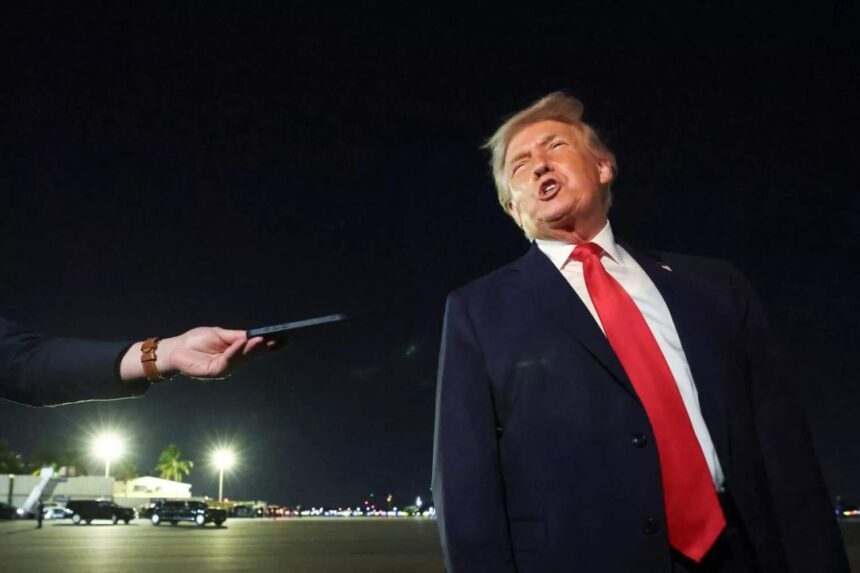
Trump’s pressure tactics are reshaping international dynamics, potentially influencing the ongoing Cyprus problem. As President Donald Trump employs aggressive strategies to align global partners with US interests, the fluidity of the global system is creating an atmosphere of uncertainty. This shift in international relations may have significant repercussions for various open issues, including the long-standing division of Cyprus.
Cyprus problem: Current State of the Cyprus Issue
Despite recent diplomatic efforts, the Cyprus problem remains at a standstill. The Republic of Cyprus has been striving to elevate its status in the eyes of Washington, hoping that recognition will bolster its position in negotiations. Current indications suggest that Cyprus is not a priority for the White House, which is focusing more on broader regional strategies.
Careful Moves by Nicosia
In light of these factors, the Cypriot government is treading carefully in its dealings with the US. The leadership in Nicosia is aware that any misstep could lead to negative consequences, particularly given Trump’s unpredictable approach to foreign policy. With Turkey’s involvement in the region, the stakes are high for Cyprus.
Turkey’s Strategic Importance
Trump’s administration appears to favour Turkey as a key ally, despite any reservations regarding President Erdoğan’s actions. The US is likely to rely on Turkey’s influence in the region, especially as tensions within NATO might escalate. As the US navigates its alliances, the potential for Turkish involvement in the Cyprus issue remains a critical consideration.
Regional Geopolitics and Cyprus
The complexities of Greek-Turkish relations add another layer of difficulty to the Cyprus problem. Greece has developed strong communication ties with the US, but the effectiveness of these ties in the current geopolitical landscape is uncertain. The balancing act between the interests of Greece, Turkey, and the US will be crucial in determining the future of Cyprus.
The Role of the ‘Peace Council’
Trump’s establishment of the so-called “Peace Council” aims to present his policies as collaborative, though many European leaders view this initiative with scepticism. The European Council’s discussions highlighted concerns about the legal implications and operational clarity of this council. The prevailing sentiment among EU states is to support initiatives that align with existing Security Council resolutions, particularly concerning Gaza.
Military Presence and Regional Stability
Trump’s recent actions, including his controversial statements regarding Greenland, demonstrate a broader strategy aimed at securing a sustained military presence in key regions. Such maneuvers reflect a desire to ensure regional stability, which is essential for the economic investments he envisions. The implications for Cyprus could be significant if the US attempts to resolve the Cyprus issue as part of its regional planning.
International Perspectives and the Future of Cyprus
As discussions in the United Nations continue regarding the renewal of the peacekeeping force’s mandate, key players are cautiously optimistic about the prospects for Cyprus. Recent meetings between Cypriot leaders have sparked some hope, as substantive discussions about the Cyprus problem have resumed after a long hiatus.
The Role of External Influences
The involvement of external parties, including Russia and the EU, also plays a critical role in shaping the future of Cyprus. Russia has reiterated its longstanding positions on the island, backing a resolution based on international agreements rather than unilateral impositions. Simultaneously, the British government’s traditional role in drafting resolutions adds another layer of complexity, as it seeks to maintain a balance between competing interests.
Progress Towards a Political Solution
Recent developments have raised hopes for a renewed dialogue, although significant challenges remain. The UN has noted encouraging signs following meetings between Cypriot leaders, with an emphasis on achieving political equality as outlined in Security Council resolutions. Nevertheless, the path forward is fraught with uncertainty, and the exact nature of any future agreement remains to be seen.
Building Confidence and Addressing Concerns
Efforts to promote confidence-building measures are underway, aimed at improving the daily lives of Cypriots. However, these measures cannot replace the need for a comprehensive political solution. Observers are cautious, with a UN source indicating that it is premature to set a date for a potential five-party conference aimed at advancing negotiations.
As the international community watches closely, the situation in Cyprus remains delicate. The interplay of local dynamics and international strategies will ultimately determine whether the Cyprus problem can be resolved in a manner that satisfies all parties involved.