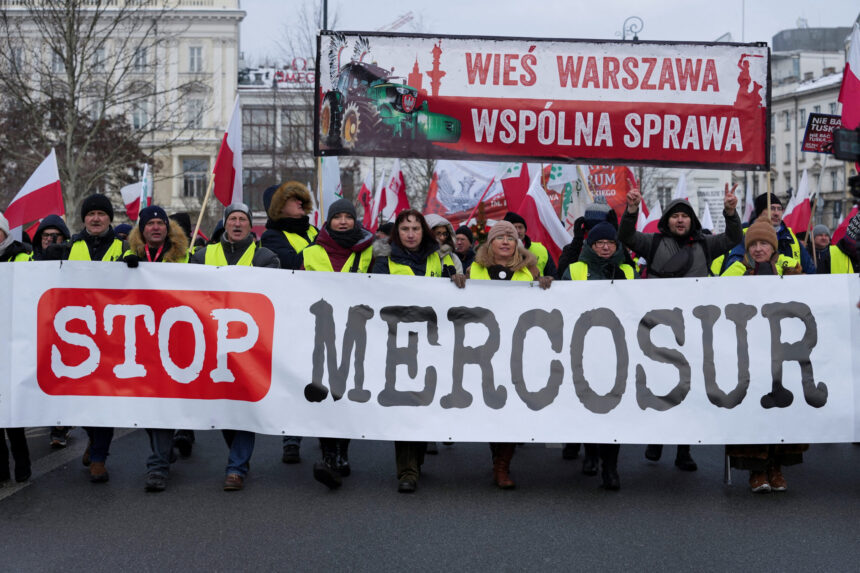
Parliament is urging the Cyprus government and the European Commission to delay the enforcement of the EU-Mercosur deal until the European Court of Justice has rendered its decision on the agreement.
- Parliament is urging the Cyprus government and the European Commission to delay the enforcement of the EU-Mercosur deal until the European Court of Justice has rendered its decision on the agreement.
- A signing ceremony took place on January 17 in Paraguay, but the agreement still requires approval from both the European Parliament and the Mercosur parliaments.
In a resolution passed on Thursday, the House plenum voiced “grave concern” regarding the potential ramifications of the trade deal, particularly for the country’s primary sector. Members highlighted that prior to the Cyprus government’s vote in favour at the EU Council, there was a lack of adequate consultation with stakeholders directly affected by the agreement.
The resolution raised alarms about the possible adverse effects on agricultural production and the income of producers. Lawmakers expressed “serious reservations” about the import of goods produced under environmental, health-related, and work-related standards that do not equate to those in the EU.
Concerns were also raised regarding unfair competition stemming from lower production costs in Mercosur countries. Mercosur, an abbreviation for the Southern Common Market, comprises several South American nations.
On January 9 this year, a qualified majority of EU member states approved the agreement in the EU Council, with a vote tally of 21 in favour against 5 opposed. Austria, France, Hungary, Ireland, and Poland voted against the deal, while Belgium chose to abstain.
A signing ceremony took place on January 17 in Paraguay, but the agreement still requires approval from both the European Parliament and the Mercosur parliaments.
On January 21, the European Parliament narrowly passed a measure requesting the European Court of Justice to clarify whether the free trade agreement between the EU and Mercosur can be enacted prior to full ratification by all member states. Additionally, the court will examine if the agreement’s provisions might restrict the EU’s capacity to establish environmental and consumer health regulations. This legal determination could potentially delay the deal by up to two years.