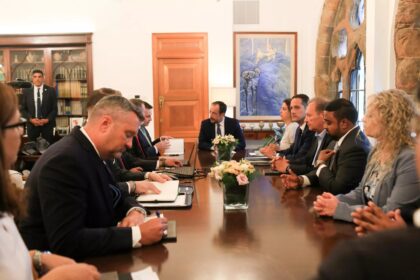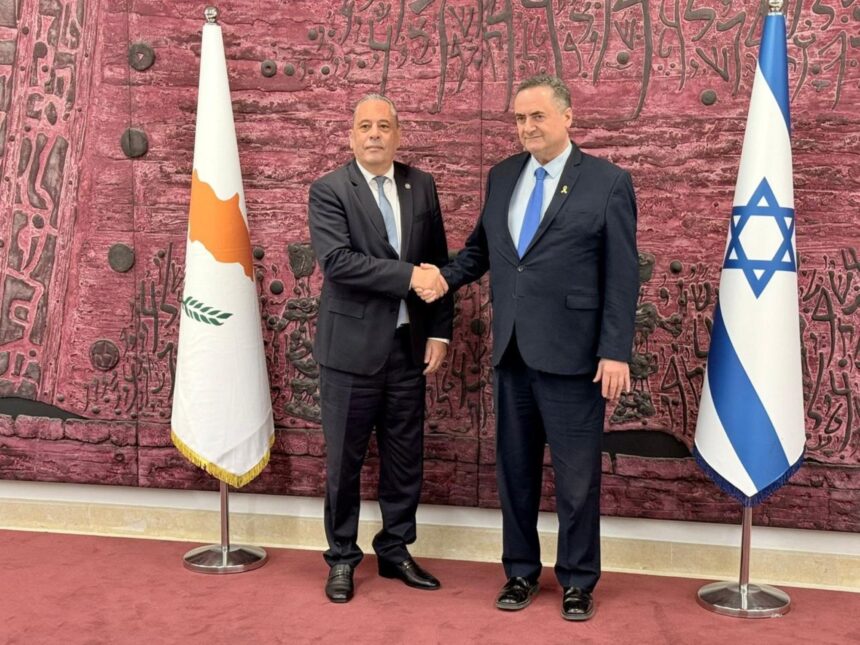
regional security — Regional security is at the forefront of discussions between Cyprus and Israel as Defence Minister Vasilis Palmas embarks on an official visit to strengthen ties and cooperation. The meetings, which took place in Israel, were underscored by a commitment to enhance bilateral relations ahead of Cyprus’s upcoming presidency of the Council of the European Union in the first half of 2026.
Regional security: Strengthening Ties Amidst Regional Challenges
During his discussions with Israeli Defence Minister Israel Katz, Palmas addressed the security dynamics not only affecting Cyprus and Israel but also the broader Eastern Mediterranean and Middle East. The two ministers explored strategies to bolster their nations’ defence and security collaboration, reflecting a mutual understanding of the pressing challenges in the region.
Promoting Stability Through EU Leadership
Palmas articulated that Cyprus intends to leverage its EU presidency to enhance European unity and advocate for strategic stability and cooperation in the eastern Mediterranean. He emphasised the importance of fostering dialogue on shared interests and working collectively towards regional peace and adherence to international law.
Growing Defence Cooperation and Technological Advancements
The partnership between Cyprus and Israel has been on an upward trajectory in recent years, particularly in defence. Cyprus has procured the Barak MX air defence system from Israel, with its components being gradually delivered. This system is expected to be fully operational by the end of the year, marking a significant enhancement in Cyprus’s defensive capabilities.
Visit to the Civil-Military Coordination Centre
Palmas’s itinerary also included a visit to the Civil-Military Coordination Centre (CMCC), located in Kiryat Gat, which serves as a critical hub for military and humanitarian operations supporting the Gaza ceasefire. During this visit, he met with Major General Patrick Frank, the centre’s director, and observed the collaborative efforts involving around 20 countries contributing personnel to the CMCC.
Role of the CMCC in Humanitarian Efforts
Established in October 2025 as part of a peace agreement, the CMCC is tasked with coordinating stabilisation and relief initiatives in the Gaza Strip following conflict. Reports indicate that the centre has grown to accommodate around 600 personnel, which includes contributions from several nations, although specifics regarding the number of Cypriot personnel remain undisclosed.
Implications for Humanitarian Aid Oversight
In recent developments, the CMCC has assumed oversight of humanitarian aid entering Gaza, a shift that has seen Israel’s Coordinator of Government Activities in the Territories taking a secondary role. This integration of authority has raised discussions on the operational dynamics within the region, particularly regarding who ultimately controls the flow of aid and resources.
As Minister Palmas concludes his visit and returns to Cyprus, the discussions initiated in Israel are poised to influence not only the bilateral relationship between Cyprus and Israel but also the broader security and humanitarian landscape in the Eastern Mediterranean.