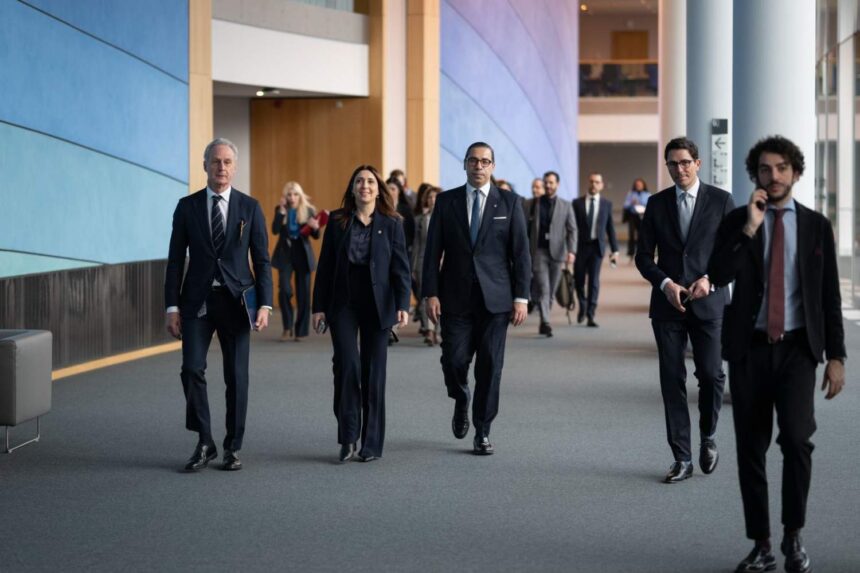
cyprus eu — cyprus eu — Cyprus’s Foreign Minister Konstantinos Kombos has defended the country’s stance on Turkey during a European Parliament hearing, stressing that Cyprus’s EU presidency is not directed against Turkey. Kombos addressed the Foreign Affairs Committee (AFET) on Thursday, affirming that Nicosia does not pursue a policy of exclusion towards Ankara.
- The Cypriot ministers highlighted the importance of constructive dialogue both within the EU and with external partners, as they navigate complex geopolitical landscapes.
Cyprus eu: Clarifying Cyprus’s Position on Turkish Involvement
During the hearing, Kombos faced questions regarding Turkey’s participation in EU defence projects, notably the SAFE initiative, as well as the potential modernisation of the EU-Turkey customs union during Cyprus’s six-month rotating presidency. The discussion underscored the tensions between Cyprus’s position and the desires of some EU member states advocating for increased Turkish involvement in European security frameworks.
Spanish MEP Nacho Sánchez Amor, who serves as the Turkey rapporteur, expressed concerns about the ongoing blockage of Turkish participation in SAFE. Kombos countered these concerns, stating, “This is not a presidency which is directed against Turkey, and is not being used against Turkey.” He highlighted that Cyprus extended public invitations to Turkish leadership for participation in summits, which were ultimately rejected.
Principles of Partnership and Recognition
Kombos reiterated that Cyprus does not aim to exclude Turkey, but rather, he emphasised that “compromises must be made by that country which seeks to be a partner.” He pointed out that Turkey’s policy of non-recognition of the Republic of Cyprus creates barriers to effective partnership. Kombos remarked, “This is not a Europe of 26, this is a Europe of 27,” making it clear that Turkey must acknowledge the Republic of Cyprus as a fundamental principle for any collaboration.
Customs Union and Future Relations
On the subject of the customs union, Kombos referred to the Varhelyi-Borrell report, which outlines the framework for EU-Turkey relations. He stated, “There is no obstruction to Turkey’s participation (in European structures), but there are specific choices that must be made on the basis of principles that apply to all Europeans.” This statement reinforced Cyprus’s commitment to following established protocols and expectations regarding EU membership and partnership.
The Foreign Minister also explained that the SAFE initiative is a legal framework that includes specific requirements for participation, thus necessitating Turkey’s adherence to the established terms. He mentioned that Cyprus’s presidency seeks to promote mutually beneficial relations with Turkey, despite the current tensions.
Addressing Broader Regional Issues
In her opening remarks, Deputy Minister for European Affairs Marilena Raouna echoed Kombos’s sentiments, stating that Turkey remains a candidate country and that the Cyprus presidency does not signify a period of inactivity regarding EU-Turkey relations. She expressed a desire for a “cooperative and mutually beneficial relationship,” emphasising the importance of alignment with EU standards and principles.
Raouna also highlighted the necessity of progress on various fronts, including democracy, rule of law, and fundamental rights, as prerequisites for further engagement with Turkey. She stated, “Enlargement rules apply to everyone, without exceptions,” reinforcing the need for consistency in the Union’s approach to candidate countries.
Dialogue on International Challenges
Questions from committee members also touched on the Cyprus presidency’s approach to international issues, such as tensions with the United States regarding Greenland. Kombos advocated for dialogue, questioning whether the EU can afford isolation, particularly from significant global partners like the US. He asserted, “When things become difficult, then more dialogue is required.”
The Cypriot ministers highlighted the importance of constructive dialogue both within the EU and with external partners, as they navigate complex geopolitical landscapes.
Cyprus’s Role in the Middle East and Beyond
The hearing provided an opportunity for Cyprus to assert its potential role in the broader Middle East region. Kombos discussed the IMEC (India-Middle East-Europe Economic Corridor) and how it could benefit the EU. He stressed that, as Europeans, there should be unity rather than competition, stating, “There should be only one point of entry.”
Additionally, Kombos underscored the importance of strengthening EU relations with the Gulf Cooperation Council, noting Cyprus’s unique position as the only EU member with representation in all Gulf states, which could enhance EU engagement in the region.
Addressing Concerns about Iran
The topic of Iran was also a focal point during the discussion, with MEPs urging the Cyprus presidency to take a firm stance against the Tehran regime, particularly regarding the Revolutionary Guards. Kombos acknowledged the ongoing monitoring of the situation by EU diplomatic missions in Tehran and mentioned that discussions on the matter were scheduled for the following day at the Foreign Affairs Council level.
As Cyprus navigates its presidency, the emphasis remains on fostering dialogue, promoting regional stability, and ensuring that the principles of the EU are upheld in all interactions with Turkey and beyond.