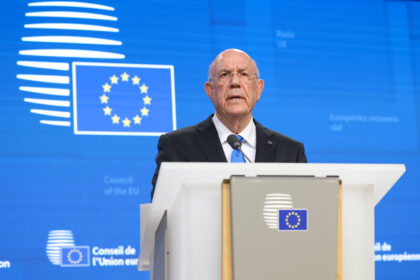
human-centric ai — human-centric ai — Cyprus aims to establish itself as a trusted regional hub for artificial intelligence, focusing on enhancing lives and boosting the economy, while prioritising human judgement and dignity. Chief Scientist for Research, Innovation and Technology, Demetris Skourides, emphasised the need for people to remain in control as the country outlines its National Artificial Intelligence Strategy for 2032.
At the heart of this strategy is a clear message: “AI must serve people. People must remain in control,” said Skourides, who also leads the National AI Taskforce. The initiative seeks to utilise AI to bolster productivity, improve public services, and ensure that technology is trustworthy and well-governed.
Instead of merely focusing on new systems and infrastructure, the strategy prioritises the needs of individuals whose lives could be transformed by AI. Skourides highlighted the potential benefits for diverse groups, including children receiving tailored educational support, older citizens accessing services more easily, and healthcare professionals identifying risks sooner.
Nevertheless, the integration of AI into society brings challenges concerning job security, privacy, and fairness. Skourides acknowledged these concerns, asserting that technology should not replace the essential human relationships found in sectors like healthcare and education. He advocates for transparency, stating that citizens should be informed when AI is in use and have the ability to question decisions that affect them.
The proposed strategy also underscores the importance of education and preparation for the workforce. Skourides warned that simply acquiring new technology will not suffice; people need to be equipped to understand and engage with AI responsibly. Thus, the strategy recommends fostering AI literacy, lifelong learning, and specialised professional training to enable citizens to use AI effectively in their respective fields.
Tailored learning pathways will be developed for various professions, ensuring that individuals in roles such as doctors, teachers, and entrepreneurs can harness AI in ways that enhance their work. Skourides stressed that education must extend beyond traditional schooling to include ongoing opportunities for skill development through workshops, online courses, and workplace training.
The strategy’s commitment to a Human+ workforce envisions a future where technology amplifies human experience, creativity, and judgement. Skourides remarked, “The future does not belong to artificial intelligence alone. It belongs to people who know how to use AI responsibly, confidently, and creatively.”
Among the innovative initiatives is the Socratic AI programme, designed to foster critical thinking and better questioning techniques. This initiative aims to empower students and professionals alike by encouraging curiosity and independent thought. By focusing on enhancing human inquiry rather than merely providing quick answers, the Socratic AI initiative seeks to cultivate a more thoughtful engagement with technology.
Inclusivity is another cornerstone of the strategy, with Skourides asserting that no one should be left behind. The approach must incorporate diverse groups, including students, professionals, and those with limited digital skills. AI holds promise for improving accessibility through tools like voice recognition and translation, but Skourides insists that such solutions should be developed with input from older citizens and persons with disabilities to ensure usability.
Furthermore, the emphasis on human interaction remains paramount. Skourides articulated that digital systems should not exclude individuals who are uncomfortable with technology, and that human assistance must be readily available. The goal is to create a system that enhances choice and independence while safeguarding dignity.
On the international stage, Cyprus seeks to distinguish itself by prioritising trust and responsible innovation over sheer scale in AI development. As a member of the EU, the country is well-positioned to combine robust governance with entrepreneurial spirit and collaboration across various sectors. Skourides noted that the compact size of Cyprus facilitates swift cooperation among institutions, enabling rapid testing and scaling of successful initiatives.
The National AI Taskforce, in collaboration with the Deputy Ministry of Research, Innovation, and Digital Policy, has crafted this strategic vision. Skourides expressed gratitude to all who contributed to the process, including stakeholders and experts who provided valuable insights and experience.
While the strategy sets a proposed direction, it is not yet finalised. Public consultation is open until August 31, 2026, with Skourides inviting participation from all segments of society. Ultimately, the measure of success will not be the quantity of AI systems implemented but rather the tangible improvements in healthcare, education, and public services experienced by citizens.