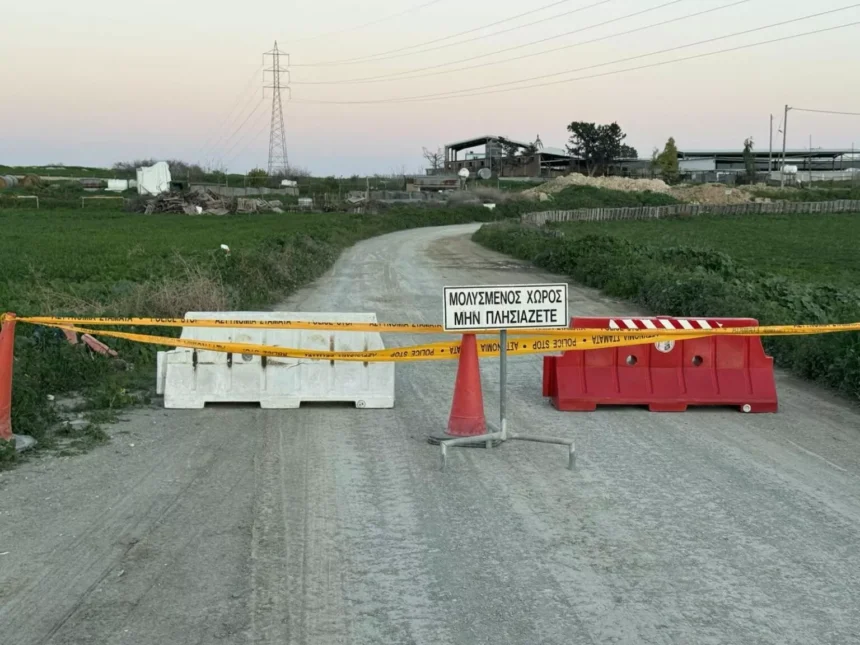
Foot-and-mouth disease has been confirmed at a cattle farm in the Livadia area of Larnaca, prompting emergency protocols from authorities to contain the outbreak.
- Foot-and-mouth disease has been confirmed at a cattle farm in the Livadia area of Larnaca, prompting emergency protocols from authorities to contain the outbreak.
Following a meeting on Friday that included Agriculture Minister Maria Panayiotou and key stakeholders, officials laid out a comprehensive plan to protect the island’s livestock. Veterinary Services confirmed that five animals tested positive for the virus at a farm housing 260 cows.
Christodoulos Pipis, head of Veterinary Services, announced that all 260 animals at the affected farm would be culled starting tomorrow. The disposal of the carcasses will adhere to established safety protocols to mitigate any further risks.
A three-kilometre protection zone has been established around the site, placing 23 livestock premises under strict quarantine. Within this area, the movement of animals and animal products is strictly prohibited without prior approval. Veterinary teams will conduct daily inspections and sampling to monitor any potential spread of the virus.
In response to the outbreak, staff leave at the Veterinary Services has been cancelled. Veterinarians from other districts are being redeployed to Larnaca to assist with tracing efforts and field checks. Additionally, a wider 10-kilometre surveillance zone has been implemented to ensure thorough monitoring.
Pipis reassured the public that the disease poses no threat to human health, emphasising that consuming Cypriot meat or dairy products remains safe. He noted that pasteurisation guarantees the safety of milk and its derivatives, including halloumi.
The department is currently investigating the entry point of the virus into the farm, with some contributing factors possibly beyond their control. While vaccination is a tool available to EU member states, Pipis clarified that it is not currently being considered as the outbreak appears to be confined to a single farm.
Farmers affected by the culling will receive compensation for their lost livestock under the National Action Plan, with payments anticipated within one to two months. The government is also coordinating with the European Commission’s Directorate-General for Health, having previously facilitated the distribution of vaccines to the Turkish Cypriot community following outbreaks in the north.