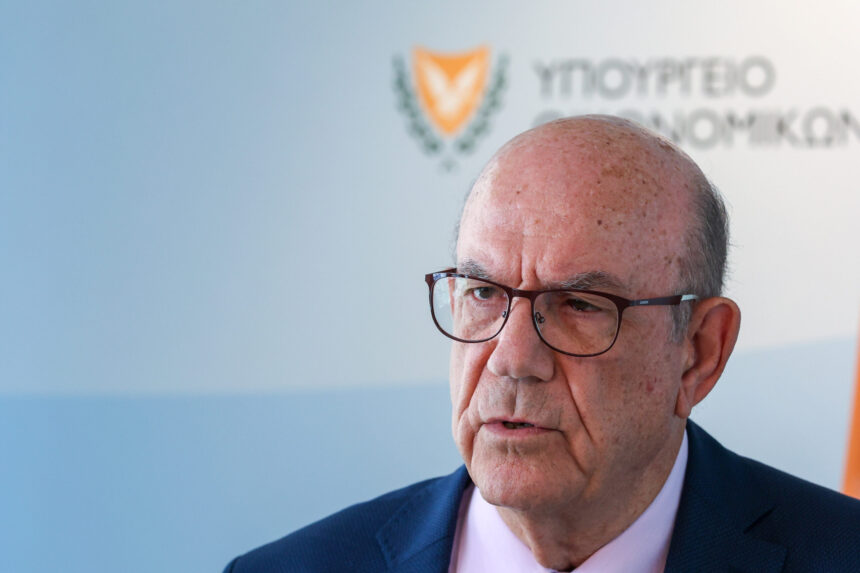
cost-of-living allowance — The ongoing dispute over the cost-of-living allowance (CoLA) is deemed “inconceivable” by Finance Minister Makis Keravnos, who expressed his frustration on Friday regarding the lack of agreement between workers and employers.
Keravnos emphasised the unexpected nature of the stalemate, especially in a country like Cyprus, where inflation has recently been zeroed out, contrasting sharply with the challenges faced by many other nations in the European Union. He urged all parties involved to engage in constructive dialogue, stating, “It is a positive juncture to reach an agreement.”
His comments came shortly after the employers’ and industrialists’ federation (Oev) and the Cyprus chamber of commerce and industry (Keve) revealed that they had received legal advice suggesting that regulating CoLA through legislation in the private sector could be unconstitutional. Legal expert Achilleas Emilianides indicated that any such regulation would conflict with existing agreements that have not been mutually consented to through personal contracts or collective agreements.
Oev and Keve called on the government to adhere to the principles of tripartite cooperation and the industrial relations code established in 1977, reflecting the historical context of workers’ rights and employer obligations.
In the wake of these developments, Andreas Matsas, secretary-general of trade union Sek, highlighted the need for the government to validate its proposal to expand CoLA coverage through legal means. He warned that the current handling of the issue risks destabilising labour relations on the island and called for immediate attention from governmental authorities.
The tension escalated last week when a three-hour general strike brought significant disruption, with public services and transport severely affected. More than 50 flights were cancelled, impacting around 15,000 airline passengers. Trade unionists took to the streets, voicing their demands for the restoration of CoLA in its original form, which they argue is essential for maintaining workers’ purchasing power and upholding living standards.
Peo’s secretary-general, Sotiroula Charalambous, declared that the strike was merely the initial step in a series of actions aimed at achieving a collective and universal agreement on CoLA. The sentiment among workers reflects a deep concern for the preservation of their economic wellbeing amidst rising living costs.
In contrast, earlier this year, former Oev chairman Antonis Antoniou had openly critiqued CoLA, suggesting it “should have disappeared”. He argued for a shift towards modern mechanisms that reflect the changing economic landscape, a viewpoint echoed by Keve’s chairman, Philokypros Rousounides, who described CoLA as an outdated institution needing significant reform.