Bridge is not just a game; it embodies life lessons that resonate with its players in Lefkara. Known primarily for its exquisite lace, the village also has a rich history tied to the card game of Bridge, which was first introduced over a century ago. This intriguing connection highlights the cultural significance of the game, which has flourished on the island of Cyprus.

Photo: cyprus-mail.com
A Historical Introduction to Bridge in Lefkara
Bridge made its debut in Lefkara, a quaint village in the Larnaca district, when lace merchants brought the game from central Europe in the early 20th century. These merchants, who frequented cafes in cities like Paris, Vienna, and Berlin, transformed local ‘kafenedes’ into vibrant social hubs for playing cards. This melding of culture and commerce created a lasting legacy for Bridge in Cyprus.
Memorable Moments from the Past
Demetris Savva, a member of the Bridge club’s committee, recounted a humorous incident from the Second World War era. While engaged in a game at a local kafenio, the merchants were accused of gambling by a police officer responding to a British officer’s report. The case reached court, where a British judge found the situation amusing, ultimately encouraging the players to continue their pastime.
Evolution and Expansion of Bridge
By 1960, Bridge had firmly established itself in Cyprus, becoming part of the International Bridge Federation. The local club expanded from a community gathering to an entity that achieved global recognition, boasting multiple awards. Today, Cyprus is home to six Bridge clubs—two in Nicosia and Limassol, and one each in Lefkara, Larnaca, and Paphos—totaling approximately 270 registered members.
Challenges in Attracting Younger Players
Traditionally, Bridge was a pastime of the upper class, who had the luxury of time to master its complex rules. Despite its accessibility today, the game faces challenges in attracting younger generations. Busy lifestyles, work commitments, and family obligations contribute to a declining interest among youth.
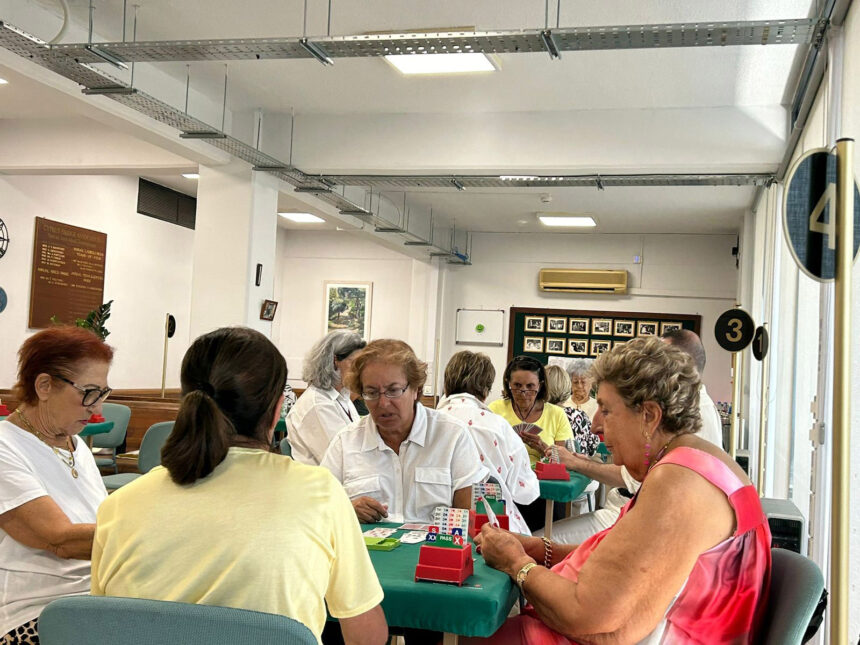
Most current players are seniors, many of whom have dedicated their lives to the game. Angelina Paraliki, the club’s president, noted, “Some of our club members are well into their 80s and 90s but you would never be able to guess that.” Research suggests that engaging in Bridge can significantly reduce the risk of dementia, making it not only a social activity but a beneficial mental exercise.
A Welcoming Atmosphere at the Bridge Club
The Bridge Club exudes a warm, inviting atmosphere, akin to visiting a relative’s home. Walls adorned with hand-drawn cartoons and leaderboards dating back to 1978 reflect the club’s rich history. Players gather before games to exchange family news and reconnect, solidifying the community aspect of the club.
Once the games commence, however, the mood shifts dramatically. “It’s very competitive. There is a director who’s in charge of the game, and everybody must follow their instructions. Silence is golden. If people misbehave, they can get penalised,” Paraliki explained. This balance of camaraderie and competition is what makes Bridge unique.
The Global Recognition of Bridge
Internationally, Bridge is lauded for its ability to promote teamwork and cognitive development, yet this doesn’t entirely translate within Cyprus. “Bringing younger people into the mind sport is so important,” stressed Paraliki. “We’re committed to ensuring the longevity of this game.”
Efforts to Revitalise Interest
To sustain the club’s legacy, efforts are underway to introduce Bridge to a broader audience. Club members have reached out to 20 embassies, the education ministry, and various federations, yet faced hurdles in gaining traction. The stigma associated with card games linked to gambling has been a significant barrier to attracting newcomers.
In an effort to modernise, the club is expanding its social media presence. “We are going to create a Facebook group, as we are very happy to give a series of Bridge lessons to newcomers,” Paraliki stated. This approach aims to draw in those who may not have previously considered joining.
The Importance of Community
Annita, a devoted player, highlighted the community aspect of Bridge: “For me, this is a community, not just a pastime.” Many players have forged deep connections through the years, reinforcing the notion that Bridge is more than just a game; it’s a significant part of their lives.
A more experienced player remarked on the complexity of Bridge, stating, “The rules are a very small part of the game; we’re talking statistics, arithmetic, logic, and countless possibilities. It’s a lesson, not just a game.”
Bridge as a Lifelong Pursuit
Errikos Leonidou, a long-time player and teacher, encapsulated the essence of Bridge beautifully: “For the last 20 years, since I retired, Bridge has been my life, I’m involved every day; it’s a way of keeping alive.” This sentiment is shared among many players, who view Bridge as a lifelong journey filled with learning and camaraderie.