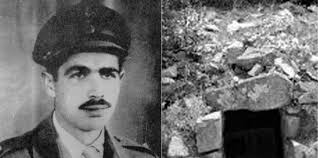
grigoris afxentiou — The ongoing party clash over comments regarding the sacrifice of Grigoris Afxentiou reflects deep political divisions in Cyprus. The controversy ignited following a podcast featuring MEP Fidias Panayiotou, who suggested that Afxentiou, a prominent EOKA figure, either committed suicide or was executed by a fellow fighter. This interpretation has drawn sharp criticism from various political factions.
In response to Panayiotou’s remarks, EDEK has called for his resignation, labelling him “dangerous for Cyprus, its people, and the cause of Cyprus.” DIPA joined the fray, vehemently opposing any distortion of Afxentiou’s historical sacrifice, firmly asserting his legacy as a symbol of self-denial and heroism during the anti-colonial struggle.
Amid the uproar, President Nikos Christodoulides took to social media, sharing a photo of Afxentiou’s wanted poster accompanied by the hero’s poignant declaration: “In my last hour, I will fight and die like a Greek, but they will not take me alive.” This gesture underscored the significance of Afxentiou’s sacrifice in the national consciousness.
Other parties have expressed their outrage. DISY condemned Panayiotou’s claims as an insult to Afxentiou’s sacrifice. They asserted that the narrative cannot be altered by political desires, emphasising that Afxentiou remains an eternal beacon of virtue and militancy. Meanwhile, DIKO reiterated that the sacrifices made by heroes like Afxentiou should not be embroiled in political squabbles.
ELAM also weighed in, accusing those questioning Afxentiou’s legacy of attempting to undermine the heroes of Cypriot Hellenism. They argued that such comments only serve to provoke laughter while reminding the public of the enduring honour owed to the nation’s heroes.
On the other hand, AKEL defended the historical context provided by journalist-historian Michalis Michael during the podcast, highlighting Afxentiou as an unparalleled symbol of sacrifice. They argued that critics are misrepresenting the discussion to fuel political agendas. In a pointed remark, they noted that the AKEL newspaper was the only publication to refuse to publish Afxentiou’s wanted notice during his time, underscoring their complex relationship with the historical narrative.
DISY responded to AKEL’s defence, accusing them of aligning with a narrative that diminishes Afxentiou’s sacrifice. They reiterated that the actions of Afxentiou were heroic and that any attempts to question them are unwarranted. The dialogue surrounding this issue reveals not only differing perspectives on historical events but also the enduring impact of these narratives on contemporary politics in Cyprus.