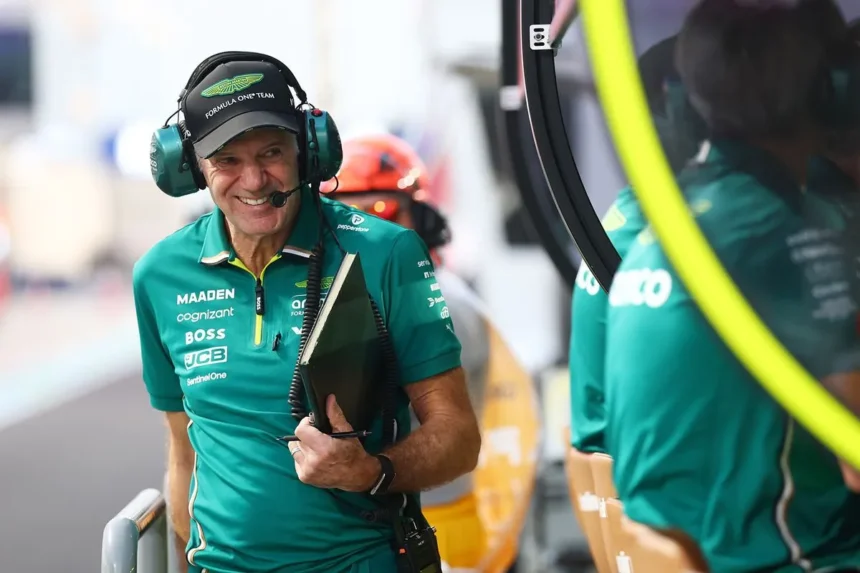
The Aston Martin F1 team is navigating through unexpected challenges as they work on the AMR26, with Adrian Newey at the helm. Since joining the team last April, Newey has been pivotal in shaping the new car, which integrates Honda’s latest power unit, marking the manufacturer’s return to Formula 1.
A New Era for Aston Martin
Newey’s reputation for identifying loopholes and advantages at the onset of a new technical regulation cycle is well established. This season’s regulations have pushed him to the limits of design innovation, aiming to unlock additional performance. However, this bold approach has led to significant hurdles during the development phase of the AMR26, forcing the team to reassess its fundamental design philosophy.
Challenges in Development
In a surprising twist, Newey discovered that neither wind tunnel data nor computer simulations were reliable. This revelation prompted a complete recalibration of the wind tunnel and a rewrite of the specialised simulation software over the summer. Consequently, the design timeline was adjusted, yet the overall programme did not suffer any substantial delays.
The updated simulations, now supported by more reliable computational tools, unveiled weaknesses in the initial AMR26 design. Under Newey’s direct supervision, further changes were made, leading to the final approval of several components later than initially planned. Historically, Newey has been known for locking in the final design of the next season’s car at the last moment, ensuring a thorough analysis of developments throughout the season.
Innovative Design Philosophy
Newey’s approach with the AMR26 is set to function as a ‘moving laboratory’ for development, contrasting with the static designs of rival teams. The car is expected to reach its final form by the August break, providing a solid foundation for the 2027 model. Despite the constraints imposed by budget limits, the development plan appears to hinge on clearly defined objectives. Some upgrades will focus on optimising internal aerodynamics and the layout of the power unit, which is critical in the early design stages for both reliability and a deeper evolutionary step in the car’s overall philosophy.
Learning from the Past
Newey’s previous experiences, notably the bold incorporation of KERS, highlight his tendency to integrate various components as key elements of the overall design. The close partnership between Aston Martin and Honda underpins Newey’s choices, with other developments aimed exclusively at enhancing aerodynamic performance. These two directions are projected to merge into a technical advantage that, according to Newey’s philosophy, rivals will find challenging to replicate throughout the season.
Honda’s Candid Acknowledgement
Honda Racing’s president, Koji Watanabe, recently acknowledged that the Japanese firm’s development of the power unit has faced setbacks, admitting that