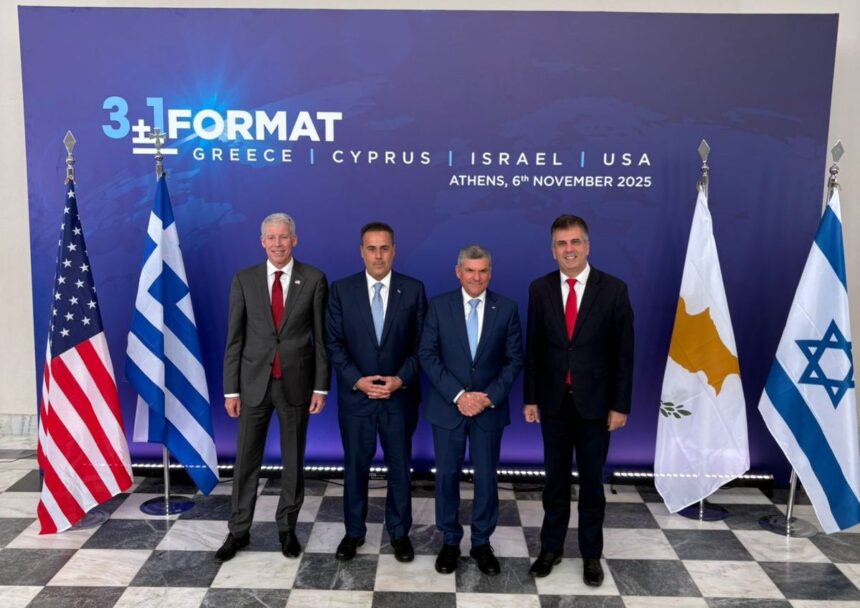
zero supply — The recent ‘3+1’ meeting of energy ministers from Cyprus, Greece, Israel, and the United States focused on the US interest in achieving zero supply of Russian gas to Europe. Cypriot Energy Minister George Papanastasiou shared insights about this discussion on Sunday, emphasising the importance of diversifying energy sources.
Zero supply: Shifting Energy Dynamics
Papanastasiou explained that the goal is to replace Russian gas with alternatives, particularly natural gas sourced from the United States and the eastern Mediterranean region. “This is why the Republic of Cyprus’ deposits may constitute a complementary quantity to the large quantities it wants to fill this corridor, and also to Israel,” he stated.
Strategic Export Plans
The minister highlighted that the US aims to facilitate the export of natural gas to Europe from the eastern Mediterranean through the Greek port of Alexandroupoli. The collaborative effort involves the US, Cyprus, and Israel, all working towards halting the flow of gas from Russia to the European market.
Cyprus’ Natural Gas Deposits
Significant natural gas deposits exist under the seabed of Cyprus’ maritime exclusive economic zone (EEZ). Agreements have already been established regarding the Kronos gas field in Block 12 of Cyprus’ EEZ, allowing for the transportation of gas to the Segas LNG terminal in Damietta, Egypt.
Infrastructure Development
Papanastasiou noted that preparations for the necessary infrastructure to connect the Kronos field to Egypt’s nearby Zohr gas field have commenced. This connection will enable the transfer of Cypriot gas for liquefaction in Damietta. He remarked, “Kronos is a cross-border project, which has several challenges, but the existence of the infrastructure very close to Kronos makes these challenges more manageable.”
Upcoming Agreements
In the coming weeks, a crucial agreement regarding the Kronos project is expected to be signed by the Cypriot government along with a consortium including French multinational Total and Italian energy company Eni. This agreement is deemed essential for advancing the project and ensuring the gas is effectively transported.
Further Developments on Aphrodite Field
Papanastasiou also mentioned the Aphrodite gas field located in Block 12, indicating that a techno-economic study is in progress and will be submitted by the end of next year. Following this, a final investment decision will be made to facilitate the export of gas from the Aphrodite field to Damietta.
Pipeline Initiatives
Seabed surveys aimed at identifying a sinking point for a pipeline transporting natural gas from Cyprus’ EEZ to Egypt began in June. The primary goal is to channel gas from the Aphrodite field to Damietta for liquefaction.
International Collaborations
This initiative follows a significant agreement signed by the governments of Cyprus and Egypt, along with American corporation Chevron, Israeli company NewMed Energy, and the BG Group, owned by Royal Dutch Shell. This agreement lays the groundwork for the effective commercialisation of gas from the Aphrodite field, cementing international cooperation in the energy sector.
Future Prospects for European Gas Supply
In September, an announcement from the Egyptian government indicated plans for exporting natural gas from Cyprus’ EEZ to Europe via Egypt by 2027. This timeline aligns with the broader strategy to decrease dependency on Russian gas and enhance energy security in Europe.
Regional Energy Security
The discussions during the ‘3+1’ meeting underscore a pivotal shift in energy supply dynamics, reflecting a collective effort to bolster energy independence for Europe. By diversifying energy sources and fostering regional cooperation, the involved nations aim to mitigate the risks associated with reliance on Russian gas.