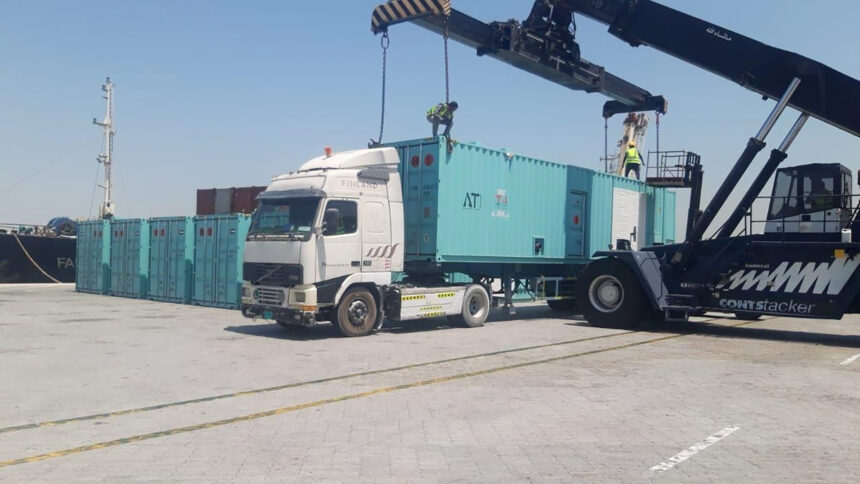
A total of 12 mobile desalination units imported from the United Arab Emirates are now in operation, with a new unit set to join them shortly, and plans for additional imports next year, according to the Water Development Department. This initiative consistently addresses water scarcity in the Republic of Cyprus.
Progress in Combating Water Scarcity in Cyprus
The implementation of measures to mitigate water shortages is moving forward at a rapid pace. The newly arrived units are expected to “strengthen the balance of Cyprus’ water supply and address the effects of the prolonged drought.” This is particularly crucial for communities struggling with limited water resources.
Mobile desalination units have already been put into operation, contributing to increased water availability, reducing network losses, and limiting waste—all while maintaining the local population’s quality of life. Among the initiatives is a unit installed in Kissonerga, Paphos, which is already producing 1,000 cubic metres of water daily. Plans are in place for a second unit to produce an additional 1,000 cubic metres per day within days.
By the end of September, the Department aims to add a further 5,000 cubic metres of daily capacity. At the Moni power station in Limassol, desalination units from the UAE are now producing 15,000 cubic metres of water each day, marking a significant advance in the country’s water management strategies.
A Comprehensive Strategy for Water Supply
Beyond the importation and installation of these desalination units, the Water Development Department is actively engaging in various interventions designed to strengthen the water supply across the island. Among these efforts are the drilling of new boreholes and projects to minimise the loss of water within the network. These initiatives are currently costing the government €10.5 million and are being undertaken with the help of local district governments.
The first mobile desalination unit from the UAE began operations last month. The acting director of the Water Development Department, George Kazantzis, characterised the installation process as “extremely complex” and accomplished within a constrained timeline. Any excess water generated will be routed to other districts, including Nicosia, Larnaca, and Famagusta, which presently rely on water from the Kouris reservoir. Kazantzis expressed hope that this strategy could reduce water supply drawn from the reservoir to these districts, allowing for greater reserves in Limassol.
Government Assurance Amid Concerns
The arrival of the desalination units was unveiled by President Nikos Christodoulides in April, with government spokesman Konstantinos Letymbiotis assuring that “there will be no risk” of water shortages in Cyprus this summer because of the installations. Christodoulides further highlighted that the units will be provided “free of charge,” illustrating the significance of international relations within Cyprus’ broader foreign policy context.
Despite these assurances, some experts have voiced dissatisfaction with the government’s approach to resolving Cyprus’ pressing water issues. Coastal engineer Xenia Loizidou has labelled the government’s plan to import mobile desalination plants as an “incoherent panic solution.” While acknowledging that these units do indeed offer a temporary fix, she stresses that a comprehensive approach requires infrastructure investment and improved management of water resources.
Loizidou advocates for eliminating water-intensive features such as lawns and golf courses, alongside cultivating crop varieties that require less water. “If, due to two incidents—Mavrokolympos and Kouklia—the entire state planning collapses, it indicates that we lack a robust defence mechanism, and this water policy has fundamentally failed over time,” she remarked, referring to the challenges posed by reservoir draining and a recent fire at a desalination plant in Kouklia.
This ongoing conversation about water management highlights the necessity for a balanced and strategic approach to addressing the water needs of all regions across the Republic of Cyprus. As the efforts to implement mobile desalination units continue, the path forward will depend on both immediate actions and long-term planning. Only through coordinated efforts and innovative solutions can Cyprus hope to secure a sustainable water supply amidst the challenges posed by climate change and growing demand.