Britain has not ruled out joining US and Israeli strikes on Iranian ballistic missile launch sites, according to western officials. This comes as American heavy bombers are en route to UK bases to prepare for potential attacks on Iran’s underground missile stockpiles, as reported by The Guardian.
In a recent briefing, a western official remarked, “I wouldn’t rule anything out at all because we just don’t know what will happen day to day, week to week as this progresses.” This statement underscores the evolving nature of the situation and Britain’s position within it.
American Air Force B-2 and B-52 bombers, equipped with bunker-buster munitions, are expected to arrive soon at Diego Garcia in the Chagos Islands and RAF Fairford in Gloucestershire. From these bases, they are poised to target Iran’s buried missile facilities, which are believed to pose an ongoing threat.
Officials have indicated that any air operations may necessitate active Royal Air Force (RAF) support beyond merely providing the bases. There are concerns regarding Iran’s remaining ballistic missile stockpile, with estimates suggesting that it retains several days’ worth at its current launch rates. However, continued US-Israeli strikes might impair Iran’s capacity to sustain these launches.
The situation is further complicated by the challenges faced by Gulf states and regional allies, who have already expended a considerable number of Patriot air defence interceptors. “That’s why it is so important to speed up the rate at which those launches and launch sites are being targeted and destroyed,” one official stated, highlighting the urgency of the military operations.
Initially, Britain refrained from participating in the US-Israeli bombing campaign, which escalated on Saturday with the assassination of Iran’s Supreme Leader, Ali Khamenei. However, Prime Minister Keir Starmer shifted Britain’s stance on Sunday night, authorising the use of UK bases for missions aimed at Iranian missile storage depots and launch sites. Starmer characterised this decision as serving a “specific and limited defensive purpose.” This move indicates a significant shift in the UK’s military posture towards Iran.
As tensions continue to escalate, HMS Dragon, the Royal Navy’s Type 45 destroyer, is set to be deployed to Cyprus to bolster the UK’s military presence in the region. Currently docked in Portsmouth for weapons loading following maintenance, the destroyer is expected to set sail next week. The journey to Cyprus, anticipated to take five to seven days, means HMS Dragon may not arrive until late next week, nearly two weeks after RAF Akrotiri first came under attack.
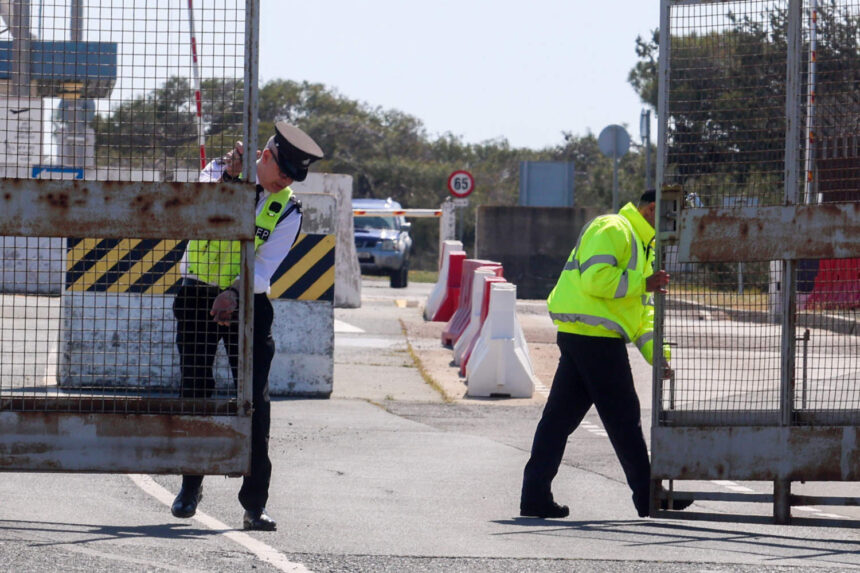
On Monday, a Shahed-type drone breached air defences at RAF Akrotiri, causing minor damage when it struck the runway, despite the presence of counter-drone units. Two additional drones were intercepted later that day, escalating concerns regarding the security of UK airbases in the area. Cypriot officials have suggested that the drone was launched from a Hezbollah-controlled area of Lebanon, although this has not been confirmed by the British Ministry of Defence, which has ruled out a direct launch from Iran.