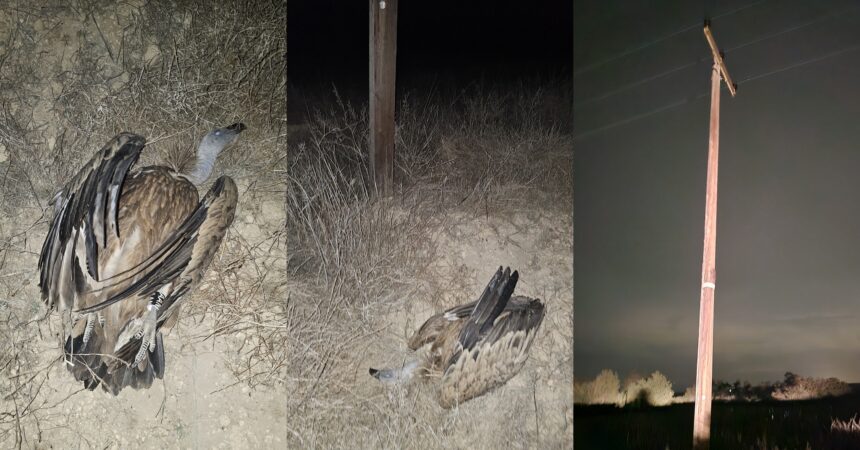
A Griffon Vulture has been fatally electrocuted on an uninsulated power pole less than a day after its release, conservationists confirmed on Monday. This unfortunate incident highlights the ongoing threats faced by vultures in Cyprus, particularly from human-made hazards.

Photo: cyprus-mail.com
Originally transferred from Spain, the vulture had spent six months recovering at the Wildlife Rescue and Care Center in Vounos. It was found in the Varos area suffering from severe weakness and dehydration, prompting an extensive rehabilitation process.
Following six weeks of care, the bird was fitted with a GPS transmitter and deemed healthy enough for release on Thursday. Tragically, by Friday, it had travelled approximately 40 kilometres in search of its flock when it landed on an 11,000-volt power pole, which proved fatal.
Power poles pose a significant threat to large birds like vultures, as their flight patterns often intersect with these hazardous structures. The Cyprus Wildlife Research Institute has raised alarms about the dangers posed by such uninsulated poles, calling attention to the broader implications for the species’ survival in the region.
In a poignant statement, the institute expressed sorrow over the incident, reflecting on the fragility of the vulture population on the island. “We are deeply sorry again, young vulture. Despite all our efforts, we couldn’t protect you,” they remarked. This tragedy forces a critical reflection on the sustainability of current practices and the urgent need for change.
This incident is not isolated. BirdLife Cyprus has labelled the uninsulated power poles as a “serial killer of vultures,” citing multiple previous cases of electrocution. In May 2024, two other Griffon vultures met similar fates on EAC poles, underscoring a troubling trend that has persisted over the years.
Statistics reveal that between 1996 and 2023, electrocution or collision was responsible for a significant number of vulture deaths, with recent tracking indicating that nine out of 46 deaths were directly linked to electrocution. Despite the alarming data and €150,000 allocated for insulation and line-marking of high-risk poles, progress on these safety measures remains alarmingly slow.
Despite having signed a cooperation agreement with BirdLife Cyprus in November 2025 aimed at addressing these issues, conservation groups remain frustrated by the delays and lack of action from the Electricity Authority of Cyprus (EAC). Dangerous poles previously identified as high-risk for vultures and eagles still lack the necessary insulation, leaving these magnificent birds vulnerable.