education agenda — Cyprus will pursue a balanced and forward-looking education agenda during its EU presidency in the first half of 2026, according to Education Minister Athena Michaelides. This initiative aims to strengthen the foundations of a resilient, cohesive, competitive, and innovative Europe.
In her remarks, Michaelides emphasised that younger generations are confronting unprecedented challenges, ranging from technological acceleration and climate disruption to social fragmentation and complex geopolitical realities.
She stated, “Cyprus’ policy regarding education must not be left on paper, but materialise into specific actions to the benefit of students across Europe.” This sentiment reflects a commitment to ensuring that educational strategies translate into tangible benefits for learners.
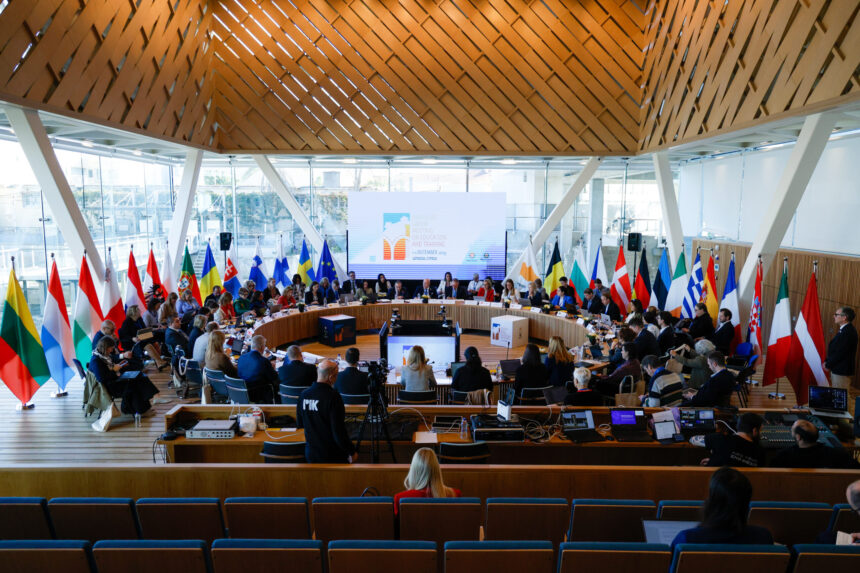
During a high-level meeting in Nicosia focused on education and training, Michaelides outlined key priorities for Cyprus’ presidency. These include promoting negotiations on the Erasmus+ regulation with a focus on accessibility and integration, enhancing teaching methodologies for the AI era, modernising vocational training, and renewing commitments to mobility in tertiary education.
“It is our collective duty to make sure that students receive not only high-quality education but also values, direction, confidence, and hope,” she asserted. This responsibility, according to the minister, extends to governments, foundations, educators, researchers, and communities alike.
Highlighting the unique context of Nicosia, which remains divided due to Turkish occupation, Michaelides pointed out that the city exemplifies resilience and creativity. It serves as a reminder that transformation is always possible, even in challenging circumstances.
Giorgos Panteli, the permanent secretary of the education ministry, further elaborated on Cyprus’ educational priorities, noting their alignment with the broader EU agenda to prepare citizens for future challenges and opportunities. He mentioned that Cyprus will host a series of meetings and events centred around careers, skills, and sustainable development.
Contributions from international representatives at the meeting reinforced the importance of the agenda. Marie Juel Bech Nielsen, a senior official from the Danish education ministry, shared insights from the Danish presidency, while Antoaneta Angelova-Krasteva, head of innovation, digital education, and international cooperation at the European Commission, emphasised the need to cultivate skills in STEM education and AI.
Nicosia’s mayor, Charalambos Prountzos, remarked on the usefulness of these meetings for drafting policies and strategies that secure high-quality education, lifelong learning, and professional advancement for all. He noted that Nicosia is home to most of the country’s universities, accommodating about 50,000 students.