earthquake response — Cyprus is set to acquire new tools aimed at improving earthquake response through the procurement of specialised rescue vehicles, coordination vehicles, and expert equipment. With funding of €2.5 million secured from the cross-border project “Epicentres,” Cyprus aims to enhance its immediate mobilisation and intervention capabilities during seismic events.
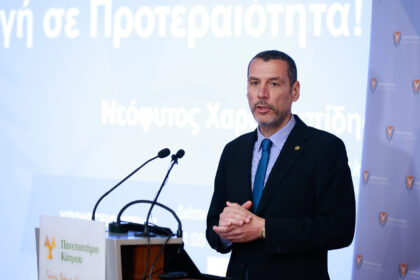
Justice Minister Marios Hartsiotis confirmed that this initiative is part of the Interreg VI-A Greece-Cyprus 2021-2027 Programme, which is supported by the European Regional Development Fund (ERDF). This project not only focuses on disaster risk prevention but also addresses climate change adaptation.
Earthquake response: Strengthening Operational Capacity
As part of the project, the Civil Defence Force will acquire a dedicated coordination vehicle, designed to function as a mobile command centre. This vehicle will be equipped with modern systems that ensure operational support, even in scenarios where telecommunications infrastructure has collapsed.
Interior Ministry Director-General Elikkos Elia emphasised the importance of both equipment and training in enhancing disaster response. The project will include three specialised workshops centred around seismic disaster management, promoting knowledge exchange between Cyprus and Greece.
Training for Effective Crisis Management
Initial training will be provided to staff from the Cyprus and Greek Fire Services, who will subsequently serve as trainers for future programmes in Cyprus and Crete. Elia highlighted that this training is crucial for the Civil Defence, as it improves coordination, enhances skills such as rubble rescue and first aid, and ultimately reduces response times. He also noted that bolstering the psychological resilience of personnel is vital in saving lives during the critical hours following a destructive earthquake.
Acknowledging the Seismic Threat
Justice Minister Hartsiotis pointed out the necessity of the project, noting that Cyprus, situated in one of Europe’s most seismically active regions, has experienced a series of intense earthquakes recently. Thankfully, these incidents did not result in significant damage, but they underscore the importance of preparedness and effective crisis management.
Fire Service Chief Nikos Longinos added that the project not only enhances local operational capacity but also strengthens joint cross-border readiness. The high seismicity and frequent environmental changes in the Eastern Mediterranean necessitate continuous adaptation from emergency services.
Collaboration Across Borders
The announcement of the “Epicentres” programme saw attendance from notable figures, including the Chief of the Greek Fire Service, Theodoros Vagias, along with representatives from Crete and Syros. This collaboration highlights a united effort to tackle the challenges posed by natural disasters in the region.