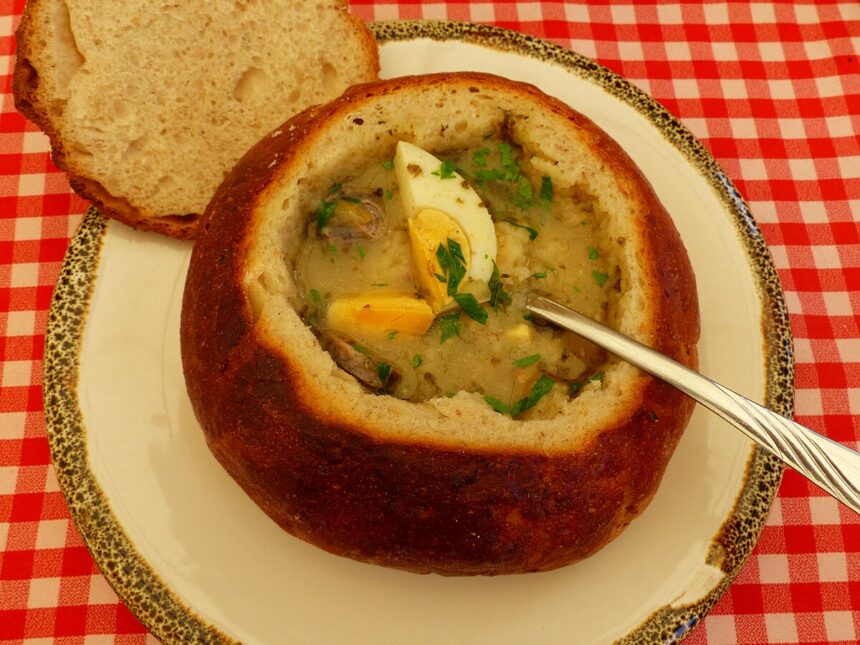
żurek — Żurek, Poland’s beloved sour rye soup, has a captivating history that intertwines with the nation’s cultural tapestry. Dating back to the Middle Ages, this hearty dish originated among the peasantry, evolving over centuries into a cherished staple across social classes.
żurek: The Origins of Żurek
Initially crafted from simple, accessible ingredients such as fermented rye flour, water, and root vegetables, Żurek’s distinctive sour taste emerges from the traditional slow fermentation process of rye flour. This method not only infuses the soup with a unique aroma but also provides a comforting and nourishing option for rural communities enduring harsh winters with limited resources.
A Culinary Staple Through the Ages
As the centuries progressed, Żurek transcended its humble beginnings to become a culinary emblem of Polish culture. It gained particular significance during Lent, when many abstain from meat. The soup’s substantial nature made it a fulfilling option during these periods of fasting. Beyond its role in religious observances, Żurek frequently graces tables during weddings, holidays, and festive gatherings, often adorned with toppings that add depth to its rustic flavour.
- Popular Toppings: Smoked sausage, bacon, mushrooms, and hard-boiled eggs.
- Regional Variations: Some recipes incorporate broad beans, split peas, or even herring, reflecting local ingredients.
The Evolution of Preparation Techniques
While the methods for preparing Żurek have evolved, the essence of the dish remains intact. Traditionally, the fermented rye starter, known as zakwas, was prepared several days in advance, often coinciding with the baking of rye bread. In modern kitchens, home cooks can find convenient, ready-made starters that preserve the age-old tradition.
The broth can be made from either vegetable or meat stock, with classic seasonings like garlic, marjoram, and horseradish enhancing its robust flavour profile. The result is a thick, creamy soup with a slightly milky tang, often served in a crusty bread bowl, elevating the dining experience.
Seasonal Significance and Symbolism
Žurek is especially associated with Easter in Poland, forming an integral part of the festive breakfast that marks the end of Lent. Its rich and warming qualities symbolise renewal and nourishment, perfectly aligning with the arrival of spring. However, it is a dish that is cherished throughout the year, particularly in colder months when its comforting properties are most appreciated.
Żurek Beyond Poland: A Taste of Home in Cyprus
In Cyprus, a vibrant Polish community has emerged, where Żurek holds a special place as a connection to homeland traditions. Although rye flour is less prevalent in Cyprus, locals often adapt the soup using fresh ingredients such as eggs, mushrooms, and seasonal root vegetables. This fusion not only pays homage to Polish heritage but also embraces the local culinary landscape.
The communal aspect of sharing a bowl of Żurek resonates with Cyprus’ rich cultural emphasis on family and togetherness. By integrating local produce, the dish evolves while maintaining its heart and soul, showcasing the adaptability of traditional recipes across borders.
The Enduring Appeal of Żurek
The charm of Żurek lies in its hearty simplicity, coupled with an ancient fermentation technique that has stood the test of time. It is a dish that brings people together, fostering connections and creating lasting memories over a warm, nourishing bowl. As it continues to inspire both in Poland and abroad, Żurek remains a testament to the rich, evolving story of food and community.
Whether enjoyed during festive occasions or as a comforting meal on a chilly evening, Żurek embodies the essence of Polish culinary heritage. Its journey from peasant fare to a beloved national dish highlights the power of food in bridging cultural divides and celebrating shared traditions.