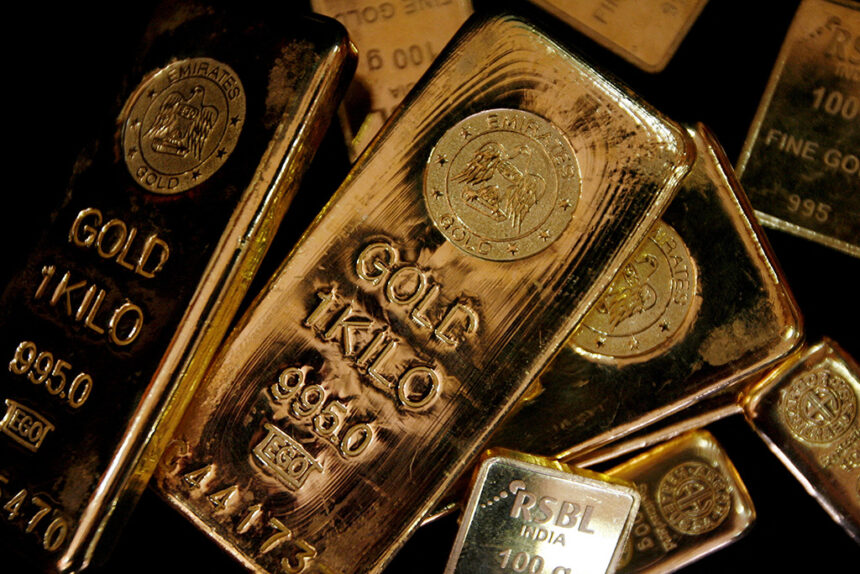
Cyprus is witnessing a remarkable surge in the allure of gold, with prices reaching unprecedented heights. Currently, the cost of gold hovers around €115 to €120 per gram, marking a significant increase from just a decade ago when it was approximately €30, according to Nicosia jeweller Aris Tsiropoulos.

Photo: cyprus-mail.com
As we delve into the past 110 years, it is evident that these are historic times for gold prices, which have recently broken records. A notable spike occurred in January 1980 due to the oil crisis, but this has been surpassed as of October 2024, indicating a continuing upward trend.
Investment strategies have also shifted dramatically. Stefan Nolte, founder and managing director of Shanda Consult, shared insights on large fund allocations. Five years ago, the recommended allocation for physical gold was merely five per cent. Today, that figure has escalated to 30 per cent, reflecting a growing confidence in gold as a stable investment.
This increased interest is not limited to institutional investors. Nolte noted a significant rise in enquiries at his firm regarding gold and silver purchases. However, most of these requests involve smaller amounts, such as 100 grams or one kilo, highlighting a grassroots movement towards gold investment.
Interestingly, the demand for gold jewellery in Cyprus seems to be driven primarily by non-Cypriots, particularly individuals from economically unstable regions. Tsiropoulos points out that many Lebanese customers are converting their cash into gold as a safeguard against their country’s hyperinflation. In contrast, local Cypriots often prefer investing in real estate rather than precious metals, viewing gold primarily as a gift for special occasions.
Local jewellers are experiencing a mixed impact from the gold boom, facing challenges as the prices of precious stones also rise. Tsiropoulos has noted that while his prices have increased, the average spending among customers has decreased, prompting some to opt for nine-carat gold or even silver wedding rings.
On the other side of the gold market, Soteris Eliades, co-owner of Elite Gold Refiners in Nicosia, has seen a surge in customers looking to sell heirlooms and jewellery, a trend that aligns with rising gold prices. Eliades emphasised the importance of ensuring the legitimacy of items being sold, stating, “You can kind of judge by the person,” after a decade in the business. While shops that buy gold have proliferated since the economic downturn in 2013, the number of gold-related crimes in Cyprus has remained stable, suggesting a trustworthy marketplace.
Investment gold is another aspect of this burgeoning market. At KDG Gold & Silver Coin Shop in Paphos, CEO Dmitry Kalinichenko reported a doubling of clients over the past two years. Investment gold is particularly appealing as it is exempt from VAT and viewed as a long-term preservation of wealth. Kalinichenko highlighted that some clients make regular purchases, while others invest substantial sums in a single transaction.
This growing interest in gold may also be influenced by global economic conditions. Nolte pointed out that many central banks have increased their physical gold holdings, while Cyprus’s central bank has slightly reduced its own. Despite this, the rising gold prices have still resulted in an unrealised gain of €286.5 million for the central bank, as per their financial statements.
While Cypriots may still favour real estate, the current instability in global markets and the increasing debt burden associated with the euro are fuelling concerns. Tsiropoulos suggested that the fear of a potential economic crisis is driving people towards gold as a more liquid and accessible asset compared to property, which can be cumbersome to sell in times of need.
Looking ahead, experts anticipate a possible correction in gold prices, with some predicting a decline of 10-15 per cent before stabilising. However, even if prices settle around €100, this would still represent a tripling of the value from a decade ago. As long as demand continues to outpace supply, the gold rush in Cyprus is likely to remain a significant feature of the economic landscape.