The Cyprus Institute of Neurology and Genetics (CING) has initiated a groundbreaking gene therapy project aimed at addressing the root cause of thalassemia, specifically beta-thalassemia, the most prevalent inherited blood disorder in Cyprus.
Thalassemia: Project Overview and Goals
The new initiative, named BETA-BET: Targeted Base Editing for Beta Thalassemia, is spearheaded by the Molecular Genetics Thalassaemia Department (MGTD). This two-year project, which commenced on June 1, 2025, is backed by a substantial budget of €198.83 million. Funding sources include the Research and Innovation Foundation (RIF), the European Union, and the Republic of Cyprus.
Addressing the Genetic Basis
Beta-thalassemia arises from mutations in the β-globin gene (HBB), which is essential for the production of haemoglobin—the protein responsible for oxygen transport in blood. Patients suffering from this condition often depend on lifelong blood transfusions to manage severe anaemia caused by insufficient effective red blood cell production.
Building on Previous Research
This new project builds on the findings of a prior RIF-funded study conducted in collaboration with George Papanikolaou Hospital, Aristotle University of Thessaloniki, and the University of Freiburg. That research successfully evaluated gene-editing tools in stem cells from individuals with homozygous HBBIVSI-110 mutations, demonstrating that these tools could correct genetic defects and restore normal red blood cell production.
Innovative Techniques and Applications
The BETA-BET project aims to expand the application of “base editing” technology, which corrects single-letter errors in DNA without cutting the strands. This precision offers a safer alternative to older gene therapy techniques.
Targeting a Broader Patient Base
One of the main objectives of this project is to validate the effectiveness of base editing for a broader group of patients known as compound heterozygotes, who have the HBBIVSI-110 mutation alongside another mutation in the same gene. In global terms, these patients are over three times more common than homozygotes, making this research particularly significant in countries like Greece and Egypt, where the mutation affects over 19% of the population.
Developing a New Delivery System
In addition to expanding the target patient group, the project will also focus on creating a new delivery platform using engineered virus-like particles (eVLPs). These particles will function as “microscopic delivery drones,” designed to transport gene-editing tools directly to blood-producing stem cells. This innovative approach could simplify treatment administration to a simple injection, eliminating the complex and costly process of removing, editing, and reinfusing stem cells.
Collaboration and Expertise
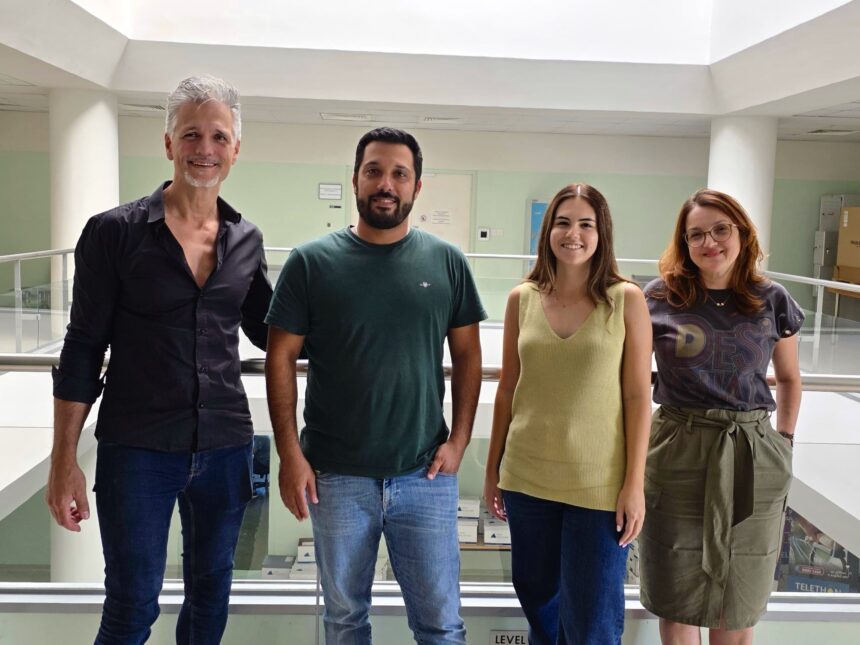
The research team is led by Dr Petros Patsali, Associate Scientist at MGTD, alongside key figures including Dr Carsten W. Lederer, Dr Nikoletta Papaioannou, and Dr Panayiota Papasavva, a hematologist and clinician-researcher. They are also collaborating with national and international partners, which include experts from the State Health Services Organization’s Thalassaemia Clinic, University Medical Center Freiburg, Imagine Institute of Genetic Diseases in France, and Laiko General Hospital in Athens.
Looking Ahead
The institute has emphasised that the BETA-BET programme could represent a pivotal step towards a potential cure for many individuals living with thalassemia. By broadening the therapy’s reach and developing a more reliable delivery system, the Cyprus Institute of Neurology and Genetics aims to provide a personalised, one-time treatment option for patients who currently rely on lifelong transfusions.
As the project unfolds, it holds the promise of significant advancements in the field of gene therapy, not just for thalassemia patients in Cyprus, but potentially for individuals suffering from similar genetic disorders worldwide.