The operation to remove cars stuck in Larnaca salt lake is now in progress, having commenced at 7am today. The vehicles have been trapped in the wetland since last Wednesday, when two drivers ventured into the area for what they believed would be an adventurous photo opportunity.
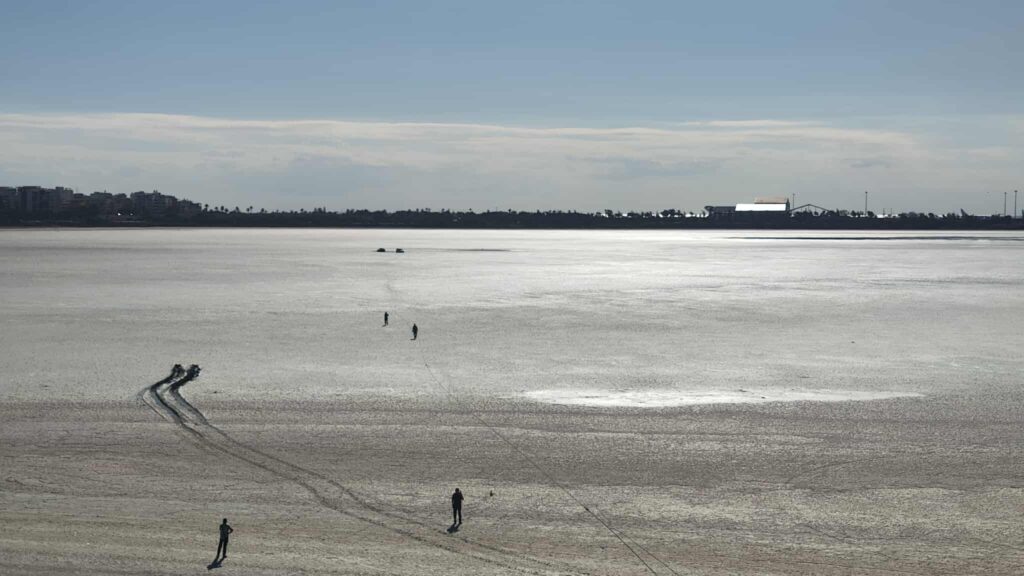
Photo: in-cyprus.philenews.com
Larnaca salt: How the Vehicles Became Stuck
The trouble began when the first driver entered the salt lake, becoming immobilised in the thick mud. Seeking assistance, he called a second driver for help, but that vehicle also got stuck. This prompted a rescue operation by Larnaca municipality, which has enlisted a private crane company to recover the vehicles.
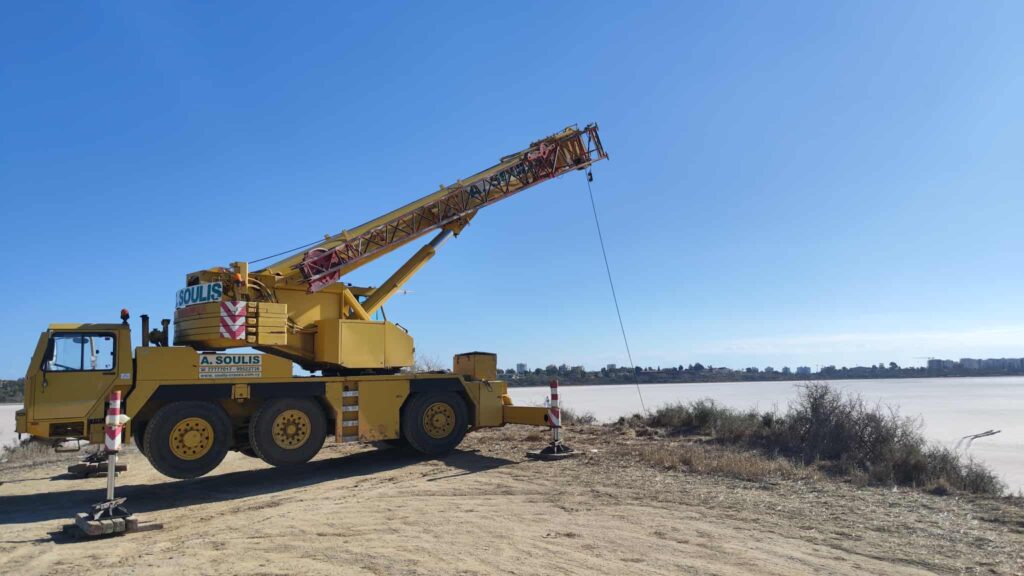
Photo: in-cyprus.philenews.com
Details of the Recovery Effort
The recovery team has deployed a specialist vehicle equipped with large ropes, aiming to extract the cars from about 400 metres into the wetland. Despite the initial optimism, the mud presents a significant challenge, making the success of the operation uncertain. Municipal officials anticipate that the recovery may take several hours, with the cars eventually being transported to municipal warehouses.
Financial Implications for the Drivers
Upon successful recovery, the drivers will be informed to collect their vehicles from the municipal storage, although they will first need to cover the operational costs. The private company involved has estimated that the recovery operation will cost between €5,000 and €8,000.
Environmental Considerations and Penalties
The incident has drawn the attention of the Game and Fauna Service, which has issued a €2,000 fine to the first driver for damaging a protected habitat. According to Larnaca municipality, the salt lake is a vital ecological site, recognised as part of the NATURA 2000 network and the Ramsar Convention, vital for wildlife and particularly for various waterfowl species.
Regulations and Public Awareness
Officials have reiterated the importance of protecting Larnaca salt lake, which has been under strict protection since 1997 due to its ecological significance. The municipality has expressed concern that despite ongoing awareness campaigns, some individuals continue to disregard regulations that protect the sensitive ecosystem.
In a statement, the municipality noted, “Any activity which may affect directly or indirectly the ecosystem, species or species habitats constitutes an offence according to the Protection and Management of Nature and Wildlife Laws.” The authorities remain committed to safeguarding this natural treasure for future generations.