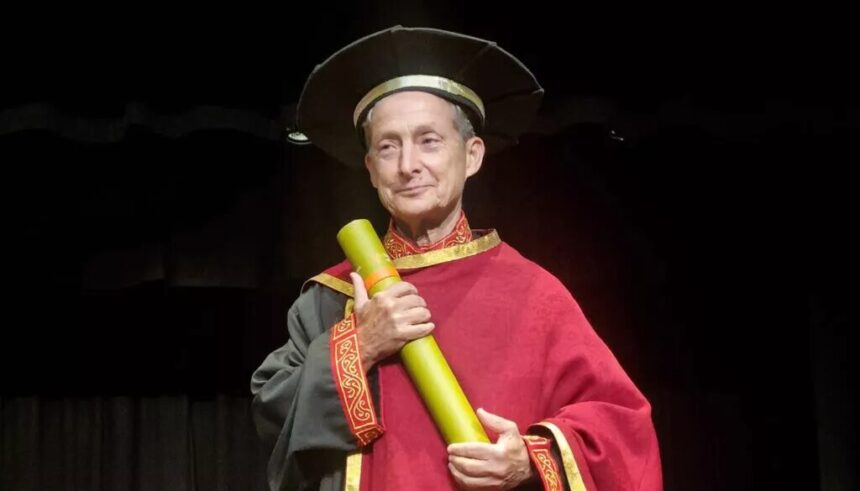
judith butler — Judith Butler, a prominent philosopher and gender theorist, addressed critical global issues such as Gaza, climate change, and gender justice during her honorary doctorate acceptance speech at the University of Cyprus.

Photo: in-cyprus.philenews.com
Judith butler: Recognition and Reflection
The ceremony took place on Tuesday evening at the Faculty of Humanities, where Butler was awarded an honorary doctorate in recognition of her contributions to philosophy and gender studies. The event was attended by notable figures including Rector Tasos Christofides, Dean Michalis Michael, and several faculty members who Butler praised as a “brilliant collection of scholars”.
In her opening remarks, Butler reflected on the significance of receiving such an honour, stating, “It is not easy to receive an honour or a prize… No one has ever made a difference on their own.” She emphasised the collaborative nature of academic work, describing texts as a “composite of voices, even a form of gathering,” shaped by interactions within communities.
Addressing Global Crises
Butler’s speech took a sobering turn as she addressed the ongoing conflict in Gaza, referring to it as a “continuing, if not intensifying genocide.” She highlighted the devastation, noting that “every academic institution in Gaza has been destroyed,” and called on scholars in other regions to uphold ethical standards and advocate for those affected. “We must assume a public life, defending the institutions in which we work,” she asserted, urging universities to act as “thresholds for public thinking and social transformation.”
Discussing the broader implications of migration, Butler noted that over 123 million people are displaced worldwide, including more than two million Palestinians. She called for the dismantling of detention camps and advocated for self-governing communities that ensure access to healthcare and employment. “Migration must be accepted as a universal freedom to be honoured at every border,” she stated, condemning the global “war on migrants” that perpetuates racism and nationalism.
The Weight of Sorrow and Interconnectedness
Reflecting on the widespread crises affecting the world today, Butler expressed her deep sorrow over the situations in Gaza, Ukraine, Sudan, and the ongoing challenges posed by climate change. She described a pervasive “melancholia, an ambient and persistent sense of mourning” that connects individuals globally, saying, “There is no way to live now without sorrow, and there’s no way to live now without each other.”
Butler emphasised the importance of interconnection, acknowledging that it often comes with disagreements but is essential for building solidarity towards economic and social justice. “Wanting to live comes about only when living is a living with others,” she remarked, illustrating the need for communities to affirm their connections in these challenging times.
Challenges Facing Gender Studies
A significant portion of Butler’s address was dedicated to the mounting attacks on gender studies around the world. She pointed to various countries, including Poland, Hungary, and Turkey, where governments have restricted feminist and LGBTQIA scholarship. “Gender is neither a side issue nor a distraction, nor can it be reduced to identity politics,” Butler insisted, challenging the narrative that positions gender studies as a threat to national security or identity.
She cautioned against authoritarian regimes that seek to censor educational content, criminalise LGBTQ+ individuals, and restrict reproductive rights. “To move on the street without fear should be a basic freedom,” she stated, underlining the necessity of defending rights to assembly and protest as collective freedoms.
Call for Collective Action
As her speech drew to a close, Butler urged academics and citizens to actively name injustices and oppose authoritarianism. She expressed that all lives should be acknowledged and treated with dignity, asserting, “We should all be worthy of grief should we become lost to the world.”
Butler concluded her remarks by emphasising the importance of community and collective action. “For all of these tasks, we need to keep gathering… even in our isolated moments we are populated by the living and the dead, incited by loss and the prospects of a community in process,” she said. Thanking the University of Cyprus for the honour, she added, “You have already expanded my world, and for that I am most grateful.”