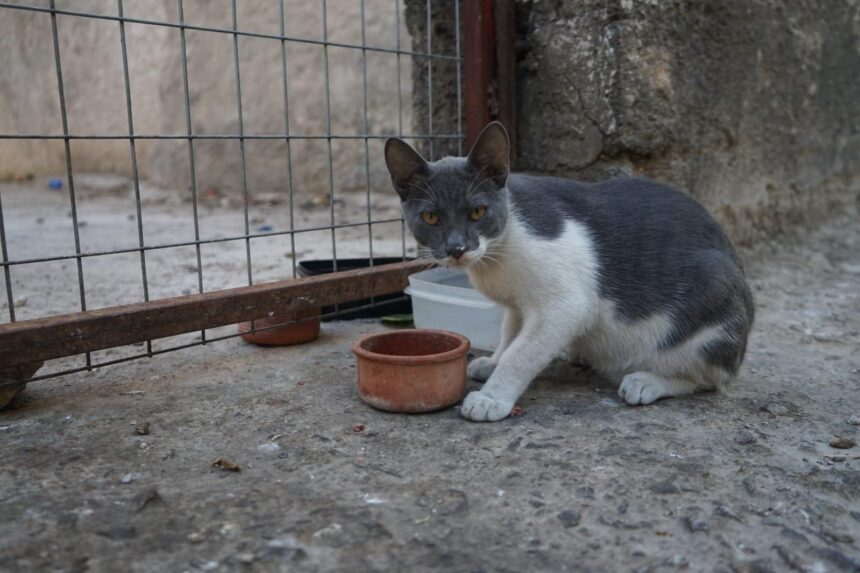
The animal welfare commissioner has announced a significant stray cat sterilisation campaign as part of a comprehensive effort to manage the island’s growing stray cat population, which exceeds one million.
Antonia Theodosiou presented a seven-year action plan aimed at mass-sterilisation, highlighting the urgent need for intervention. “We support the mass sterilisation of cats,” she stated, referencing a national programme funded by the ministry of agriculture with an annual budget of €100,000. However, she suggested that this amount should be increased to effectively address the issue.
Theodosiou mentioned that her office collaborated with various animal welfare organisations to develop the action plan. They determined that a seven-year timeframe is necessary to achieve comprehensive sterilisation across the island.
Charalambos Theopemptou, a member of the House Environment Committee and representative of the Greens, commented on the alarming situation. He noted that Cyprus might have the largest population of stray cats in the world. During a committee session, he expressed concern that the current budget is insufficient for the required sterilisation efforts. “Without proper planning, we are simply spending money without getting any results,” he remarked, highlighting the ineffective allocation of resources over the years.
Theopemptou has raised questions about the allocation of the 2025 budget as discussions are set to begin in two weeks. He fears that the government will continue to allocate the same €100,000 budget, repeating past mistakes without addressing the underlying issues.
Elena Loizidou, head of the animal welfare organisation Cat Alert Nicosia, echoed these sentiments during the committee meeting. She pointed out that political parties have historically shown little interest in effectively managing the stray cat population. “While the population of stray cats is increasing to unprecedented numbers, the responsibility seems to have been placed on volunteer animal lovers,” she lamented.
Loizidou emphasised that most strays are sterilised in private veterinary clinics at the expense of rescuers. With the current budget, only around 2,000 cats can be sterilised, which is a minuscule fraction of the actual need. “If the state continues to be theoretically present but practically absent, thousands of kittens will die every season,” she warned, highlighting the dire consequences of inaction.
She called for proper legislation to manage the stray cat population, suggesting that pet owners should be required to sterilise their pets to prevent the abandonment of unwanted kittens. “Access to sterilisation at zero cost would be a prerequisite for achieving a large number of sterilisations,” she concluded, advocating for a more proactive approach to animal welfare.