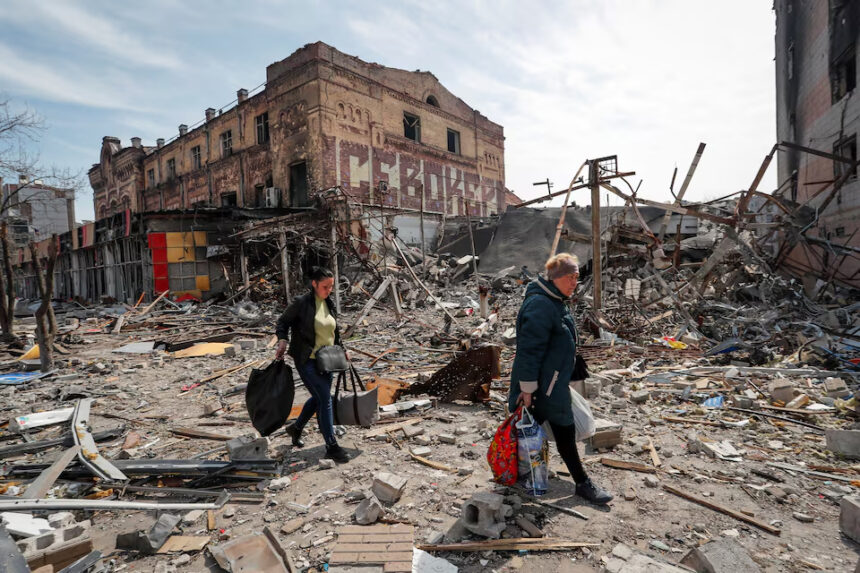
economic prospects — Ukraine’s economic prospects hinge on its ability to recover from the extensive destruction caused by the ongoing conflict. With the war still raging, the immediate damage to infrastructure is estimated at a staggering $176 billion, while total rebuilding costs could exceed $524 billion over the next decade.
Economic prospects: Investment Priorities for Recovery
The reconstruction effort is expected to focus on several critical sectors, including energy, transportation, housing, agriculture, and digital infrastructure. The energy sector is particularly vital, as repeated attacks have crippled electricity and gas networks, leaving millions of Ukrainians without reliable access, especially during harsh winter months.
Transportation infrastructure, encompassing roads, railways, airports, and ports, is essential for reconnecting Ukraine with European networks. This reconnection is crucial for boosting exports, especially for agricultural products, which are a significant part of Ukraine’s economy.
Urgent Needs in Housing and Displacement
The urgency of rebuilding housing cannot be overstated, with approximately 13 per cent of residential properties damaged and nearly five million people displaced due to the conflict. Addressing these needs will be a foundational step in stabilising the country and supporting its citizens.
International Support and Commitments
International backing for Ukraine’s reconstruction efforts appears robust. The recent Ukraine Recovery Conference (URC 2025) held in Rome highlighted this commitment, with immediate financial pledges exceeding €10 billion. Additionally, the European Union announced an extra €2.3 billion, with aims to mobilise up to €10 billion in strategic investments.
A newly established European Reconstruction Fund for Ukraine aims to attract private capital in key sectors such as energy, infrastructure, and defence. The United States continues to be the largest donor, committing nearly $175 billion through 2024, with $106 billion specifically directed to Kyiv. Other significant contributors include Germany, the UK, Poland, Italy, and France, each focusing support on various regions within Ukraine.
Innovative Funding Models on the Horizon
To facilitate reconstruction, various funding models are being considered, such as reconstruction bonds, multilateral guarantees, and direct equity participation. Financial institutions like the World Bank, IMF, and European Investment Bank are expected to provide loans on favourable terms to mitigate investment risks. There is also discussion around utilising frozen Russian assets, estimated at $300 billion, though legal hurdles remain a challenge.
Private Sector Engagement
Private sector involvement is deemed essential for the success of Ukraine’s recovery. Major companies, including Vinci, Bouygues, General Electric, Nokia, and Deere & Co., are preparing to enter contracts in sectors like construction, energy, telecommunications, and agriculture. Defence firms like Lockheed Martin and Rheinmetall may also play a role in rebuilding Ukraine’s military industry.
Challenges Ahead
Despite the positive signals and strong international support, significant risks persist, including political instability, corruption, legal uncertainty, and demographic challenges stemming from mass migration. The success of Ukraine’s reconstruction is contingent not only on establishing credible, long-term peace agreements but also on implementing necessary institutional reforms and fostering international cooperation.
If Ukraine successfully navigates these challenges, it could emerge as a dynamic economic hub at the heart of Europe, reshaping the geopolitical landscape and serving as a model for post-war recovery.