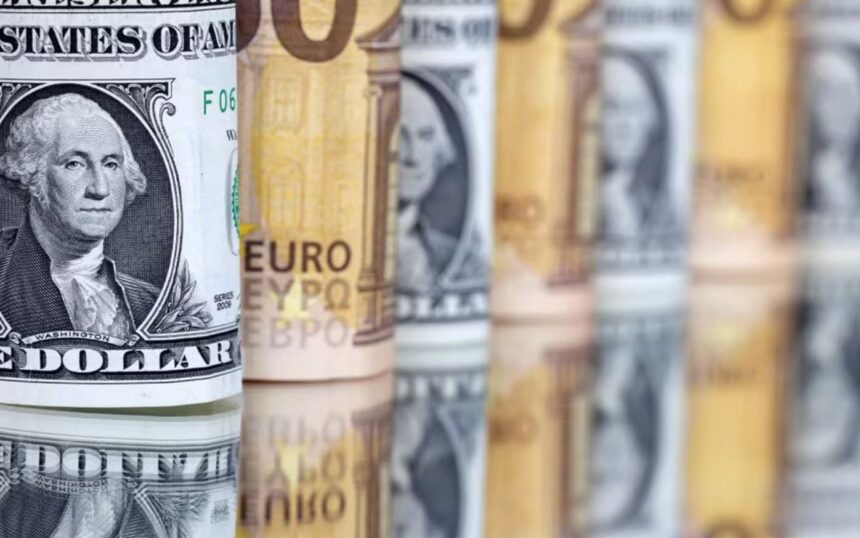
EU leaders are keen to enhance the global role of the euro as Transatlantic ties become increasingly strained. In a recent informal summit, European Commission President Ursula von der Leyen and other finance chiefs discussed measures to bolster the euro’s economic significance amidst rising concerns regarding US currency dominance.
Global role: Strengthening Euro’s Position
During the Munich Security Conference, the EU leaders signalled a renewed commitment to integrate European capital markets and expand the reach of the euro. This push comes at a time when political and economic instability in the US raises questions about the dominance of the dollar and its implications for global trade.
Urgent Measures on the Table
The discussions included plans for joint euro debt sales and initiatives led by the European Central Bank to widen access to euro liquidity and financing on a global scale. The urgency for these measures is underscored by the willingness of six core EU countries—Germany, France, Italy, Spain, the Netherlands, and Poland—to advance these initiatives even if it means moving forward without full consensus from all 27 member states. An EU6 summit is scheduled for early next month to address these strategies further.
The Impact of Increased Euro Usage
Strengthening the euro’s global role is seen as necessary to mitigate the risks associated with the world’s heavy reliance on the dollar, especially as the US experiences significant political and economic upheaval. However, the potential for an appreciation of the euro raises concerns among European leaders about its impact on export competitiveness, particularly in a period marked by global trade uncertainty.
Contrasting Views on Currency Dynamics
As the EU contemplates its strategy for the euro, perspectives on currency dynamics differ significantly between American and European officials. The Trump administration viewed a “strong dollar” as an extension of US power in international finance, not necessarily tied to the currency’s exchange rate fluctuations. This contrasts with European concerns that an increased global role for the euro could lead to an unwanted appreciation in its value.
Expert Opinions on Exchange Rate Effects
Eswar Prasad, a professor at Cornell and former IMF official, suggests that a gradual weakening of the dollar’s exchange rate could occur without jeopardising its status as the dominant global currency. In his recent book, The Doom Loop, he warns that while dollar dominance provides stability in times of crisis, it also creates economic instability worldwide, exposing other nations to unpredictable US financial policies.
European Concerns on Appreciation
European leaders are keen to elevate the euro’s status but are apprehensive about the potential for an appreciation that could harm their export-driven economy. They desire the benefits of being a more prominent reserve currency without the adverse effects of a high exchange rate. AXA Group Chief Economist Gilles Moec highlights that disentangling the impact of currency usage from exchange rate changes is theoretically sound, yet practically challenging.
Lessons from Historical Currency Transitions
Moec draws parallels to the last major transition between dominant reserve currencies, which occurred between the two world wars when the dollar replaced the pound sterling. Historically, during such transitions, the emerging reserve currency typically experiences appreciation as global demand grows. The European Central Bank’s role will be crucial in managing the euro’s position in light of these historical dynamics.
Benefits of an Assertive Euro Role
Despite the challenges, a more assertive role for the euro could yield benefits for the EU. Increased foreign investment in euro-denominated assets could bolster the economy, particularly as Europe seeks to shift from an export-led growth model to one driven by domestic consumption. However, achieving this requires flexible monetary policies to mitigate any adverse effects on competitiveness.
Moving Forward Amidst Complexity
The path forward for the euro is fraught with complexities, particularly in balancing the desire for increased global influence with concerns over exchange rate valuations. As Europe navigates this delicate landscape, the need for cohesive and decisive action is paramount. If EU leaders feel compelled to cross “lines that cannot be uncrossed,” they may need to embrace the potential consequences of their actions in the evolving landscape of global finance.