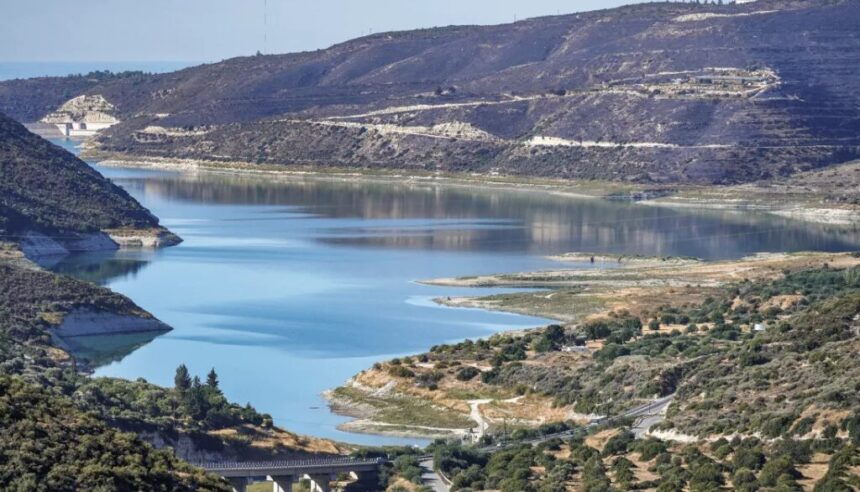
Cyprus is grappling with the consequences of dismantling its dam safety team in 2015, a decision driven by economic pressures that has led to significant infrastructure failures, including the catastrophic collapse of the Mavrokolymbos dam in Paphos.
Dam Safety Team Disbanded Amid Economic Strains
The revelation regarding the dismantling of the dam maintenance team emerged during a recent session of the House Audit Committee. Members of the team, critical for the upkeep of essential infrastructure, were either transferred to other departments within the Water Development Department or retired, leaving the nation’s dams without systematic maintenance.
Mavrokolymbos Dam’s Structural Failure
The Mavrokolymbos dam, which was constructed in 1966 and has a capacity of 2.18 million cubic metres, suffered major structural failure early this year due to corroded components, which ultimately led to the decision to completely drain the facility. This incident has raised alarms about the state of other similar infrastructures across the island.
Parliamentary Committee Highlights Neglect
During the committee hearing, Akis Kikas, representing the Audit Office, pointed out that a report from the Water Development Department for 2023-2024 indicated a lack of systematic maintenance being carried out on the dams. He emphasised concerns regarding electromechanical installations, stating, “Some valves have not been opened for years and questions arise about whether they will function in an emergency.” This lack of oversight has put the safety of multiple dams at risk, necessitating the reconstitution of the maintenance team, which currently requires seven new staff members to function effectively.
Risks for Other Dams
Constantinos Constanti, president of the Scientific and Technical Chamber (ETEK), has warned that five other dams constructed with similar technology during the 1950s and 1960s—namely Germasogeia, Polemidia, Argaka, Ayia Marina, and Pomos—are at risk of experiencing failures akin to that of Mavrokolymbos. The combined capacity of these dams is approximately 19.5 million cubic metres, raising significant concerns about water security in the region.
Desalination Plant Issues Compounding Water Shortage
The parliamentary inquiry also unveiled critical issues regarding Cyprus’s desalination infrastructure. Kikas noted that the EAC desalination unit, while operational, lacks a proper distribution network, forcing clean water through contaminated pipelines. This process necessitates additional filtration, resulting in increased operational costs.
The desalination plant produces 60,000 cubic metres of water daily. However, a substantial portion requires further filtration due to contamination during distribution. This inefficiency not only strains resources but also raises concerns over the sustainability of water supply in Cyprus.
Tourism Sector Under Threat
Cyprus’s water shortage has broad implications, particularly for the tourism sector, which constitutes 13.5% of the country’s GDP. The government has begun subsidising private desalination plants to ensure hotels have sufficient water supplies during the peak summer months, highlighting the urgency of addressing the ongoing crisis.
Future Projections and Community Concerns
As the situation develops, experts are warning of potential country-wide water cuts expected in 2026, further exacerbating the challenges facing both residents and the economy. With the current state of infrastructure and the looming water crisis, there is a pressing need for timely action to avert further disasters.
The situation serves as a stark reminder of the importance of maintaining critical infrastructure and the potential repercussions of neglecting such vital services. Cyprus is now at a crossroads, needing to balance economic constraints with the imperative of ensuring public safety and environmental sustainability.