aerospace engineering — An international research team led by the University of Nicosia has developed an advanced Artificial Intelligence (AI) model that promises to revolutionise aerospace engineering and high-speed aircraft design. This groundbreaking innovation, in collaboration with the Air Force Research Laboratory (AFRL) and the German Aerospace Center (DLR), was recently published in the esteemed journal Physics of Fluids, where it has been highlighted as an Editor’s Pick.
- For further information, contact Professor Dimitris Drikakis at [email protected], University of Nicosia.
Aerospace engineering: Transforming Aerospace with Machine Learning
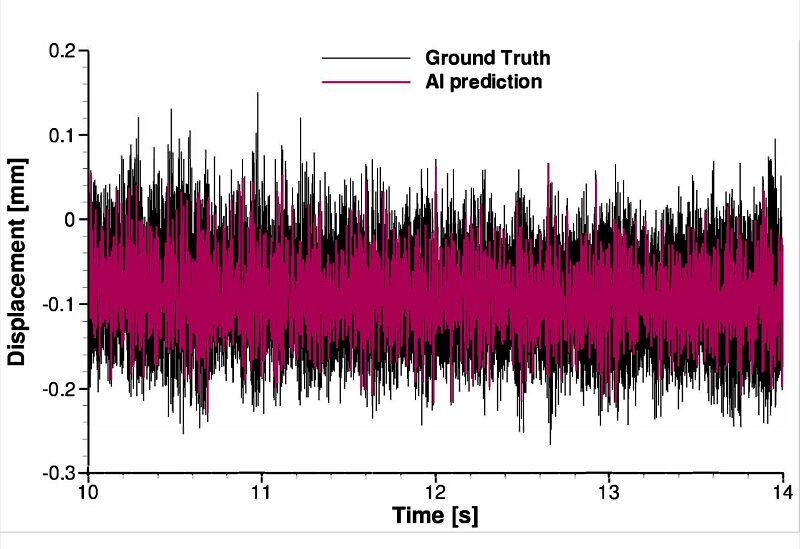
The research focuses on utilising a pioneering Transformer deep learning model to analyse shock waves and their interactions with flexible structures under extreme conditions, specifically in hypersonic flight scenarios. Trained on experimental data derived from specialised wind tunnel tests, the AI model effectively simulates conditions reaching Mach 5.3. This advance is not just a technological leap; it significantly enhances the safety, efficiency, and resilience of high-speed aerospace vehicles.
Broader Implications for Various Industries
While the immediate applications of this AI technology are evident in aerospace, its implications extend into several other fields. The study outlines how this technology can be applied in renewable energy, automotive design, civil engineering, and even medicine. For example, the AI model can help predict how buildings withstand extreme weather, optimise energy production in turbines, or understand blood flow dynamics in arteries.
Collaborative Efforts Yielding Significant Results
The success of this project underscores the importance of international collaboration in advancing scientific research. The combined expertise of AFRL, one of the leading research institutions in the United States, alongside DLR, a top European research centre, and the University of Nicosia has proven to be a powerful synergy. This partnership exemplifies how diverse knowledge pools can address complex scientific challenges.
Insights from the Lead Researcher
Professor Dimitris Drikakis, who spearheaded the study, expressed enthusiasm regarding the implications of this work. “This work demonstrates AI’s revolutionary potential in aerospace, mechanical engineering and beyond, strengthening global innovation efforts,” he noted. He believes that this breakthrough could pave the way for next-generation vehicles and technologies, impacting both civilian and defence sectors significantly.
Pioneering Fluid-Structure Interaction Modelling
A key aspect of this research lies in its contribution to fluid-structure interaction modelling. Understanding how fluids interact with flexible structures is critical in a variety of applications, from aerospace to healthcare. This AI model’s ability to predict and simulate these interactions accurately can lead to safer and more efficient designs across multiple domains.
Potential Applications in Renewable Energy
The renewable energy sector stands to gain immensely from this technology. For instance, the AI model can assist in designing wind turbines that adapt to changing wind conditions, improving energy harvesting efficiency. By simulating fluid dynamics in real-time, engineers can optimise turbine performance, ultimately contributing to more sustainable energy solutions.
Impact on Automotive and Civil Engineering
In the automotive industry, this AI technology can help engineers design vehicles that are not only faster but also more fuel-efficient and safer. The ability to predict how vehicles react to various aerodynamic conditions can lead to innovations in vehicle design and performance. Additionally, civil engineering can benefit from these advancements, particularly in designing structures that can withstand natural disasters. The AI’s predictive capabilities could lead to more resilient infrastructure.
Medical Applications: A New Frontier
In the medical field, the potential applications of this AI model are equally promising. Understanding blood flow through arteries, for instance, could lead to better diagnostic tools and treatment plans for cardiovascular diseases. By simulating how blood interacts with arterial walls under various conditions, medical professionals can gain insights that improve patient outcomes.
Future Directions for AI in Engineering
The future of AI in engineering looks bright, with this research paving the way for further innovations. As more industries begin to adopt AI-driven solutions, the potential for enhanced performance, safety, and efficiency will only grow. The collaboration between UNIC, AFRL, and DLR serves as a model for future partnerships aimed at tackling complex scientific challenges.
Access to Research Findings
For those interested in exploring the detailed findings of this research, the study is published in Physics of Fluids, and the accepted manuscript is available on the University of Nicosia’s website. This research not only contributes to the field of aerospace but also opens the door for innovations across various sectors.
For further information, contact Professor Dimitris Drikakis at [email protected], University of Nicosia.