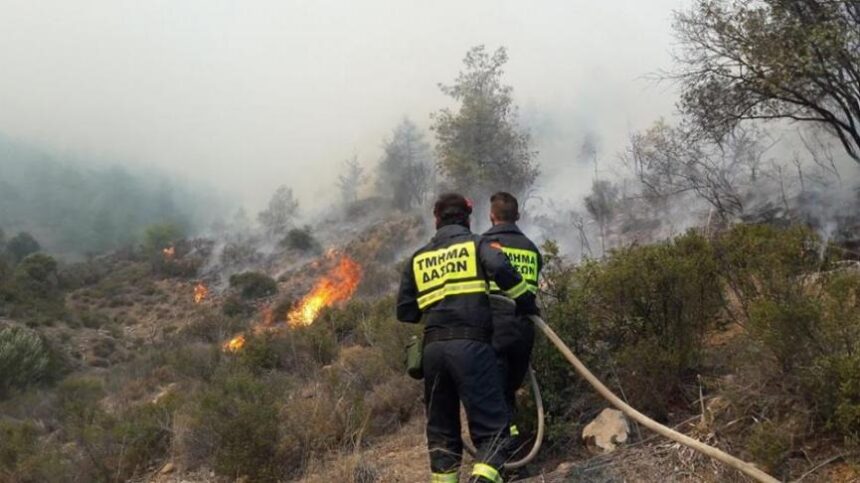
Recruitment procedures at Cyprus’s Forestry Department are undergoing significant changes as chronic understaffing continues to threaten forest fire protection efforts across the island.
- Recruitment procedures at Cyprus's Forestry Department are undergoing significant changes as chronic understaffing continues to threaten forest fire protection efforts across the island.
- However, the union condemned generalised criticism of staff, stressing that such remarks often disregard the harsh realities faced by employees on the ground.
- More than 90 positions remain unfilled in the department, and projections suggest that this number could exceed 120 in the coming years without substantial action.
During a joint session of Parliamentary Committees for Internal Affairs, Agriculture, and Environment last Friday, lawmakers expressed deep concerns regarding the operational readiness of the Department of Forests. This scrutiny follows a tragic fire in mountainous Limassol that claimed two lives and caused extensive damage to properties and ecosystems.
The Department of Forests Employees Union (PASYDY) voiced gratitude to the parliamentary committees for the opportunity to present their views from the “hot front line” of forest firefighting and management. Union representatives highlighted the dedication and professionalism of forest employees, including guards and firefighters, who often work under challenging conditions and away from public scrutiny.
However, the union condemned generalised criticism of staff, stressing that such remarks often disregard the harsh realities faced by employees on the ground.
Forestry department: Chronic Shortages and Future Solutions
A key issue raised by the union is the persistent understaffing of forest services. While there have been some advancements in hiring temporary personnel, the number of permanent employees, including foresters and technicians, continues to dwindle. Statistical data illustrates this decline: from 293 forest employees in 2011 to a projected 265 in 2025, with 83 positions currently vacant.
This shortage places an immense burden on the existing workforce, who are tasked not only with firefighting but also with comprehensive forest management duties. A decade ago, the closure of the Forestry College has led to a critical shortage of trained professionals. Although the college is set to reopen in September 2025, with an anticipated initial intake of 20 students, the union believes this is merely a temporary fix.
More than 90 positions remain unfilled in the department, and projections suggest that this number could exceed 120 in the coming years without substantial action.
Changes to Recruitment Policies
In response to these challenges, the Agriculture Ministry has implemented measures to exempt the recruitment of forest employees from general government examinations. Starting from 1 January 2026, special written examinations will be conducted by an advisory committee within the Department of Forests. This new approach aims to establish selection criteria in line with public service evaluation laws, specifically for Forest Officer and Forest Conservator roles.
The ministry has also laid out extensive plans for infrastructure and equipment enhancement. In 2025, the department is expected to have a record 1,008 staff members, the highest number in its history. Recently, 108 new forest firefighters, fire guards, and special vehicle operators were recruited, significantly boosting the department’s capacity.
The fleet has been expanded with 25 new firefighting vehicles, with an additional 17 expected by 2026. Notably, Cyprus will have 14 aerial firefighting aircraft in 2025, marking the largest fleet in the Republic’s history.
Concerns Over Implementation and Future Direction
While the union supports the need for comprehensive rural fire protection management, there are apprehensions regarding the implementation of new policies without adequate consultation. They stress the importance of securing necessary infrastructure and personnel before any major changes are enacted.
Furthermore, the union advocates for a gradual and coordinated approach to changes, warning that any rush to implement reforms could undermine forest protection efforts in rural areas. A clear separation of responsibilities focused on prevention rather than mere suppression is essential for the success of future initiatives.