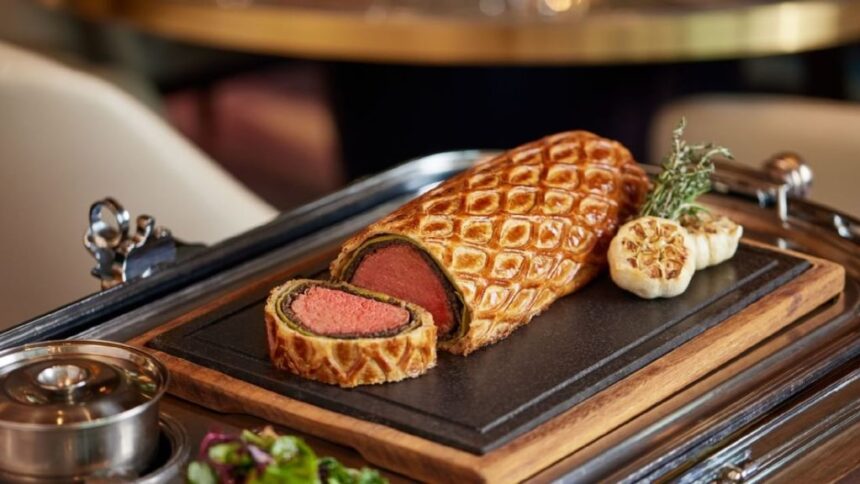
Beef Wellington is a dish that captures the imagination and tantalises the taste buds with its luxurious presentation and rich flavours. Wrapped in golden puff pastry and filled with finely chopped mushrooms, and sometimes complemented by a sliver of pâté or Parma ham, it truly arrives at the table as a celebration in itself.
The origins of Beef Wellington are as layered as the pastry that encases it. The most prevalent theory links its creation to Arthur Wellesley, the first Duke of Wellington, a figure renowned for his victory at the Battle of Waterloo in 1815 and his tenure as British Prime Minister during a tumultuous era. This dish is believed to have been crafted in his honour, perhaps inspired by his preferences for beef, mushrooms, and Madeira wine. Culinary historians also offer alternative insights; some speculate that its name could have been a patriotic rebranding of the French filet de bœuf en croûte at a time when Anglicising French cuisine was notably popular. Others suggest that the dish’s resemblance to the Duke’s iconic Wellington boots played a role in its naming.
Despite its roots in the early 19th century, Beef Wellington saw a rise in popularity during the Victorian era, only to fade into culinary obscurity before making a spectacular comeback in the mid-20th century. It became a symbol of special occasion cooking, often gracing hotel menus and festive gatherings, particularly during the Christmas season. In the 1960s and 70s, no festive table was complete without a Beef Wellington, gleaming under a savoury egg wash and showcasing the intricate lattices crafted by ambitious home cooks.
As culinary tastes evolved, so too did Beef Wellington. Today, chefs embrace creativity, experimenting with variations that include individual servings and vegetarian interpretations filled with ingredients like beetroot, lentils, or wild mushrooms. The pastry itself has also seen innovation, with alternatives ranging from classic puff to gluten-free options. The core ingredient is no longer limited to beef, as salmon and lamb Wellingtons have surged in popularity, particularly during springtime Easter menus or in coastal areas where red meat might not dominate the dining scene.
Although Beef Wellington is not a traditional dish in Cyprus, the elements that define it resonate with the island’s culinary culture. The love for slow-roasted meats, savoury pastries, and seasonal herbs reflect a shared appreciation for flavour and tradition. One can easily envision a Cypriot reinterpretation of this classic: a beef tenderloin brushed with a glaze of Commandaria, enveloped in a crust infused with oregano and thyme, bringing local influences to a well-loved dish.