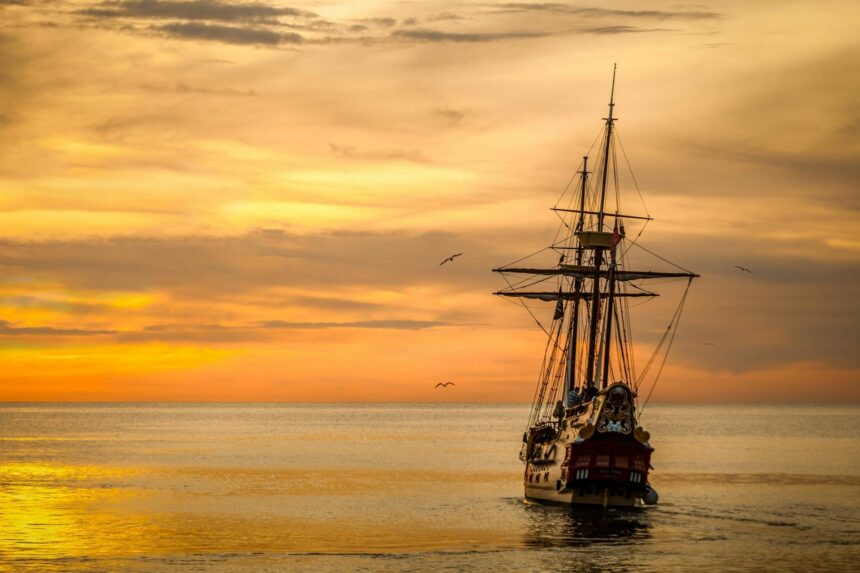
Rediscovering trans-Pacific trade has become a focal point for researchers inspired by the story of the 17th-century Spanish galleon San Francisco, which sank off the coast of Japan in 1609. This shipwreck not only took with it precious cargo but also vital clues about how centuries of trading shaped cultural exchanges and medical practices across vast ocean distances.
- As they unearth the hidden links between cultures, the researchers remind us of the lasting legacy of these ancient trade routes and their relevance in today’s world.
An international team of researchers, supported by EU funding, is delving deep into the legacy of these maritime routes. Their initiative, known as TRANSPACIFIC, seeks to illuminate the era of the Manila galleons that connected Asia to the Americas from the 16th to the early 19th century. These galleons were instrumental in transporting luxury goods like silver, silk, and spices from Asia, while bringing back cacao, medicines, and other items from the New World.
Trans-pacific trade: Unraveling Historical Mysteries
The inspiration for the TRANSPACIFIC project arose during a conversation between Professor Angela Schottenhammer and Dr Jun Kimura, a maritime archaeologist, after a dive to search for the remains of the San Francisco. Although their expedition did not yield tangible findings, it sparked a discussion about the limited knowledge available regarding the Manila galleons.
Since embarking on their research, the team has scoured rare manuscripts, diaries, and maps stored in museums and libraries worldwide. They have also combined archaeological data with historical climate records to reconstruct ocean currents and winds that influenced these voyages.
Revealing Medical Exchanges
Among their intriguing discoveries is the role of Peruvian balsam, a resin known for its antiseptic properties. This substance travelled from Latin America to Asia aboard the galleons, reaching even the Qing army in China. Professor Schottenhammer shared, “If it was used in the army for healing sword wounds, it shows how even what seem like marginal aspects of trade could have an important impact.”
The team also focused on the inventory of Agustín Sánchez, a Spanish barber-surgeon who died aboard the San Martín galleon in 1592. His collection included medical tools and texts advocating the use of local plants mixed with lime and garlic for medicinal purposes. Such historical practices reflect how European travellers adapted indigenous knowledge to suit tropical climates.
Water and Resources on Long Voyages
Another critical aspect of their research examines how galleon crews managed to secure drinking water during lengthy crossings. The appointment of a “water constable” and the development of methods for purifying seawater were essential for survival on these ships. Local island populations quickly recognised the importance of fresh water, leading to a barter economy that benefited both sailors and indigenous communities.
Dr Mathieu Torck, a maritime historian, noted that, “For a galleon with a crew of several hundred, you needed a lot of water.” This necessity fostered trade relationships that were crucial for sustaining long voyages.
Chocolate: A Surprising Ingredient
Interestingly, the researchers have also explored the potential role of cacao in sustaining crew health. Records indicate that cacao was frequently mentioned on board, leading to speculation that its rich flavonoid content may have contributed to preventing scurvy when combined with fruits and vegetables. Dr Torck pondered how the Spanish managed to maintain such a lengthy trade route, suggesting that this nutritional element may have played a pivotal role.
A Digital Future for Historical Exploration
As the TRANSPACIFIC team continues its work, they are in the process of developing a digital database that will trace the movement of goods, people, and ideas over the centuries of trans-Pacific trade. This initiative aims to uncover the intricacies of cultural exchanges and the informal factors that influenced trade dynamics.
Professor Schottenhammer expressed hope that their findings will reshape our understanding of historical trans-Pacific trade, stating, “They reveal how deeply connected the world was, long before modern globalisation.” The ongoing research not only highlights the interconnectedness of past societies but also resonates with contemporary interests in natural remedies and plant-based medicines.
As they unearth the hidden links between cultures, the researchers remind us of the lasting legacy of these ancient trade routes and their relevance in today’s world.