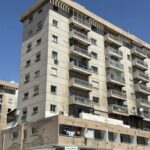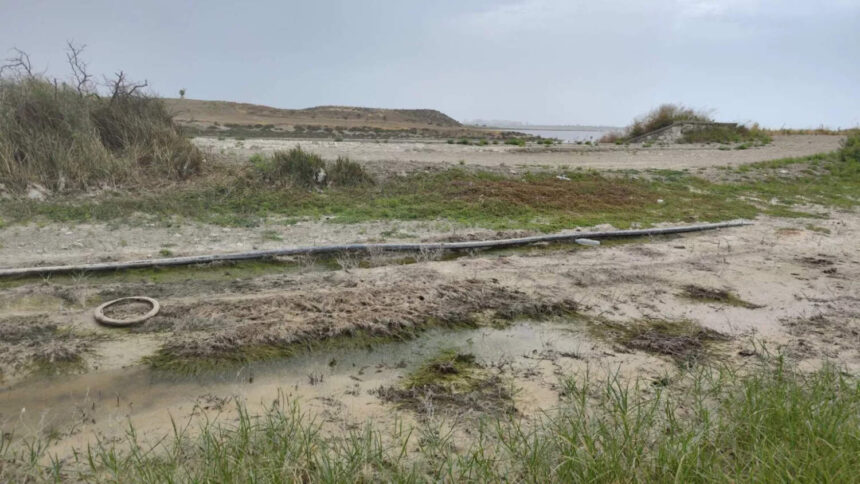
Sewage from a large residential complex in Pyla is putting public health at risk, with part of it, however unbelievable it may sound, ending up in a canal in the Oroklini area, next to the sea. Despite numerous complaints lodged with the relevant authorities, no measures have been taken to address this alarming situation.
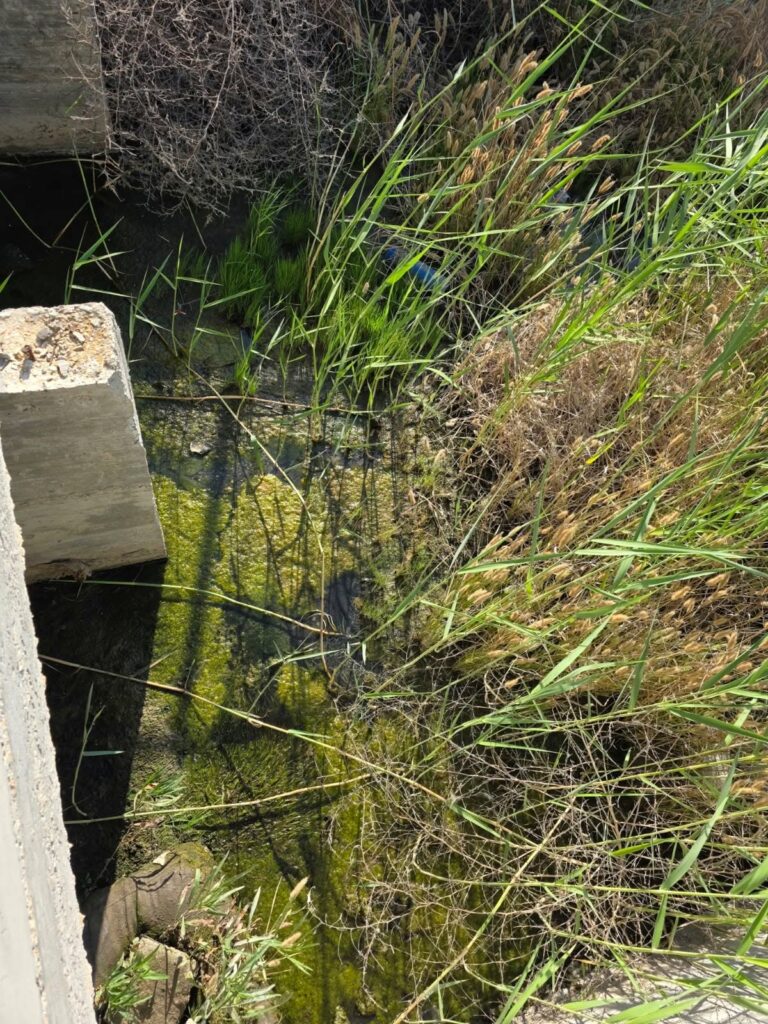
Photo: en.philenews.com
Residents have reported intense odours emanating from the coastal area near where the “Chryso Psari” (“Golden Fish”) restaurant used to be located. Many describe the situation as a significant health hazard, urging authorities to take immediate action.
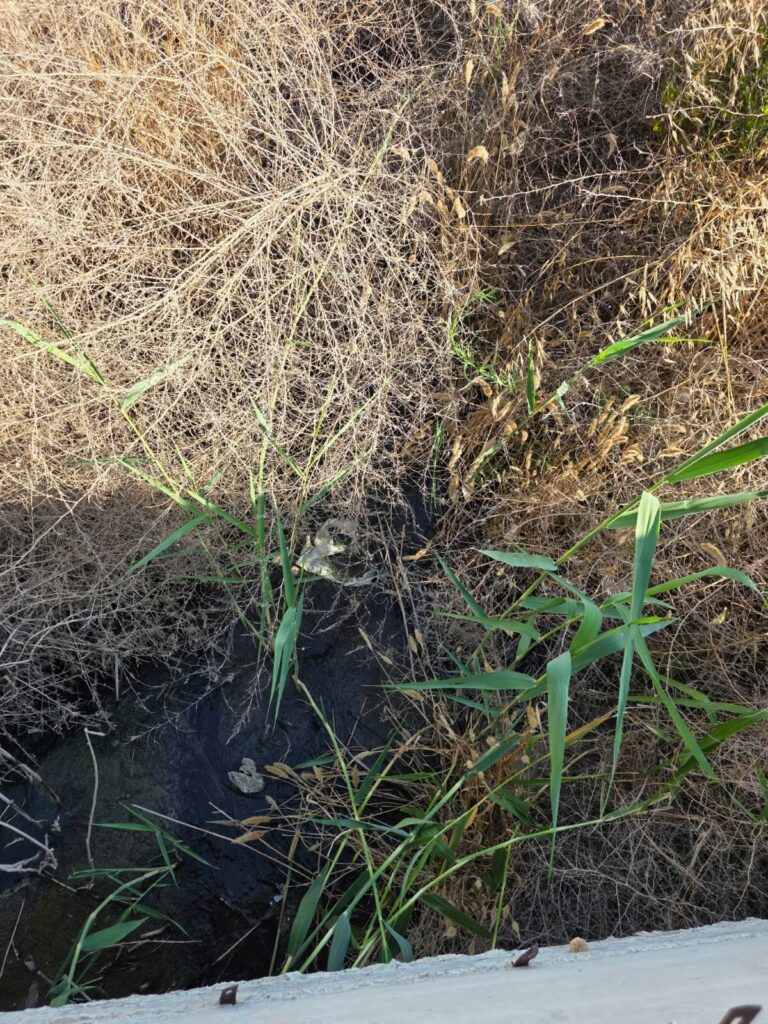
Photo: en.philenews.com
Sewage: Local Authorities Acknowledge the Issue
Oroklini deputy mayor Neofytos Fakontis has confirmed the complaints received by Phileleftheros and has corroborated the presence of photographic evidence documenting the sewage issue. He stated that representations had been made to relevant bodies to address the problem, noting that officials from the Larnaca District Local Government Organisation (DLGO) and the Department of Environment visited the site but failed to implement any measures.
Absence of Sewerage System in Pyla
Fakontis highlighted a critical issue: the Pyla area lacks a sewerage system. When the waste pits in the residential complex fill up, the sewage flows into the canal. He also mentioned that during summer months, the volume of sewage entering the stormwater canal increases significantly, raising further concerns.
To tackle the issue, Larnaca Municipality has engaged two professors from the Democritus University of Thrace, specialising in stormwater management. They examined the canal’s entire route, confirming the influx of sewage from the Pyla complex. Fakontis has urged the DLGO and the Department of Environment to impose fines, suggesting that a €4,000 penalty could be effective in prompting action.
Community Leaders Demand Action
Simos Mitidis, the Pyla community leader, echoed the concerns of residents, stating that the sewage problem is well-known among the authorities. “It’s a complex with 64 residences,” he noted, questioning why the DLGO claims the issue does not fall under its jurisdiction, especially since residents pay sewerage fees.
The community council is actively seeking to expedite the installation of a sewerage system, which has faced delays. Mitidis mentioned that pressure is being applied for tankers to regularly empty the septic pits, and the council is in ongoing communication with the DLGO and the Department of Environment.
Authorities Respond to Complaints
The Department of Environment has acknowledged the complaints and stated that their inspectors visited the site following the concerns raised by Phileleftheros. They clarified that local authorities are responsible for addressing such issues, and after a visit to the Pyla community leader, they were informed of the ongoing situation.
Officials from the Department of Environment communicated that the community council has the legal authority to cut off the water supply to the complex if it fails to manage its sewage properly. Until then, the council must bear the expense of hiring a tanker to empty the pit.
As the situation remains unresolved, residents continue to grapple with the health risks posed by the sewage contamination in their area. The lack of effective action from the relevant authorities raises urgent questions about public health and the accountability of local governance.