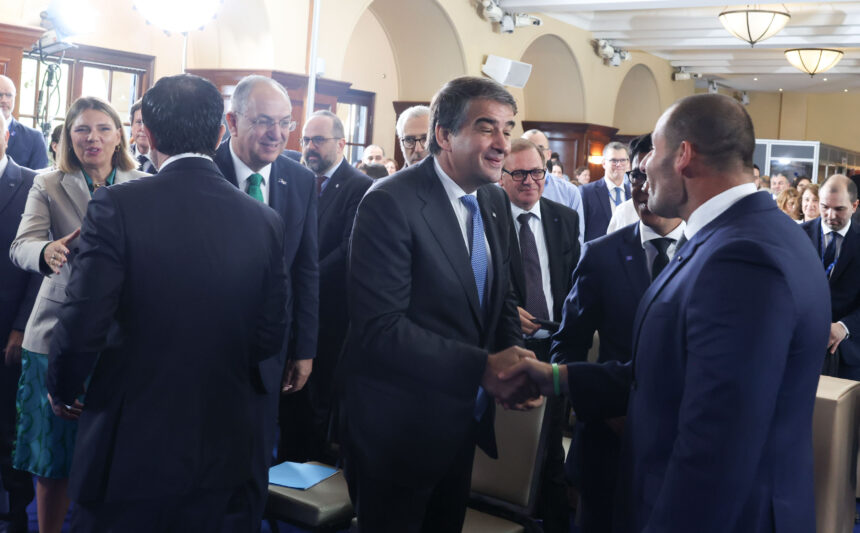
eu island — The EU island strategy must now transition from vision to action, as stressed by European Commission Executive Vice-President Raffaele Fitto. During a high-level conference on islands and coastal communities held in Paphos, Fitto highlighted the urgency of turning the recently adopted strategy into practical policies that cater to the daily realities faced by island communities.
With over 17 million inhabitants spread across more than 4,000 inhabited islands in Europe, including three EU member states that are islands themselves, the need for effective policies is pressing. Fitto articulated that insularity is not merely a geographic fact but carries substantial economic and social implications, affecting every aspect of life for islanders.
“Islands contribute significantly to Europe’s economic development, maritime identity, and cultural heritage,” he stated, underscoring their role as innovation hubs. However, they also grapple with structural challenges stemming from their distance from mainland markets, dependence on maritime and air connections, and the higher costs associated with transport and limited economies of scale.
Fitto referred to the “cost of insularity” as a daily burden for residents and businesses, impacting access to jobs, education, healthcare, and public services. This burden is a continuous reality, not an occasional inconvenience, which makes the implementation of the EU Strategy for Islands, adopted earlier this month, crucial.
The strategy aims to create a coordinated framework for EU action, aiding member states in crafting policies and investments that are responsive to island-specific needs. It is structured around four key pillars: economic development and connectivity; energy, climate and the environment; people and demographic challenges; and security and crisis preparedness.
Connectivity remains a primary concern for these islands. Fitto noted that under the new strategy, the Commission is committed to enhancing transport and digital infrastructure, assessing the unique situations of islands in state aid frameworks, and conducting a thorough analysis of the cost of insularity. He pointed out that many islands experience energy isolation, population decline, and significant housing pressures, which need targeted interventions.
Fitto emphasised the strategic importance of islands, particularly in light of geopolitical challenges that affect regions from the Baltic to the Mediterranean. His recent visit to remote areas of Cyprus reaffirmed the necessity for policies that reflect the realities faced by local communities. “A strategy is a starting point, not an endpoint,” he remarked, calling for a shift from theoretical discussions to concrete actions.
In discussions with the Cyprus Mail, Fitto outlined the European Commission’s broader goal of modernising cohesion policy and strengthening the connection between competitiveness and territorial cohesion. He pointed to the mid-term review of the current EU budget, which has allowed member states to redirect funding toward five new priorities: defence, water, housing, energy, and competitiveness.
The new islands strategy is part of a broader package of territorial strategies currently being developed by the Commission, including initiatives aimed at cities, eastern border regions, and outermost territories. Fitto highlighted the planned “right to stay” strategy, which seeks to address the pressing issue of depopulation in rural and remote areas across Europe.
Fitto detailed that the call for evidence regarding the “right to stay” strategy received over 700 contributions since its launch in May. The insights gained from these contributions will be pivotal in shaping effective policies. “Visiting the territories and engaging directly with citizens is essential for understanding their experiences and challenges,” he said.
His recent engagements in the Troodos region allowed him to hear firsthand about public service needs, infrastructure issues, and employment opportunities, particularly for younger generations. Fitto plans to continue visiting remote areas and small islands across the EU in the coming months, ahead of the January presentation of the “right to stay” strategy. “The challenges faced by villages in Cyprus differ from those in northern Europe, but we must address them with tailored strategies that respect their unique contexts,” he noted.
Fitto believes that these place-based strategies will be instrumental in shaping the next EU long-term budget framework. The Commission intends to simplify this framework through national and regional partnership plans developed in collaboration with national governments, regional authorities, and local communities. Furthermore, he revealed that 25 member states have already redirected more than €34 billion—approximately 10% of cohesion funding—towards these new priorities, with over €1.5 billion specifically allocated to support strategic objectives in island areas.
While discussing potential projects, Fitto mentioned that improving connectivity and water infrastructure are likely focal points, noting that desalination plants could be included among the initiatives, given the EU’s priorities. He reiterated that these strategies are not crafted in isolation; instead, they are shaped through active dialogue with communities, involving over 350 stakeholders from 18 member states in the development of the islands strategy, including citizens, public authorities, businesses, universities, NGOs, and island networks.