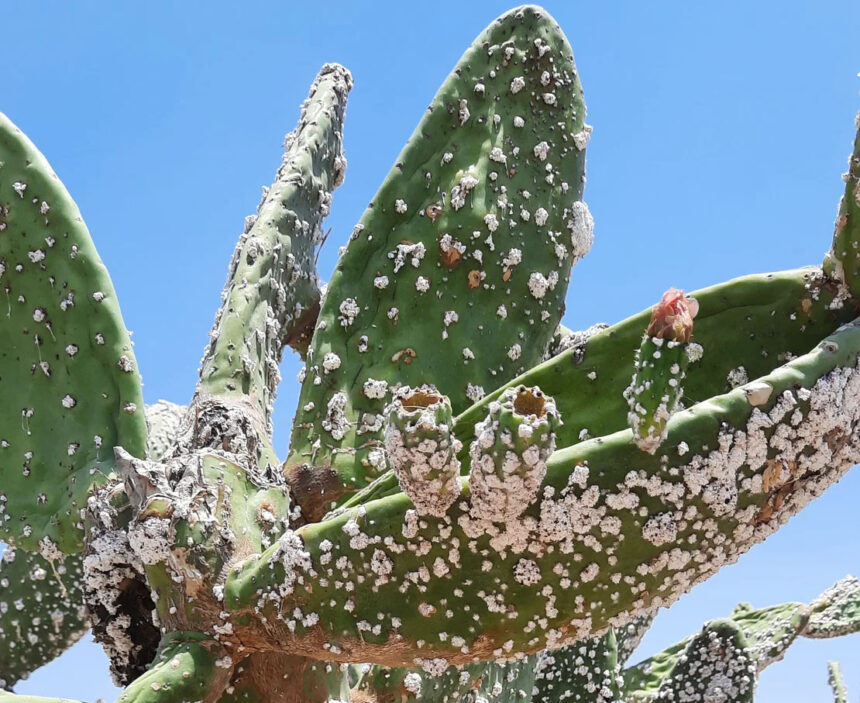
Cyprus is grappling with the invasive prickly pear cochineal, an insect that poses a significant threat to the island’s prickly pear cacti. This pest, known scientifically as Dactylopius opuntiae, has been steadily spreading across Cyprus since its first identification in September 2016 in the Famagusta district. As climate conditions and unmanaged prickly pear plants contribute to its proliferation, the agriculture ministry is facing difficult challenges in managing this invasion.

Photo: cyprus-mail.com
Prickly pear: Invasive Spread Across Cyprus
Since its initial discovery, the prickly pear cochineal has expanded its reach into the Larnaca district and parts of Nicosia and Limassol. The extent of its spread raises pressing questions regarding the effectiveness of existing control measures. Nearly ten years after it was first reported, there is uncertainty about how far the insect has advanced in recent years, prompting concerns from agricultural officials.

Photo: cyprus-mail.com
A Complex Ecological Challenge
Lyssandros Lyssandrides, a senior agricultural officer at the agriculture ministry, describes the pest as presenting an unusually complex challenge. The warm climate of Cyprus is conducive to the cochineal’s survival and reproduction, allowing it to thrive. Moreover, the prevalence of unmanaged prickly pear plants acts as a reservoir for the pest, facilitating its gradual movement across various regions.
“Because these plants are not cultivated or cared for, they become easy reservoirs for infestation,” Lyssandrides commented. The cochineal insect is not only resilient due to its environment but also possesses natural defence mechanisms that complicate management efforts. It secretes a waxy, cotton-like coating that renders several insecticides less effective. Additionally, its production of carminic acid limits the impact of natural predators that could help control its population.
Slow-the-Spread Strategy
Given the limitations of available chemical controls, the agriculture ministry has adopted a “slow-the-spread” strategy instead of aiming for complete eradication of the pest. This approach focuses on delaying the insect’s advance to allow time for natural ecological balance to develop or for more effective long-term measures to be identified.
Some recommended preventative measures include:
- Avoiding the transfer of plant materials and fruits from affected areas.
- Regularly pruning plants to enhance airflow and light penetration.
- Removing and burying infected cladodes.
- Washing infestations with strong water sprays, which, when combined with soap or alcohol, can break down the cochineal’s protective coating.
The ministry stresses that these preventative actions are crucial, as without them, both chemical and biological control options are unlikely to succeed.
Researching Long-Term Solutions
In addition to immediate strategies, researchers are exploring longer-term solutions to combat the prickly pear cochineal. One avenue involves identifying varieties of Opuntia that demonstrate natural tolerance to the pest. Specimens from across Cyprus are being collected for evaluation to understand which may resist infestation.
Another promising line of inquiry is biological control, specifically the introduction of the predatory beetle Hyperaspis trifurcata in regions heavily affected by the cochineal. This beetle is known to primarily target Dactylopius species and could potentially help manage the pest population.
An Ecological Paradox
The situation is further complicated by the fact that both the prickly pear cochineal and its host plant are non-native to Cyprus. The cochineal originates from the Americas, where it co-evolved with native cactus species. Similarly, prickly pear cacti were introduced to Cyprus from Mexico in the late nineteenth century and have since become a common sight in rural areas.
Despite its invasive nature, prickly pear fruit remains a seasonal favourite among locals, lauded for its nutritional benefits, including fibre, antioxidants, and essential vitamins. This creates an ecological paradox: an introduced pest threatening an introduced plant that has become ingrained in the island’s landscape.
Ongoing Monitoring and Future Measures
Nearly a decade into managing the prickly pear cochineal, the agriculture ministry continues to focus on strategies to slow its spread. However, the lack of updated data on the insect’s current distribution compared to previous years leaves the extent of the threat uncertain. With no clear indication of whether current measures are effectively reducing infestations or merely delaying further spread, the battle against this invasive pest remains ongoing.
As Cyprus navigates this ecological crisis, the balance between preserving its agricultural heritage and managing invasive species is more crucial than ever. The ministry’s commitment to research and ecological management will be vital in determining the future of prickly pear cacti on the island.