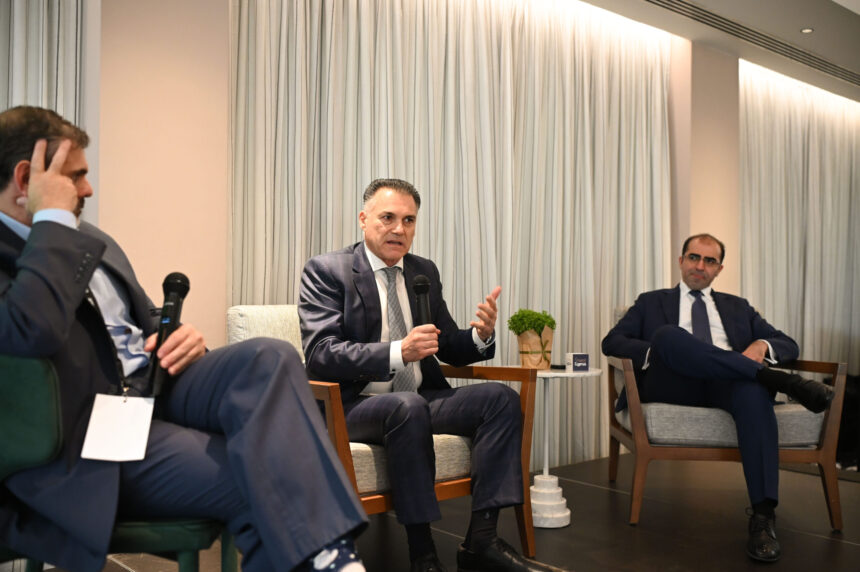
Eurobank is placing the green transition at the forefront of its strategy, as reaffirmed during its participation in the recent Green Agenda Summit. This year marked the bank’s third consecutive appearance as a platinum sponsor of the event, held on June 4 under the theme “Transition as a Responsibility (not a trend)”.

Photo: cyprus-mail.com
- “The aim is the creation of long-term social value,” he remarked, emphasising the bank's focus on fostering economic growth that aligns with sustainability goals.
The summit gathered academics, senior executives, and leading experts from Cyprus and around the world to explore the challenges and opportunities that arise from the shift towards a more sustainable economy. It served as a vital platform for discussing how both public and private sectors can meet the demands of the green transition.

Photo: cyprus-mail.com
Green transition: A Call for Serious Commitment
During the event, speakers emphasised that the green transition should not be perceived as a fleeting trend, but rather as a crucial necessity that lays the groundwork for a sustainable future. The dialogue highlighted the need for businesses to be prepared and flexible in managing the risks associated with this transition.
Particular attention was drawn to the importance of establishing measurable ESG (Environmental, Social, and Governance) targets. These targets enable companies to effectively evaluate both risks and performance in relation to sustainable development.
The Banking Sector’s Evolving Landscape
Discussions within the banking sector centred on the intricate challenges financial institutions face as they strive to align with the evolving European regulatory framework. A panel discussion entitled “Green Transition and Risk Management” explored the shifting environment for banks, characterised by factors such as climate change, technological advancements, armed conflicts, and legal requirements.
Chief Risk Officer Joseph Antoniou represented Eurobank by discussing the transformative landscape confronting the banking industry. He articulated that the bank regards the green transition as a top priority, a perspective grounded in the belief that it is pivotal for ensuring a sustainable future for the economy and upcoming generations.
Strategic Approaches to Sustainability
Antoniou noted that climate-related physical risks have fundamentally reshaped risk management frameworks. Eurobank is addressing ESG considerations through a comprehensive and structured strategic approach. He outlined a variety of measures the bank is implementing to embed sustainable practices across all facets of its operations.
“The role of banks is to act as examples of best practices by setting clear strategic objectives for their own sustainable development,” Antoniou stated, underscoring the responsibility financial institutions have in leading the way.
Educating and Guiding the Market
In his comments, Antoniou further elaborated on the pivotal role banks play in not only financing but also guiding the market through the green transition. Eurobank is committed to supporting and enhancing the Cypriot economy by providing sustainable financing options for businesses and households, while also prioritising technological innovation and transparency.
“The aim is the creation of long-term social value,” he remarked, emphasising the bank’s focus on fostering economic growth that aligns with sustainability goals.
As Eurobank continues its journey towards sustainability, the bank’s initiatives reflect its dedication to creating lasting social value and reinforcing its strategic framework through the lens of responsible development.