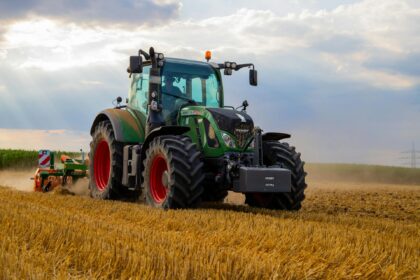
women driving — Women driving rural innovation is a powerful narrative reshaping the agricultural landscape in Europe. Across the continent, from the Netherlands to Spain, women are taking the reins, demonstrating how their ideas and leadership can reinvigorate rural communities.
Women driving: Unleashing Potential in Agriculture
Albertine Ekkels, a 34-year-old entrepreneur from the Netherlands, epitomises this change. For years, while helping on her family’s organic dairy farm, she struggled to find the time to pursue her entrepreneurial aspirations. “The biggest challenge for me was time,” she reflected. “For years, I had ideas, but I couldn’t take the plunge while working full time with my parents on their organic farm.”
A New Beginning
In 2023, Ekkels joined a GRASS CEILING Living Lab, an EU-funded initiative designed to connect female entrepreneurs in agriculture and rural sectors with experts and academic resources. These labs, operational from 2023 to 2026, serve as incubators where women can develop innovative ideas and form valuable networks.
Creating Opportunities
The GRASS CEILING initiative has established Living Labs in nine European countries, including Croatia, Ireland, Italy, Lithuania, the Netherlands, Norway, Spain, Sweden, and the UK. This initiative aims to empower women by providing them with the tools and support needed to thrive in various agricultural contexts.
Turning Ideas into Reality
Inspired by the collaborative environment of the Dutch lab, Ekkels launched a booking platform that allows individuals to rent farm spaces for events and short stays. Her goal is to attract visitors to the countryside and showcase the positive aspects of farm life. “I want to spread a positive message about farming,” she stated. “I want people to be able to visit farms so that they can form their own impressions of farm life.”
Recognising Women’s Contributions
Women constitute nearly half of the EU’s rural population, yet they own only about a third of farms, most of which are small. Their contributions are significant, ranging from managing livestock to promoting sustainable tourism, but they often remain undervalued and underrepresented in agricultural policy discussions.
Barriers and Challenges
Women in agriculture frequently face barriers that limit their access to credit, funding, and recognition from advisory services. Cultural norms often lead to the perception that farming is predominantly a male profession, and inheritance practices in many regions favour sons over daughters, rendering much of women’s vital work invisible.
Changing the Narrative
Professor Sally Shortall, president of the International Rural Sociology Association, has long been a proponent of recognising women’s roles in agriculture. “Women have always been central to rural life, but policies, data and support systems have too often ignored their roles,” she remarked. Her research highlights existing gender inequalities in farming, from unfavourable land inheritance rules to limited access to capital and training.
Empowering Through Collaboration
At the University of Newcastle in the UK, Shortall collaborates with South East Technological University in Ireland, an EU Gender Equality Champion, to coordinate the GRASS CEILING initiative. “We want to create the conditions for women to lead socio-ecological transitions, from sustainable farming to digital forestry,” she explained.
Building Networks for Growth
The Living Labs have become catalysts for change, fostering environments where women can collaborate with farmers, foresters, and researchers. These spaces promote experimentation and visibility, enabling women to share knowledge and innovate.
Success Stories
In Ireland, sisters Karen and Natalie Keane transformed a simple kitchen idea into Bean and Goose Chocolate, a successful brand now employing around a dozen people in County Wexford. In Spain, Silvia González utilises drones for monitoring forest growth, while Amada de Salas has successfully expanded her agro-tourism business.
Advocating for Policy Change
Blanca Casares Guillén, a policy expert at the European Association for Innovation in Local Development, emphasises the need for greater representation of women in agricultural policy. “Most monitoring systems still don’t separate data by gender,” she noted, highlighting the importance of gender-sensitive data in shaping future policies.
A Roadmap for Equality
The GRASS CEILING policy roadmap advocates for binding commitments on gender equality in EU funding, gender-responsive finance, and improved childcare in rural areas. “Now it’s the EU’s turn to embed gender equality into the policies that shape rural life,” said Shortall, underlining the need for systemic change.
Imagining a Future of Inclusivity
The women involved in the GRASS CEILING Living Labs envision a future where rural communities thrive through inclusive policies and investment. Despite the challenges posed by social and cultural expectations, they recognise that digitalisation and community networks are powerful enablers of innovation.
A Call to Action
For Ekkels, participating in the Living Lab has been a transformative experience. “It can be daunting for women to step forward and claim their place,” she said. “I want to show that if you have an idea, you should go for it.” Her journey exemplifies the GRASS CEILING mission—breaking down barriers and constructing new futures where women’s ideas and leadership are valued.
As Europe moves forward, the contributions of women like Ekkels, the Keane sisters, González, and de Salas highlight the importance of inclusive innovation in agriculture. Their stories prove that when everyone is given the opportunity to plant their ideas, the roots of rural innovation can flourish.