fed rate — fed rate — Weaker US economic data has intensified speculation regarding potential rate cuts by the Federal Reserve, as evidenced by recent shifts in the US dollar’s performance. On Wednesday, the dollar softened following the release of JOLTS data and factory orders, which confirmed a slowdown in the labour market. This development has provided a boost to the Euro, despite a slightly weaker EU PMI.
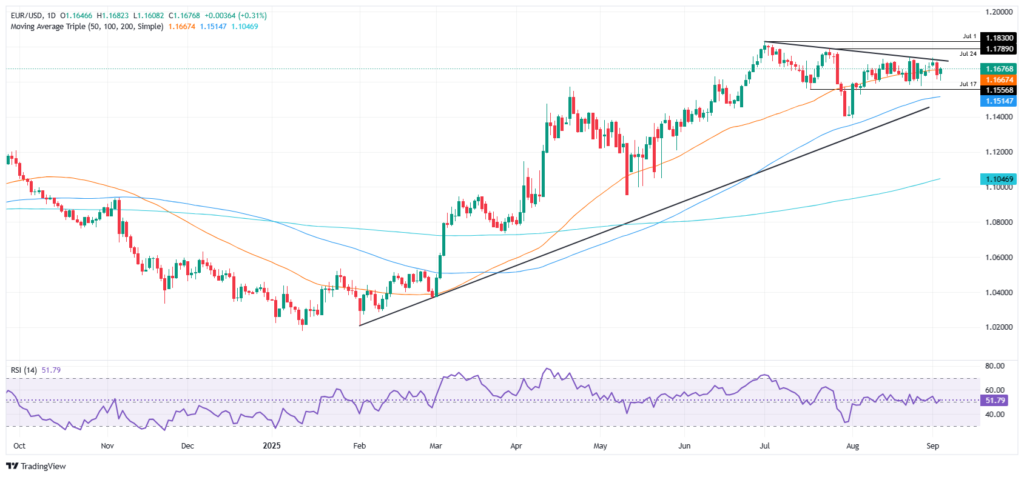
Photo: financialmirror.com
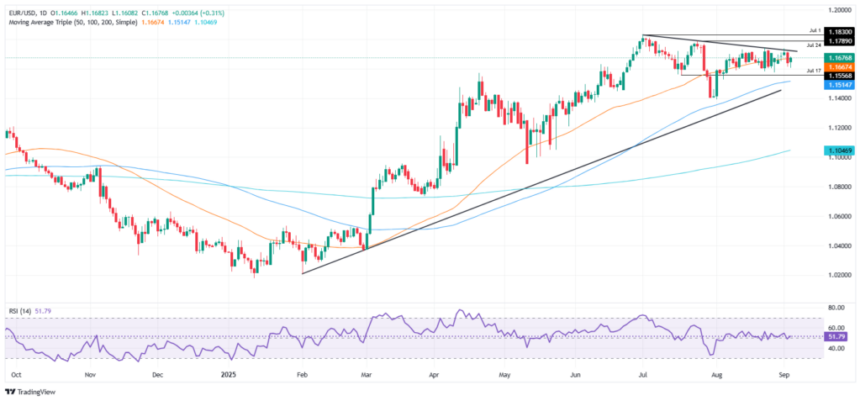
The EURUSD pair, recovering from Tuesday’s losses that saw it dip below key support levels around the 50 and 20-day SMAs, is currently trading at 1.1679, reflecting a 0.37% increase. This upward movement can be partially attributed to a significant decline in job vacancies reported in the Job Openings and Labor Turnover Survey (JOLTS) for July. The JOLTS data revealed that vacancies fell from 7.44 million to 7.18 million, indicating a tightening labour market.
Fed rate: Labour Market Signals Shift
The Bureau of Labor Statistics (BLS) reported that while hirings increased by 41,000, layoffs also rose by 12,000, further substantiating the ongoing labour market slowdown. Economists have pointed to factors such as tariffs imposed by President Donald Trump as key contributors to this trend.
In addition to the JOLTS data, the US Census Bureau’s report on Factory Orders showed a month-on-month contraction of -1.3% in July, which was slightly better than the anticipated -1.4% decline. This data, combined with Tuesday’s ISM Manufacturing PMI, which recorded its sixth consecutive month of contraction, has raised concerns about the persistent weakening of factory activity in the US economy.
Impact on Currency Markets
As a result of this broad dollar weakness, the DXY Dollar Index, which assesses the greenback’s performance against a basket of six currencies, dropped by 0.25% to 98.06. The decline in the dollar has allowed the Euro to gain traction, despite the HCOB Services PMI for the European Union missing forecasts, coming in at 50.5 against expectations of 50.7.
Moreover, other European data revealed that Producer Prices increased by 0.4% month-on-month in July, down from 0.8% in June. Year-on-year, prices rose by only 0.2%, a decline from the previous year’s 0.6% increase. Such mixed signals from the EU economy suggest that while there are challenges, the Euro may continue to find support against a weakening dollar.
Looking Ahead to Nonfarm Payrolls
As market participants brace for Friday’s Nonfarm Payrolls report, economists are projecting an increase of 75,000 jobs for August. However, expectations also indicate a potential rise in the Unemployment Rate, from 4.2% to 4.3%. This pivotal report will likely provide further insight into the health of the US labour market and influence future Federal Reserve policy decisions.
With the recent economic data pointing towards a slowdown, the anticipation of a rate cut by the Federal Reserve has grown stronger, shaping the outlook for both the dollar and the Euro in the coming weeks.