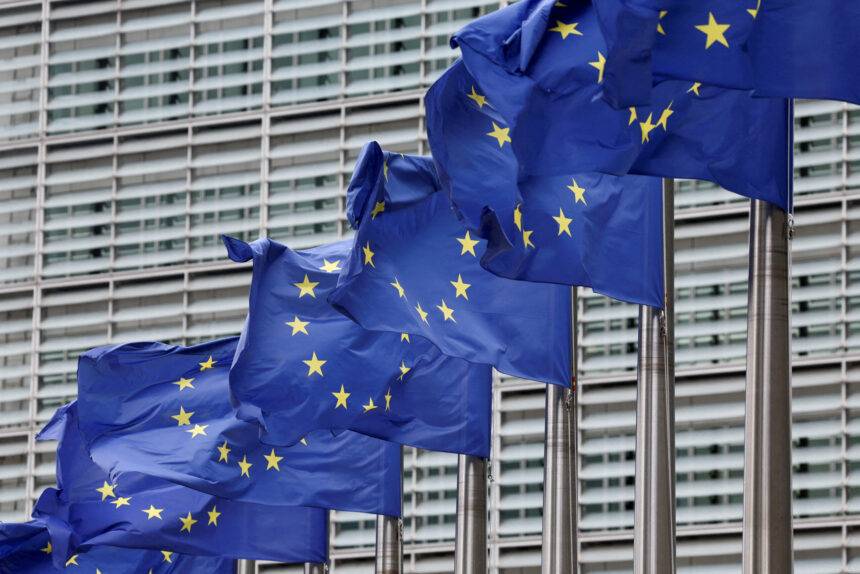
The European Union is navigating a complex identity crisis, struggling to define its role in the global arena—neither a middle power nor a big power.
- The European Union is navigating a complex identity crisis, struggling to define its role in the global arena—neither a middle power nor a big power.
Mark Carney’s Call for Middle Powers
Mark Carney’s recent remarks at the World Economic Forum have sparked debate in European capitals. While the middle power label resonates with countries like Canada, it leaves the EU in a state of confusion. Individual member states such as France, Germany, and Italy might fit the description of middle powers, but the EU as a whole possesses the characteristics of a great power.
Economic Might and Institutional Limitations
By any economic measure, the EU surpasses mere middle-ranking status. It stands as the largest trading bloc globally, contributing approximately 16 per cent of international imports and exports. Additionally, the euro is the world’s second most significant currency, commanding around 19 per cent of global use. Yet, despite its market size and economic influence, the EU struggles to translate this weight into effective political power.
The crux of the EU’s challenge lies in its institutional structure. As a coalition of member states, it lacks the singular authority characteristic of a state. Key decisions on sensitive issues like foreign policy and economic strategy require unanimous consent from all member states. This has led to instances like Hungary’s veto of a substantial loan to Ukraine, illustrating how individual national interests can hinder collective action.
The Quest for Coherence and Security
The EU’s dilemma isn’t simply about size; it concerns its ability to act cohesively on the world stage. Without a unified voice, it finds it difficult to exert influence, particularly in geopolitical matters. Each member state grapples with its own national sensitivities, making it challenging to relinquish control over defence and security issues.
However, the objective isn’t to become a superpower; rather, it’s about achieving sufficient military, industrial, and financial coherence to safeguard its territory and protect critical supply chains. The EU must prioritise economic security, as highlighted in Mario Draghi’s report, which outlines necessary reforms aimed at enhancing productivity and resilience.
Strategies for a United EU
To strengthen its position, the EU needs to embrace a collective approach to defence spending. This involves common procurement initiatives, shared air defence capabilities, and military mobility, moving away from the fragmented national rearmament efforts that have characterised the past. By consolidating resources, the EU can develop a more robust defence strategy.
Moreover, the EU should view enlargement as a strategic imperative. The Commission’s 2025 Enlargement Package describes it as a “political and geostrategic imperative,” emphasising that neglecting its neighbourhood invites external influences.
The Formidable Yet Limited Sphere of Influence
While the EU may not aspire to be a unitary military superpower, its influence remains significant within its geographical and political realm. The European continent, its eastern neighbourhood, the Mediterranean, and the financial space linked to the single market represent critical areas where the EU can exert power. The question facing the EU now is not about its size, but rather its organisation and ability to act decisively.