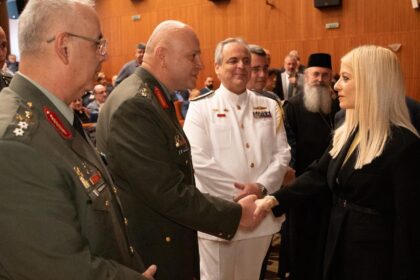
Europe’s future in space will depend significantly on skills development alongside the necessary infrastructure and technology. This was a key takeaway from the EU Space Days 2026 conference held in Nicosia, where industry leaders and experts gathered to discuss the evolving landscape of Europe’s space sector.

Photo: cyprus-mail.com
Expanding the Definition of Space Professionals
As the space industry transforms, the demand for a diverse range of professionals is increasing. Experts highlighted that the sector is not solely in need of engineers and astronauts anymore; it requires specialists in artificial intelligence, cybersecurity, business, and data analysis. This shift points to a widening gap between traditional educational paths and the practical skills needed in the modern space economy.

Photo: cyprus-mail.com
Strategic Skills Development
Lysandros Stathopoulos, a senior expert from DG DEFIS, underlined the urgency of skills development, stating that the pace of change within the European space ecosystem necessitates prioritising workforce training to enhance the bloc’s competitiveness. He emphasised that without a skilled workforce, Europe risks falling behind in a rapidly evolving global market.
Challenges in Education Systems
Andri Vryoni, founder of the STEMFreak Educational Innovation Centre, expressed concerns about traditional educational systems, arguing they often disconnect science from innovation. She warned that such systems may dissuade young people from pursuing careers in STEM fields before they even reach higher education. Vryoni stated, “Traditional schooling kills innovation, motivation, interests and children’s curiosity.”
She further stressed the importance of identifying interest in space-related fields much earlier in students’ academic journeys, particularly for those from underrepresented groups such as girls and young people with neurodevelopmental differences. Her comments highlight a pressing need to reform education to nurture curiosity and engagement in STEM.
Revising Public Perceptions of Space
During the conference, Monica Pesce, head of space, defence, and digital technologies for EU institutions at EY, noted that public perceptions about the space sector remain outdated. She stated, “People still think space means rockets and astronauts,” despite the growing applications of space technology in various industries, including agriculture and environmental monitoring.
This disconnect suggests a need for public outreach and educational campaigns that can better illustrate the diverse roles and opportunities within the space sector, thereby attracting a wider range of talent.
Infrastructure as Essential Support
As the conversation progressed, the focus shifted to the infrastructure necessary to support Europe’s ambitions in space. Christina Giannopapa from the European Union Agency for the Space Programme remarked on the critical role of space as not merely an avenue for exploration but as vital infrastructure for society, economy, security, and defence.
She pointed out that capabilities such as Earth observation, satellite navigation, and secure connectivity are essential for Europe to maintain strategic autonomy amid complex geopolitical dynamics. This perspective underscores the necessity of investing in robust infrastructure to ensure the continent’s future in the space arena.
Emphasising Sustainability in Space Initiatives
Duarte Cota, a scientific and education officer at Portugal Space, discussed the need for sustainability in space infrastructure, advocating for a broader view that transcends mere financial considerations. He highlighted Portugal’s initiative to establish a spaceport in the Azores, which is part of a larger European network aimed at enhancing access to space. Cota stressed that future infrastructure must be flexible and multi-purpose, fostering ties with the defence sector.
The Importance of Cooperation
Sotiris Alexandrou, director of satellite communications services at Cyta, emphasised the necessity of cooperation among smaller countries in the space sector. He noted that “Space is an expensive activity. Cooperation is the solution, especially for smaller countries.” Alexandrou pointed to the role of EU support in enabling member states to develop their capabilities, which can eventually evolve into commercial services.
Strategic Sovereignty and Technological Control
Emiliano Agosta, chief technical officer at Spaceopal, stressed that Europe’s sovereignty in space is not solely about ownership of satellites but also about control over the software and algorithms that power them. He remarked, “Without systems that operate continuously and reliably, there is no strategic sovereignty.” This statement reinforces the need for Europe to develop independent technological capabilities to ensure its autonomy.
Translating Investments into Economic Value
Diophantos Hadjimitsis, director of the Eratosthenes Centre of Excellence, called for infrastructure investments to translate into practical services and economic value, reducing Europe’s reliance on non-European data sources. His remarks highlight the importance of not only investing in infrastructure but ensuring these investments yield tangible benefits for the economy.
As the conference concluded, speakers collectively reiterated that Europe’s future competitiveness in the space sector will hinge as much on skills and education as on technological investment. The consensus was clear: cultivating a skilled workforce is essential for harnessing the full potential of Europe’s space ambitions.