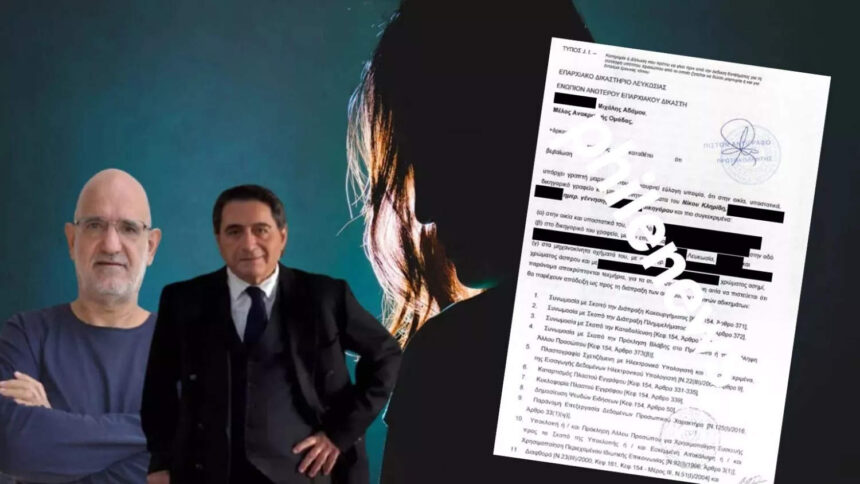
The ongoing Sandy affair has taken a significant turn as police investigations reveal that the 45-year-old woman at the centre of allegations never worked at the Presidential Palace, contradicting claims made by Makarios Drousiotis.
According to data from the Social Insurance Department and statements from former employers, police have established that Sandy, whose real name is Kyriaki, was employed elsewhere during the time in question. Drousiotis had alleged that she was involved in an organised network linked to senior judicial and political figures and claimed she worked at the Palace in 2023, facilitated by former judge Michalis Christodoulou.
A sworn statement submitted on Good Friday indicated that Sandy was not employed at the Presidential Palace from 2023 to the present. Instead, police investigations confirmed that she was working at a private shop in Nicosia during that period. This was corroborated by formal statements from her former employers, who were traced and interviewed by authorities.
Records from the Social Insurance Department further show a history of employment for Sandy over the last decade, with continuous contributions indicating she was working in Cyprus from 2001 to 2023. These findings suggest a pattern that contradicts the allegations put forth by Drousiotis.
The controversy began when Drousiotis published a lengthy social media post alleging that Sandy was part of a network comprised of current and former officials. He claimed she had connections to influential figures and had been involved in illicit activities. While Christodoulou acknowledged knowing Sandy, he firmly denied any wrongdoing.
Adding to the intrigue, Sandy’s lawyer, Nikos Clerides, stated that she had provided him with approximately 1,000 SMS messages from around 2019, which she claimed implicated various public figures. In a notable development, police raided Clerides’s home and office on Easter Saturday, seizing his mobile phone and other electronic devices as part of their investigation.
However, Sandy later retracted her claims regarding the authenticity of the messages, asserting that they were not real. Investigators expressed skepticism over her revised statement. Forensic examinations revealed that applications capable of generating fake messages were found on her mobile devices, downloaded shortly before Drousiotis published his report.
In a further twist, Europol has been called in to assess the legitimacy of the SMS messages submitted as evidence. This examination aims to determine whether the messages are genuine or fabricated, adding another layer of complexity to the unfolding saga.
As the investigation continues, all allegations surrounding the Sandy affair remain unverified, with those named in the claims denying any misconduct. The implications of these developments could have far-reaching consequences in the political landscape.